 Eng
Eng
 Español
 عربى
عربى Deutsch
 русский
 Français
Content
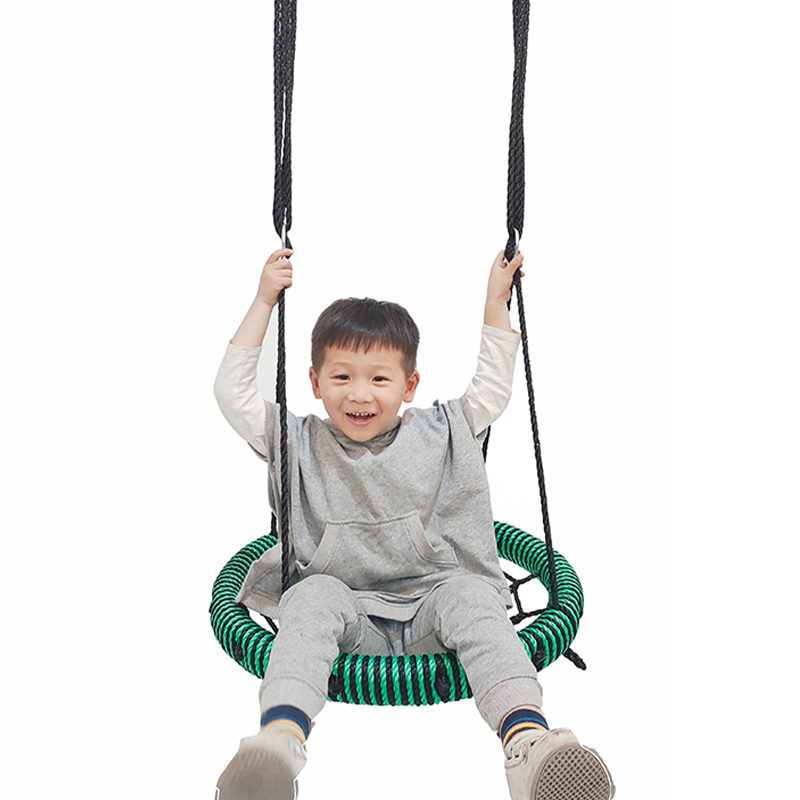
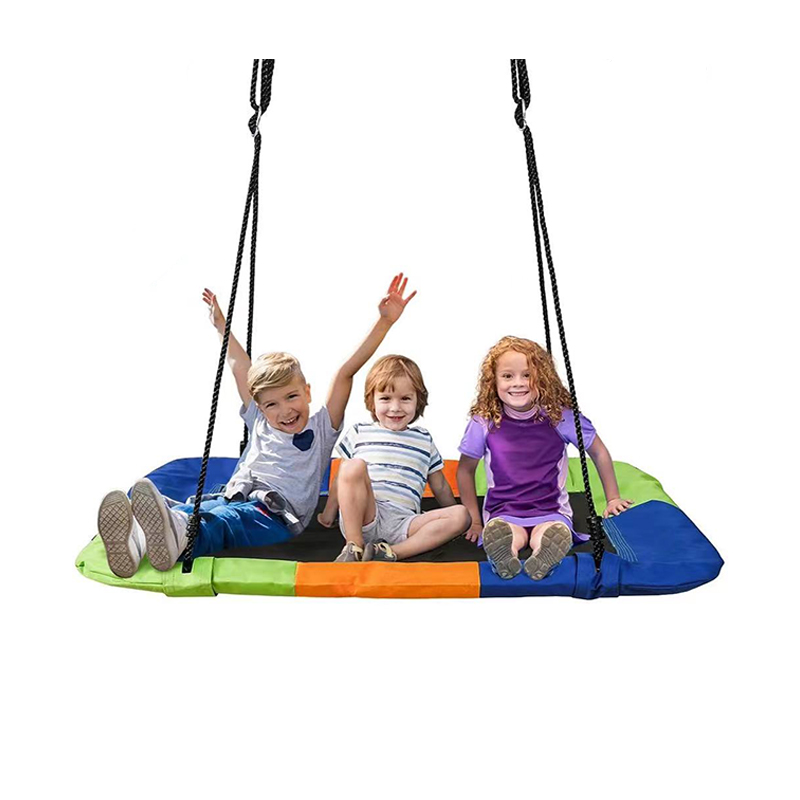
A nest and saucer swing is a wide, flat or slightly concave swing seat with a circular or square platform shape — large enough to accommodate a child lying down, sitting cross-legged, or sharing the seat with siblings or friends. Unlike traditional narrow-seat swings, the saucer format allows the rider to face any direction and swing in a full 360-degree arc, making it a significantly more immersive and versatile play experience. The design originated as a "nest" concept — a safe, enclosed platform where children can recline and feel cradled while in motion — and has since become one of the most popular swing formats for both home gardens and public playgrounds worldwide.
Design Formats: Circular vs. Square Nest Swings
Nest and saucer swings are produced in two primary form factors, each suited to different users and installation contexts:
Circular Saucer Swings
Circular models range from 60 cm to 120 cm in diameter depending on the intended age group and capacity. Smaller 60–80 cm models are designed for individual children; larger 100–120 cm versions comfortably seat two children or one adult with a child. The circular shape allows omnidirectional swinging and spinning, which provides vestibular stimulation that supports sensory development in children. The galvanized steel frame is typically wrapped in UV-resistant Oxford fabric or breathable PP mesh, giving the seat its characteristic nest-like softness while the structure underneath provides the rigidity needed to support loads of up to 300 kg on heavy-duty commercial models.
Square Nest Swings
Square or rectangular designs — typically in sizes of 120×80 cm or 150×80 cm — offer more usable surface area per hanging position compared to circular equivalents and are particularly well suited to two or three users sitting side by side. The defined edges of a square design also make it easier for smaller children to find a stable sitting position near the corners, using the frame edges as a natural handhold.
Materials and Construction
The durability and safety of a nest swing depend entirely on the quality of its materials. Most quality nest swings use one of two structural approaches:
Galvanized Steel Frame with Fabric or Mesh
A galvanized steel ring or square frame provides the structural core, which is then wrapped or interlaced with either UV-resistant Oxford fabric (providing a solid, cushioned surface) or breathable PP mesh (allowing air circulation beneath the user — reducing heat buildup in warm weather). The high-strength suspension straps and rust-proof connectors are rated for the full stated load capacity, ensuring consistent safety across the product's lifespan.
Woven PE Rope Construction
Rope versions use thick weather-resistant PE rope woven across a steel frame in 4 or 8 segments. These designs offer a more open, net-like surface that provides tactile stimulation through the rope texture. PE rope is UV-stabilized and does not rot, absorb water, or become brittle in cold weather. Rope versions are often more portable, as they can be collapsed or folded more readily than padded fabric designs.
| Feature | Oxford Fabric / PP Mesh | Woven PE Rope |
|---|---|---|
| Surface feel | Soft, cushioned | Tactile, open weave |
| Breathability | Moderate (mesh) to low (Oxford) | High |
| Weather resistance | UV resistant, waterproof | UV stabilized, no water absorption |
| Portability | Moderate | High (foldable designs available) |
| Best for | Comfort-focused residential use | Tactile play, portable installations |
Developmental Benefits for Children
Beyond the obvious fun factor, nest and saucer swings provide a meaningful developmental environment for children of all ages:
- Vestibular stimulation: the spinning and multi-directional swinging motion activates the vestibular system — the inner ear's balance and spatial orientation mechanism — which research indicates is important for coordination, attention, and emotional regulation development in children aged 2–12
- Core strength and balance: maintaining position on the open platform while in motion activates deep core and stabilizer muscles continuously — unlike seated swings where the back is supported
- Social play: the wide platform naturally accommodates multiple children simultaneously, promoting cooperative play, negotiation, and turn-taking
- Risk calibration: the open platform with no seat back or restraint requires children to manage their own position — building proprioceptive awareness and the confidence that comes from managing controlled physical challenge
Installation and Safety Considerations
Proper installation is essential for safe nest swing use. Key requirements include:
- Minimum clearance: the swing area requires a clear radius of at least 1.5× the suspension height on all sides — for a swing hanging at 2 meters, this means a clear zone of at least 3 meters from the center in every direction
- Suspension height: the bottom of the swing seat should be 35–45 cm above the ground for children's use — low enough for easy mounting, high enough to swing freely
- Anchor point load rating: the overhead attachment point (beam, branch, or dedicated frame) must be rated for the stated dynamic load — at least 1.5× the maximum static load capacity of the swing
- Fall zone surface: install over soft ground, rubber mulch, or impact-absorbing play matting rather than concrete or compacted earth
- Regular inspection: check straps, connectors, and the frame for UV degradation, rust, and wear at least twice per year — and before the beginning of each play season