 Eng
Eng
 Español
 عربى
عربى Deutsch
 русский
 Français
Content
- 1 Understanding the Parts of a Swing Trapeze
- 2 How to Install a Swing Trapeze Correctly
- 3 Basic Swing Trapeze Technique for Beginners
- 4 Upper Body and Core Exercises Using a Swing Trapeze
- 5 Using Swing Trapezes for Sensory Integration Therapy
- 6 Age-Appropriate Use Guidelines for Swing Trapezes
- 7 Common Mistakes When Using Swing Trapezes and How to Avoid Them
- 8 Swing Trapeze for Aerial Arts Training: Getting Started
- 9 Maintenance and Inspection Schedule for Swing Trapezes
- 10 Choosing the Right Swing Hanger for Your Trapeze Setup
- 11 Summary: Using Swing Trapezes Safely and Effectively
Swing Trapezes are used by gripping the horizontal bar with both hands, engaging your core, and either swinging freely for play and fitness, performing controlled hanging exercises for upper body strength, or using them as part of sensory and occupational therapy programs. The fundamental technique involves a firm two-handed overhand grip on the bar, arms fully extended or slightly bent, and a controlled pumping motion from the hips and legs to build and maintain the swinging arc. Safe and effective use depends on correct installation height, appropriate bar grip diameter for the user's age and hand size, and a clear safety zone free of obstacles in all directions of travel.
Swing trapezes are used across a surprisingly wide range of contexts: backyard play equipment for children, upper body conditioning tools for gymnasts and calisthenics athletes, sensory integration therapy apparatus for children with developmental needs, and aerial arts training aids for beginners. Each context has specific technique requirements, but all share the same foundational setup and safety principles covered in this guide.
Understanding the Parts of a Swing Trapeze
Before using a swing trapeze, understanding how it is assembled helps you verify that every component is correctly configured and within safe operating limits for the intended user.
The Trapeze Bar
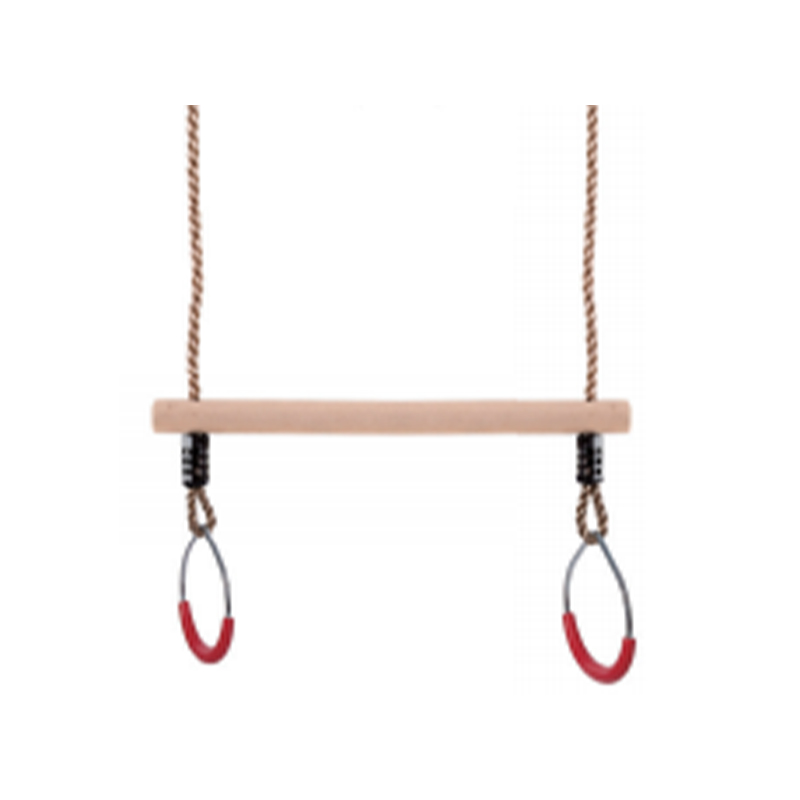
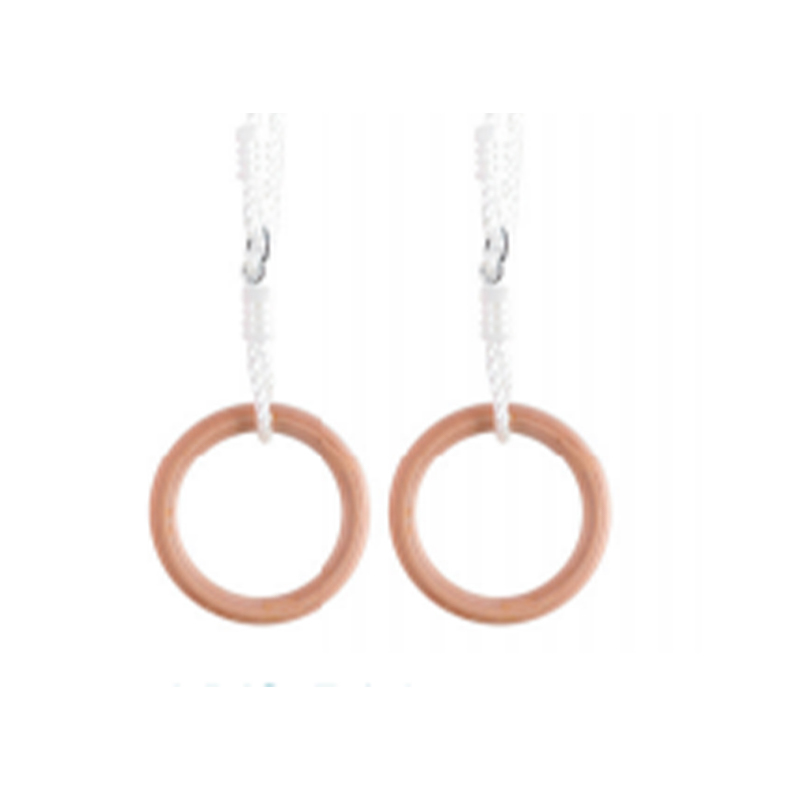
The trapeze bar is the horizontal gripping element, typically made from steel, aluminum, or coated wood. Bar diameter is a critical ergonomic factor: bars intended for children typically measure 25mm to 32mm in outer diameter, which suits smaller hand spans and allows a full wrap-around grip. Adult and gymnastics-grade bars commonly measure 28mm to 38mm, matching the diameter ranges used in gymnastics apparatus where grip strength and bar feel are optimized for performance. Bars with a knurled, rubberized, or powder-coated surface provide significantly better grip security than smooth bare metal, particularly in outdoor use where moisture and temperature changes affect hand grip.
The Suspension Ropes or Straps
The ropes or straps connect the bar to the swing hanger or overhead attachment point. Braided polyester and polypropylene ropes are the most common materials in residential swing trapeze applications, offering UV resistance, minimal stretch under load, and resistance to moisture-related degradation. Ropes and straps should be checked before each use session for fraying, discoloration, kinking, and any sign of load-bearing fiber damage. The ASTM F1148 standard for home playground equipment specifies that swing ropes and connections must support a minimum static load of 1,500 pounds (approximately 680 kg) without failure (source: ASTM F1148-21, Standard Consumer Safety Performance Specification for Home Playground Equipment).
The Swing Hangers
Swing hangers are the connecting hardware between the overhead structure and the suspension ropes or chains. They must be rated for dynamic loading rather than static loading, as swinging generates impact forces that can reach two to three times the static weight of the user. Quality swing hangers incorporate a rotating or swiveling bearing mechanism that allows the suspension ropes to move freely through the full swing arc without generating twist stress in the rope that could accelerate wear or cause sudden failure.
The swing hanger product range at nbyongxu.com is designed specifically for dynamic swing loading applications, with load-rated bearing mechanisms and corrosion-resistant finishes suited to outdoor installation, supporting the full range of trapeze and swing configurations described in this guide.
How to Install a Swing Trapeze Correctly
Correct installation is the single most important safety factor for swing trapeze use. More swing-related injuries are caused by installation failures than by incorrect use technique, making this step worthy of thorough attention before any use begins.
Choosing the Right Overhead Structure
A swing trapeze must be attached to a structure capable of handling dynamic swing loads. Acceptable structures include purpose-built swing frame sets rated for the intended user weight, structural timber beams in a garage or basement gym with appropriate fastening hardware, and outdoor tree branches meeting minimum size and health criteria. For tree attachment, arborists generally recommend a minimum branch diameter of 8 inches (approximately 200mm) at the attachment point, with the branch verified to be living, structurally sound, and oriented horizontally within 30 degrees (source: Tree Climber's Guide, Sharon Lilly, International Society of Arboriculture, 2010). Never attach a swing trapeze to a fence post, thin-wall conduit, or any overhead structure not specifically evaluated for dynamic swing loading.
Setting the Correct Hanging Height
The hanging height of the trapeze bar above the ground determines both the maximum swing arc achievable and the critical fall height in the event of a grip release. Recommended hanging heights vary by user age and application:
| User Group | Recommended Bar Height Above Ground | Reasoning |
| Children aged 5 to 8 | 150 to 180cm | Allows foot-touch landing without excessive fall height |
| Children aged 9 to 12 | 180 to 220cm | Enables full hang with feet clear of ground during swing |
| Teenagers and adults (recreational) | 220 to 270cm | Full arc swing with adequate clearance |
| Adults (fitness and gymnastics training) | 250 to 300cm | Allows full leg raises and inverted positions without ground contact |
| Sensory therapy (children) | 120 to 160cm | Therapist-accessible height for assisted use and supervision |
Source: Consumer Product Safety Commission (CPSC) Publication 325, Handbook for Public Playground Safety, 2010.
Safety Zone Clearance
The safety zone around a swing trapeze must be clear of all obstacles, structures, and other users. The CPSC Handbook recommends a minimum clearance of 6 feet (approximately 1.8 meters) to each side of the swing in the direction of travel, and 6.5 feet (approximately 2 meters) in front and behind the maximum swing arc position. In practice, adding a further 0.5 to 1 meter margin beyond the minimum specification is strongly advisable, particularly for younger children whose arc control and dismount timing are less predictable than adults.
Checking Rope Length and Symmetry
After installation, verify that both suspension ropes or straps are exactly equal in length so that the bar hangs level. An asymmetrically hanging bar causes the user to drift sideways during swinging, increasing the risk of uncontrolled rotation and uneven grip stress. Use a tape measure to verify rope length from the hanger attachment point to the bar attachment point on each side before first use, and recheck after any rope adjustment or replacement.
Basic Swing Trapeze Technique for Beginners
Whether using a swing trapeze for play, fitness, or therapy, the foundational movement technique is the same. Developing correct body position and swing initiation before progressing to more advanced movements reduces injury risk and builds the upper body and core strength needed for longer sessions.
The Starting Position
Stand directly below the bar with feet shoulder-width apart. Reach up and grip the bar with both hands using an overhand grip, thumbs wrapped around the bar from beneath. Arms should be fully extended with elbows soft rather than rigidly locked. Lift feet from the ground by bending the knees, allowing the body to hang freely. This dead hang position is the baseline from which all swing trapeze movements begin and is itself a valuable upper body endurance exercise.
Initiating the Swing
To begin swinging from a stationary hang, extend the legs forward together at an angle of approximately 30 to 45 degrees while simultaneously driving the hips slightly forward. As the body swings back through center, bring the legs back and slightly behind the vertical. This coordinated hip and leg drive creates a pendulum pumping action that progressively increases the arc with each cycle. The key principle is that leg and hip movement must be synchronized with the natural pendulum rhythm of the swing to add energy efficiently. Fighting the pendulum rhythm by moving out of phase with it reduces arc height and increases grip fatigue.
Maintaining and Controlling Arc Height
Once a comfortable arc is established, maintaining it requires only small continuing leg and hip inputs timed to the pendulum cycle. To reduce arc height when preparing to dismount, the user should resist the forward leg swing rather than extending it, using the body as a brake against the pendulum motion. Never attempt to stop a swing abruptly by dragging feet or by jerking the body, as either creates sudden load spikes on both the user's arms and the suspension hardware.
The Dismount
The safest dismount from a swing trapeze is a feet-first landing at the lowest point of the swing arc, directly below the bar. At this position the body is moving at its slowest transitional speed between forward and backward swings, minimizing the horizontal velocity at landing. Bend the knees on contact with the ground to absorb the landing force and step forward to dissipate any remaining forward momentum. Never release the bar at the forward or backward extremes of the arc, as this launches the user horizontally at the highest point of kinetic energy in the swing cycle.
Upper Body and Core Exercises Using a Swing Trapeze
Swing trapezes are used extensively in fitness and calisthenics training because the instability of a hanging swinging bar engages stabilizing muscles that fixed-bar exercises do not activate. The following exercises range from beginner-accessible to advanced, covering the primary muscle groups trained in trapeze-based fitness work.
Dead Hang
Gripping the bar in the hanging position without swinging is a foundational grip strength and shoulder mobility exercise. Beginners should work toward 30 to 60 seconds of continuous dead hang before progressing to dynamic movements. Dead hanging on a slightly unstable suspended bar like a swing trapeze activates the rotator cuff and shoulder stabilizers more intensively than hanging from a fixed pull-up bar, making it a valuable shoulder prehabilitation exercise. Research published in the Journal of Human Kinetics (2015) found that suspended instability training increased rotator cuff muscle activation by an average of 22 percent compared to equivalent fixed-support exercises (source: Saeterbakken et al., Journal of Human Kinetics, Vol. 49, 2015).
Tuck and L-Sit Raises
From a dead hang, bring both knees toward the chest (tuck raise) or extend both legs horizontally forward (L-sit raise) and hold for a count of two to three before lowering. These exercises develop hip flexor strength and abdominal compression while challenging grip and shoulder endurance simultaneously. Beginners should start with tuck raises and progress to L-sits as core strength develops.
Swing Pull-Ups
Performing pull-ups on a swing trapeze bar significantly increases the difficulty compared to a fixed bar because the bar moves backward as the user pulls upward, requiring continuous lateral and rotational stabilization from the shoulders and core. Begin with a controlled swing and use the upward momentum of the forward swing to assist the pulling phase. Three sets of 5 to 8 swing pull-ups is a challenging workout for intermediate-level practitioners.
Skin the Cat
An advanced full-body mobility and strength exercise where the user, from a dead hang, pulls the knees through the arms, rotates the body backward to an inverted hang position with arms extended overhead, then reverses the rotation back to the starting position. This movement requires significant shoulder flexibility in the impingement range and should only be attempted after developing solid dead hang endurance and after a thorough shoulder warm-up. The instability of the swing trapeze makes skin the cat more challenging than on a fixed bar and should not be attempted by beginners.
Swing Knee Tucks and Pikes for Core
Using the forward swing momentum, drive both knees toward the chest at the top of the forward arc and extend fully on the backswing. This dynamic tuck creates a more powerful hip flexor contraction than static raises and develops the timing coordination needed for more advanced aerial movements. The pike variation, where the legs remain straight and are raised to horizontal or above horizontal at the forward peak, is significantly more demanding on the hip flexors and lower abdominals.
Using Swing Trapezes for Sensory Integration Therapy
Swing trapezes have a well-established role in pediatric occupational therapy as a sensory integration tool for children with sensory processing disorders, autism spectrum conditions, and developmental coordination disorder. The vestibular and proprioceptive stimulation provided by suspended swinging movement is a key therapeutic input in sensory integration frameworks developed by Dr. A. Jean Ayres (source: Ayres, A.J., Sensory Integration and the Child, Western Psychological Services, 1979).
How Swinging Provides Vestibular Input
The vestibular system in the inner ear detects linear and rotational acceleration of the head, providing the brain with information about body position and movement in space. Children with sensory processing difficulties often have atypical vestibular processing that affects balance, coordination, and behavioral regulation. Linear swinging on a trapeze provides repetitive, rhythmic vestibular stimulation in the forward-backward plane that many children with these conditions find both calming and organizing to their nervous system. Studies have shown that 15 minutes of linear swing activity significantly improved attention task performance in children with sensory processing disorder compared to a control condition (source: Schilling and Schwartz, American Journal of Occupational Therapy, 2004, Vol. 58).
Proprioceptive Input Through Active Gripping
Gripping and bearing weight through the hands and arms on a swing trapeze provides heavy proprioceptive input to the joints and muscles of the upper limb, which is experienced as calming and organizing by the nervous system of many children who are sensory-seeking. Therapists often use trapeze bar activities specifically because they combine proprioceptive input from gripping with vestibular input from swinging, delivering two of the most therapeutically significant sensory modalities simultaneously.
Therapist-Guided Trapeze Activities
In a therapeutic context, a trained occupational therapist introduces trapeze activities progressively, beginning with supported hanging where the child grips the bar while the therapist supports their body weight, progressing to assisted swinging, and eventually to independent swinging as the child's grip strength, postural control, and sensory tolerance develop. The installation height for therapy applications is typically lower than for recreational use, allowing the therapist to maintain contact and provide support throughout the session.
Age-Appropriate Use Guidelines for Swing Trapezes
Swing trapeze use is appropriate across a wide age range, but the specific activities, supervision level, and safety requirements differ significantly between age groups. The following guidelines align with CPSC and ASTM recommendations for playground equipment and home swing use:
| Age Group | Appropriate Activities | Supervision Level | Key Safety Considerations |
| Under 5 years | Supported hanging with adult holding body, very low arc swinging | Hands-on adult support at all times | Bar height must allow instant adult intervention; grip strength insufficient for independent use |
| 5 to 8 years | Independent low-arc swinging, simple tuck positions | Direct adult supervision within arm's reach | Verify grip before each session; bar diameter must suit small hands |
| 9 to 12 years | Higher arc swinging, basic tuck raises, assisted pull-ups | Adult supervision in the area | Teach correct dismount technique; enforce no-doubles rule |
| 13 to 17 years | Full arc swinging, fitness exercises, basic skill progressions | Independent use after safety briefing | Check hardware before each session; no single-hand or inverted use without progressive training |
| Adults | Full fitness and gymnastics application, therapy | Independent | Warm up shoulders before each session; respect fatigue limits on grip endurance |
Source: CPSC Publication 325, Handbook for Public Playground Safety; ASTM F1148-21, Standard Consumer Safety Performance Specification for Home Playground Equipment.
One of the most important age-related safety rules for any swing trapeze installation is the single-user rule: never allow two people to use a single trapeze bar simultaneously. The combined dynamic load of two users swinging in coordination can exceed the design load of residential-grade swing hardware by two to four times, depending on the mass and timing of the users.
Common Mistakes When Using Swing Trapezes and How to Avoid Them
Most swing trapeze injuries and equipment failures are attributable to a small number of repeating mistakes that are easily avoided with correct knowledge and consistent safety habits.
Gripping Too Tightly Throughout the Session
Many beginners grip the bar with maximum hand force throughout an entire swing session, which accelerates grip fatigue and significantly increases the risk of a sudden involuntary release as the hand muscles fail. The correct grip uses firm but not maximal force, engaging only enough pressure to maintain control, and allows the wrists and fingers to relax slightly during the passive phases of the swing cycle when forces are lower. Chalk or grip-enhancing gloves can help maintain an adequate grip with lower muscle effort, particularly in warm or humid conditions.
Attempting Advanced Movements Before Building Baseline Strength
Skin the cat, single-arm hangs, and inverted positions on a swing trapeze require significantly more shoulder stability, grip endurance, and body control than basic swinging. Attempting these movements without the prerequisite strength base is a common source of shoulder impingement injuries and uncontrolled falls. A practical progression benchmark before attempting any inverted trapeze work is the ability to complete 3 sets of 30-second dead hangs and 8 controlled L-sit raises with no grip fatigue.
Ignoring Equipment Inspection
Swing trapeze hardware, ropes, and attachment points degrade over time under the combination of UV exposure, dynamic loading, moisture, and temperature cycling. A rope that appears intact visually may have significant internal fiber damage from cyclic fatigue. Hardware inspection should be performed before each use session and should take no more than 60 seconds: visually check all rope lengths for fraying or discoloration, check all hardware connections for looseness or corrosion, and apply body weight briefly before each full use session to verify there are no creaking or movement sounds from the overhead attachment point.
Incorrect Landing Technique
Landing flat-footed with locked knees from a swing release is one of the most common causes of ankle and knee injuries in swing trapeze use. Always land with soft, bent knees and allow the body to sink into a partial squat on impact, then step forward to dissipate horizontal momentum. Children should be specifically coached on this technique, as the instinct to land stiff-legged is common and requires deliberate correction.
Installing on Inadequate Overhead Structures
Attaching a swing trapeze to a structure not designed for dynamic swing loading is a serious safety risk that is unfortunately common in home installations. Ceiling joists in residential construction, for example, are designed for vertical dead loads only and may not safely support the lateral and dynamic loads generated by a swinging user. Always consult the structural loading specifications of the overhead structure or use a purpose-built swing frame before installation.
Swing Trapeze for Aerial Arts Training: Getting Started
A swing trapeze is the standard entry-level apparatus for aerial arts training because its swinging motion builds the foundational strength, timing, and body awareness required for more advanced aerial disciplines including flying trapeze, lyra, and aerial silks.
The Importance of Bar Kipping for Aerial Beginners
Kipping refers to the technique of using the forward-backward swing arc to generate upward momentum for mounting the bar. On a swing trapeze, learning to kip effectively is the foundation of all aerial mount progressions, as it teaches the coordination of hip drive, core engagement, and grip position that is replicated in nearly every advanced aerial skill. Beginners should spend their first several training sessions exclusively on developing a consistent, controlled kip before attempting any bar mounts.
Muscle-Up Progression on a Swing Trapeze
The muscle-up, in which the user transitions from a hang below the bar to a support above the bar, is significantly more challenging on a swing trapeze than on a fixed pull-up bar because the bar moves away during the transition phase, requiring faster and more decisive pulling and transition mechanics. Mastering the muscle-up on a swing trapeze is a strong benchmark of aerial readiness, indicating that the user has sufficient grip strength, pulling power, and coordination for more complex apparatus work. A recommended progressive approach is to first achieve the muscle-up consistently on a fixed bar before transferring the skill to the swing trapeze.
Bar Hang and Swing Sequences for Skill Development
Structured aerial conditioning sessions on a swing trapeze typically follow a format of warm-up swinging and dead hang sets, followed by progressive skill work on specific movements, followed by a cool-down stretching sequence targeting the shoulders, wrists, and hip flexors. Scheduling two to three training sessions per week with at least one rest day between sessions allows the grip, shoulder, and core muscles to recover and adapt progressively, following standard periodization principles for strength endurance training (source: National Strength and Conditioning Association, Essentials of Strength Training and Conditioning, 4th Edition, 2015).
Maintenance and Inspection Schedule for Swing Trapezes
A consistent maintenance schedule extends the service life of swing trapeze equipment, prevents silent hardware degradation from becoming a safety hazard, and ensures that the equipment always performs as expected during use sessions.
Before Each Use Session
- Visually inspect both suspension ropes or straps along their full length for fraying, cuts, kinking, or discoloration that may indicate UV degradation or chemical exposure.
- Check all metal hardware connections including carabiners, S-hooks, quick links, and swing hanger bodies for signs of corrosion, deformation, or gate opening in load-bearing carabiners.
- Verify that the overhead attachment point has not shifted, loosened, or shown any new signs of structural movement since the last session.
- Check the trapeze bar itself for splinters, sharp edges, loose coating, or deformation that could affect grip safety.
Monthly Maintenance
- Apply a light coat of corrosion-inhibiting lubricant to all metal swing hanger bearing mechanisms, particularly on outdoor installations where moisture accelerates wear. Wipe away excess lubricant before use to prevent dripping onto hands.
- Check rope or strap attachment points at both the bar end and the hanger end for wear caused by metal-on-rope contact under dynamic loading. Reinforce or replace any rope section showing wear thinning to less than 80 percent of its original diameter.
- Verify that all S-hooks and quick links are still fully closed and have not begun to open under loading. Any hardware with evidence of deformation should be replaced immediately rather than bent back to shape.
Annual Replacement Thresholds
Regardless of visual condition, the following replacement intervals are recommended based on material fatigue and UV degradation characteristics of standard swing hardware materials:
- Braided polyester or polypropylene ropes: Replace every 2 to 3 years in outdoor use, or immediately upon any evidence of internal strand breakage revealed by bending the rope sharply and inspecting the outer sheath.
- Nylon webbing straps: Replace every 2 years in outdoor UV-exposed use, or when the webbing shows any stiffness, discoloration, or surface cracking.
- Swing hanger bearings: Replace when any roughness, binding, or lateral play is detected in the bearing movement under load. Quality swing hangers with sealed bearing cartridges, such as those available through nbyongxu.com, allow bearing replacement without replacing the entire hanger assembly, reducing long-term maintenance cost.
Choosing the Right Swing Hanger for Your Trapeze Setup
The swing hanger is the most mechanically critical hardware component in any swing trapeze installation. Its load rating, bearing quality, and corrosion resistance directly determine the safety margin and longevity of the entire assembly. Key selection criteria include:
- Dynamic load rating: The hanger must be rated for dynamic loading, not just static loading. A hanger rated for 200 kg static load may only safely handle 100 kg dynamic load due to the impact multiplier effect of swinging. Always confirm the dynamic load specification with the manufacturer before purchasing.
- 360-degree rotation or restricted swing arc: For swing trapezes intended for linear forward-backward swinging only, a hanger with a restricted swing arc prevents the user from developing unintended rotational swinging that can entangle ropes and create sudden load asymmetries. For therapy applications where rotational swinging is therapeutically intended, a 360-degree rotating hanger is appropriate.
- Corrosion protection for outdoor use: Swing hangers for outdoor installation should be made from stainless steel, hot-dip galvanized steel, or powder-coated alloy with sealed bearing cartridges that prevent moisture ingress into the bearing race. Bare steel hangers without corrosion protection have a service life measured in months in outdoor conditions before bearing degradation begins to affect smooth swing movement.
- Ease of rope or chain attachment: Hangers with screw-lock or quick-release attachment points allow rope length adjustment and seasonal removal of the trapeze bar for storage without tools, which is a significant convenience for residential installations in climates with winter conditions.
- Compatibility with overhead structure: Verify that the hanger's mounting bolt pattern and loading geometry are compatible with the overhead beam or frame it will be attached to. Hangers designed for I-beam attachment are not suitable for timber beam use without appropriate adapter hardware, and vice versa.
The Swing Trapezes hanger range at nbyongxu.com provides a comprehensive selection of dynamic-load-rated hangers in stainless and coated steel, suitable for both residential outdoor installations and indoor gym environments, with bearing systems designed for smooth, consistent swing motion across the full product lifespan.
Summary: Using Swing Trapezes Safely and Effectively
Using a swing trapeze correctly and safely comes down to five core principles applied consistently across every session:
- Install correctly on a structurally rated overhead anchor with load-rated hardware, correct bar height for the user group, and verified safety zone clearance before first use.
- Inspect before every session, checking ropes, hardware, the bar, and the overhead attachment point for any changes in condition since the last use.
- Use correct technique for the intended activity, whether recreational swinging, fitness exercise, therapy, or aerial training, starting with foundational dead hang and basic swinging before progressing to advanced movements.
- Match activities to the user's age, strength, and skill level, applying appropriate supervision levels and progressions rather than rushing toward advanced movements before prerequisite strength and coordination are developed.
- Maintain hardware on schedule, lubricating bearings monthly, replacing ropes and straps at their recommended intervals, and replacing any component that shows deformation, corrosion damage, or unexpected wear immediately rather than deferring replacement until a future session.
With these principles applied consistently, a swing trapeze installation provides years of safe, versatile use across play, fitness, therapy, and aerial training applications for users of all ages and ability levels.