 Eng
Eng
 Español
 عربى
عربى Deutsch
 русский
 Français
Content
- 1 The Core Structure Of A Steel Swing Frame
- 2 Steel Frame Configurations: A-Frame, Single Post, And Arch
- 3 Residential Versus Commercial Steel Swing Frames
- 4 Surface Treatments That Protect Steel Swing Frames
- 5 Safety Zones And Installation Requirements
- 6 Applications And User Groups For Steel Swing Frames
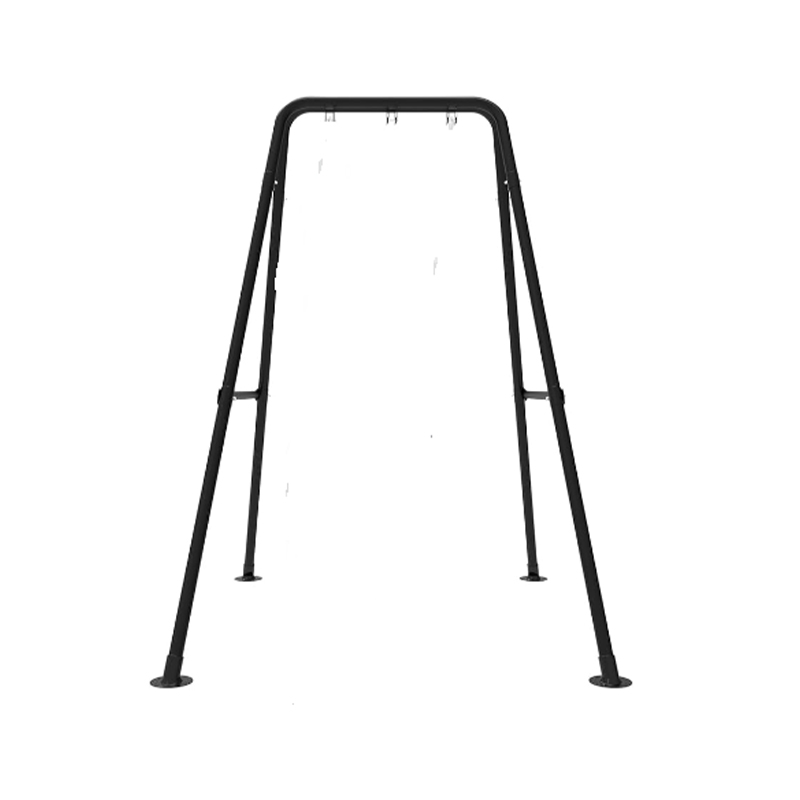
A Steel Swing Frame is a freestanding or ground-anchored metal structure designed to suspend one or more swing seats from a horizontal overhead beam supported by vertical or angled legs. It is the foundational supporting component of any swing system, transferring the dynamic loads generated by swinging users safely into the ground through its leg and anchoring structure. Steel swing frames are available in residential, commercial, and institutional grades, with beam diameters, steel wall thickness, surface treatment, and load ratings varying significantly between categories. Commercial-grade frames are produced to comply with ASTM F1487, the Standard Consumer Safety Performance Specification for Playground Equipment for Public Use, and are rated to support 300 pounds per swing position while withstanding years of heavy daily use in parks, schools, and public playgrounds (Source: Backyardcity.com, Single Post Metal Swing Sets: Commercial-Grade Play Solutions).
The Core Structure Of A Steel Swing Frame
Every steel swing frame, regardless of its configuration, consists of the same fundamental structural elements arranged to support the weight and dynamic forces generated by swinging.
Horizontal Overhead Beam
The beam is the horizontal structural member from which swing seats, chains, and hangers are attached. It must span the full width of the swing frame's active swing positions and carry all user loads transferred upward through the suspension chains. Commercial-grade steel swing frames use heavy-duty steel beams, with a common diameter specification of 2 3/8 inches in painted or galvanized steel for standard commercial configurations (Source: PlayLSI, 5000 Series Swing Frame). For single-post commercial frames, the structural post is specified at 5 inches in diameter from Schedule 50 pipe with a wall thickness of 0.258 inches, providing the exceptional stability needed to eliminate the wobbling experienced with lighter residential designs (Source: Backyardcity.com, Single Post Metal Swing Sets).
Legs And A-Frame Or Tripod Support
The legs transfer all beam loads down to the foundation anchors or ground. Steel swing frames use two primary leg configurations. The A-frame design uses two pairs of angled legs that meet at the beam ends, forming an inverted V at each end of the frame. The tripod design uses three legs per end for additional stability, particularly on higher frames where the increased height multiplies lateral force at the base. WillyGoat's commercial arch swing set uses robust 3.5-inch metal tubing for its legs, giving a completed frame assembly weight of 365 pounds, which provides natural ballast stability even before ground anchoring (Source: WillyGoat Playgrounds, Metal Swing Sets).
Footings, Anchors, And Base Connections
How a steel swing frame connects to the ground determines both its stability in use and its resistance to uplift forces during swinging. For commercial installations in public spaces, concrete footings that extend below the local frost line, typically 24 to 42 inches deep depending on geography, are required for each post or leg (Source: Backyardcity.com, Single Post Metal Swing Sets). Residential frames rated for lower loads may use bolt-down anchor plates or ground stake systems, but Backyardcity.com specifically notes that ground stakes are usually not installed correctly or deep enough to work well, and that bolt-down or cement anchors are the recommended choice for long-term stability in any high-traffic area or for frame beam heights above 8 feet (Source: Backyardcity.com, Commercial Metal Swing Sets).
Steel Frame Configurations: A-Frame, Single Post, And Arch
Steel swing frames come in several structural configurations, each suited to different space constraints, user populations, and installation environments.
| Configuration | Footprint | Best Suited For | Typical Beam Heights |
| A-Frame (twin angled legs) | Wider at base, compact depth | Residential and light commercial, 2 to 6 swing positions | 6 ft to 12 ft |
| Single post (cantilever arm) | Minimal ground footprint | Space-limited parks and playgrounds, 1 to 5 bay configurations | 8 ft to 10 ft |
| Arch frame | Curved legs with narrow base | Schools and parks where a modern aesthetic is combined with commercial durability | 8 ft to 10 ft |
| Tripod / 3-leg end support | Wider footprint at each end | High-capacity multi-bay commercial installations, heavy-duty institutional | 8 ft to 12 ft |
SwingSetMall documents available frame heights across the residential and commercial A-frame category as 8 feet, 10 feet, and 12 feet for the same frame platform, with beam height selection determined by the age range of intended users and the clearance required below the swing at the bottom of its arc (Source: SwingSetMall, Metal A-Frame Swing Set). Single-post commercial configurations are available in 8-foot and 10-foot heights with configurations from 1 to 5 bays, covering 2 to 10 swing positions per installation (Source: Backyardcity.com, Single Post Metal Swing Sets).
Residential Versus Commercial Steel Swing Frames
The distinction between residential and commercial steel swing frames goes beyond size and price, covering material specifications, surface treatments, load ratings, anchorage requirements, and the safety standards to which each category is manufactured.
Residential Steel Swing Frames
Residential steel swing frames are manufactured to ASTM F1148, the Standard Consumer Safety Performance Specification for Home Playground Equipment, which covers equipment for children from 18 months through 10 years for private residential use (Source: ASTM F1148-22, Standard Consumer Safety Performance Specification for Home Playground Equipment). These frames typically use lighter-gauge steel tubing with powder-coated finishes, are rated for lower daily use cycles, and are designed for installation in private gardens with ground stakes or bolt-down anchors rather than deep concrete footings. Frame assembly weights are correspondingly lower, enabling home assembly without specialized equipment.
Commercial Steel Swing Frames
Commercial steel swing frames must comply with ASTM F1487, the Standard Consumer Safety Performance Specification for Playground Equipment for Public Use, which covers public installations for children from 2 to 12 years in parks, schools, childcare centers, and recreational facilities (Source: ASTM F1487-21, Standard Consumer Safety Performance Specification for Playground Equipment for Public Use; ASTM International). This standard requires that swing frames be designed to reduce life-threatening and debilitating injuries, address fall hazards, and use noncorrosive metals or metals that have been appropriately treated (Source: ANSI Blog, ASTM F1487-21: Playground Equipment for Public Use Standard). Backyardcity.com's commercial playground sourcing guide confirms that each swing position on a compliant commercial frame is rated for 300 pounds, making them suitable for children and teenagers, and that commercial frames fully comply with both ASTM F1487 standards and Consumer Product Safety Commission guidelines (Source: Backyardcity.com, Single Post Metal Swing Sets).
Surface Treatments That Protect Steel Swing Frames
Steel exposed to outdoor conditions requires surface treatment to resist corrosion, and the treatment chosen determines how long the frame maintains its structural integrity and appearance with minimal maintenance.
Hot-Dip Galvanizing
Hot-dip galvanizing immerses the fabricated steel frame in molten zinc at approximately 450 degrees Celsius, forming a metallurgically bonded zinc-iron alloy coating that provides long-term corrosion protection. According to the American Galvanizers Association, hot-dip galvanized steel can last for decades in outdoor environments, making it a preferred treatment for commercial frames installed in parks and high-traffic public spaces (Source: PlaygroundEquipment.com, Commercial Metal Swing Sets). Galvanized frames are particularly recommended for coastal, high-humidity, or chemically exposed environments where painted coatings would degrade more rapidly.
Powder Coating
Powder coating applies a dry polyester or epoxy powder to the cleaned steel surface electrostatically, then cures it in an oven to form a hard, adherent finish available in a wide range of colors. Backyardcity.com specifically recommends powder-coated or hot-dip galvanized frames for maximum protection against rust, and explicitly advises avoiding paint-only coatings since they chip and rust faster than either galvanized or powder-coated alternatives (Source: Backyardcity.com, Commercial Metal Swing Sets). Many premium steel swing frames combine both treatments, applying powder coat over a galvanized base for dual-layer corrosion protection that provides both the long service life of galvanizing and the color and aesthetic options of powder coating.
Frame Material For Playground Applications
ASTM playground specifications require that steel components used in public playground equipment meet defined strength minimums. The unified facilities guide specification for playground equipment (UFGS 11 68 13) requires steel components to meet ASTM A513 standards with a minimum tensile strength of 310 MPa and a minimum yield point of 225 MPa, with steel components containing a minimum of 40 percent pre-consumer recycled content (Source: UFGS 11 68 13, Playground Equipment). These material requirements ensure that frames can withstand both the static weight of users and the dynamic shock loads generated by swinging and by impact from falls.
Safety Zones And Installation Requirements
A steel swing frame does not function safely in isolation from its installation environment. The use zone around the frame, the surfacing under and around the swing arc, and the depth of ground anchorage all contribute to whether the overall installation meets safety requirements.
- Use zone clearance: ASTM F1487 defines the required clearance space around swing equipment that must be free of other equipment and hazards; for a double-bay 4-swing single post commercial set, this requires approximately 20 by 32 feet of clear space including safety zones (Source: Backyardcity.com, Single Post Metal Swing Sets)
- Protective surfacing: the ground surface within the use zone must provide impact attenuation meeting ASTM F1292 requirements; acceptable materials include engineered wood fiber, rubber tiles, poured-in-place rubber, sand, and pea gravel at appropriate depths
- Concrete footing depth: commercial installations require footings extending below the local frost line, typically 24 to 42 inches deep, to prevent uplift and movement during freeze-thaw cycles and peak dynamic loading (Source: Backyardcity.com, Single Post Metal Swing Sets)
- Installation by qualified personnel: professional installation is recommended for commercial settings specifically to ensure concrete footings are correctly sized, positioned, and allowed to cure fully before the frame is loaded (Source: Backyardcity.com, Single Post Metal Swing Sets)
- Annual inspection: hardware tightness, chain wear, seat condition, surface coating integrity, and anchor security should be inspected annually, with the powder-coated frame itself requiring minimal maintenance beyond occasional cleaning under normal conditions
Applications And User Groups For Steel Swing Frames
Steel swing frames serve a much wider range of applications and user populations than the standard children's playground image suggests.
- Public parks and playgrounds: multi-bay commercial steel swing frames installed in municipal parks serve high daily user counts across the 2 to 12 year age range, with swing positions rated for 300 pounds accommodating older children, teenagers, and supervising adults
- Schools and childcare centers: institutional swing frames at schools are selected for heavy daily use by groups of children cycling through recess periods, with commercial-grade frames offering the structural durability and compliance documentation required by school procurement standards
- Sensory and therapy environments: specialized triangulated steel swing frames with single-point and two-point suspension for therapy swings support users up to 450 pounds and are used in sensory rooms and occupational therapy settings, where swinging provides vestibular input for users with sensory processing disorders, autism, and low muscle tone (Source: Fun and Function, Steel Swing Frame for Sensory Rooms)
- Residential backyards: residential-grade A-frame steel swing sets rated and tested to ASTM F1148-22 serve private family use, with heavy-duty powder-coated galvanized A-frame designs at heights up to 10 feet providing safe residential swinging for children up to 11 years (Source: Backyard Discovery, Big Brutus Heavy-Duty Metal A-Frame Swing Set)
- Porch and garden lawn swings: commercial-grade steel lawn swing frames constructed with heavy-duty 2 3/8-inch galvanized steel and expanded metal seating provide a weather-resistant outdoor seating option for patios, gardens, and commercial outdoor hospitality areas (Source: WillyGoat Playgrounds, Commercial Grade Steel Lawn Swing and Frame)
The Nbyongxu Steel Swing Frame range is designed to serve this full spectrum of application requirements, combining the structural steel specifications, corrosion-resistant surface treatments, and design configurations needed for both residential and commercial installations across these diverse user groups.