 Eng
Eng
 Español
 عربى
عربى Deutsch
 русский
 Français
Content
- 1 Physical Development Benefits for Children
- 2 Sensory-Motor Development: A Key Benefit Often Overlooked
- 3 Cognitive and Emotional Benefits of Regular Swinging
- 4 Material Choices: Plastic vs. Wood Swings
- 5 Durability and Weather Resistance: Long-Term Reliability
- 6 Safety Standards and Certifications: Why They Matter
- 7 Installation Flexibility: Homes, Kindergartens, and Community Spaces
- 8 Benefits by User Group: Who Gains the Most?
- 9 Eco-Friendly Materials and Responsible Manufacturing
- 10 Maintenance Tips to Maximize Swing Seat Longevity
- 11 Ningbo Yongxu: Quality-Assured Children's Swing Manufacturing
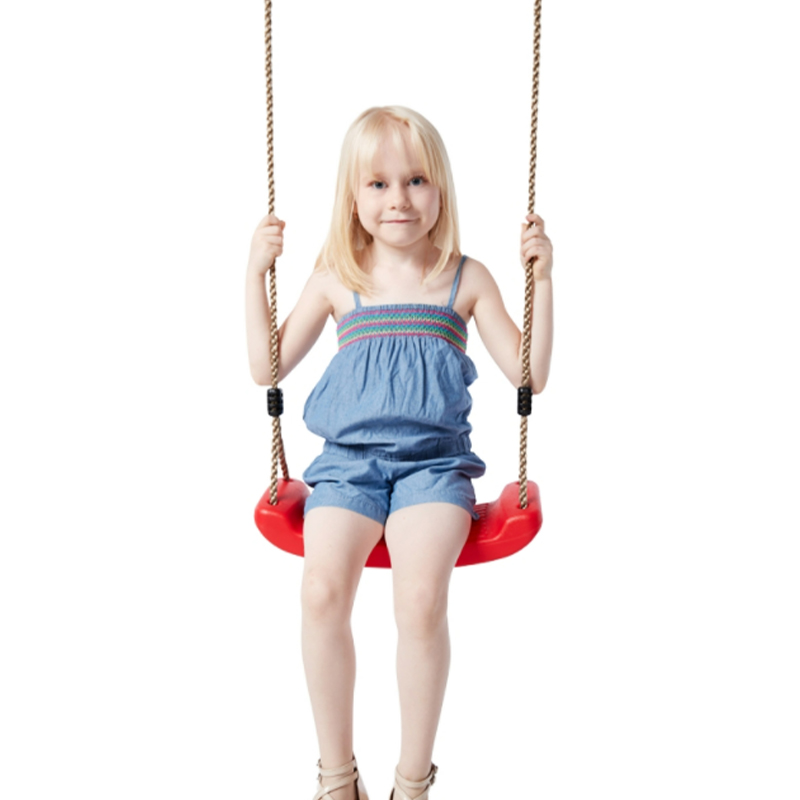
Swing seats and swing chairs deliver a proven combination of physical, cognitive, and emotional benefits for children while offering practical advantages in durability, safety, and installation flexibility for parents, schools, and community spaces. Whether made from blow-molded plastic or carbonized natural wood, a well-designed children's swing supports sensory-motor development, encourages outdoor play, and provides years of reliable use thanks to weather-resistant materials and internationally certified safety standards such as EN71 and ASTM.
In short: swing seats are not merely play equipment. They are developmental tools, outdoor wellness products, and long-term investments in children's health — all in one compact, easy-to-install package.
Physical Development Benefits for Children
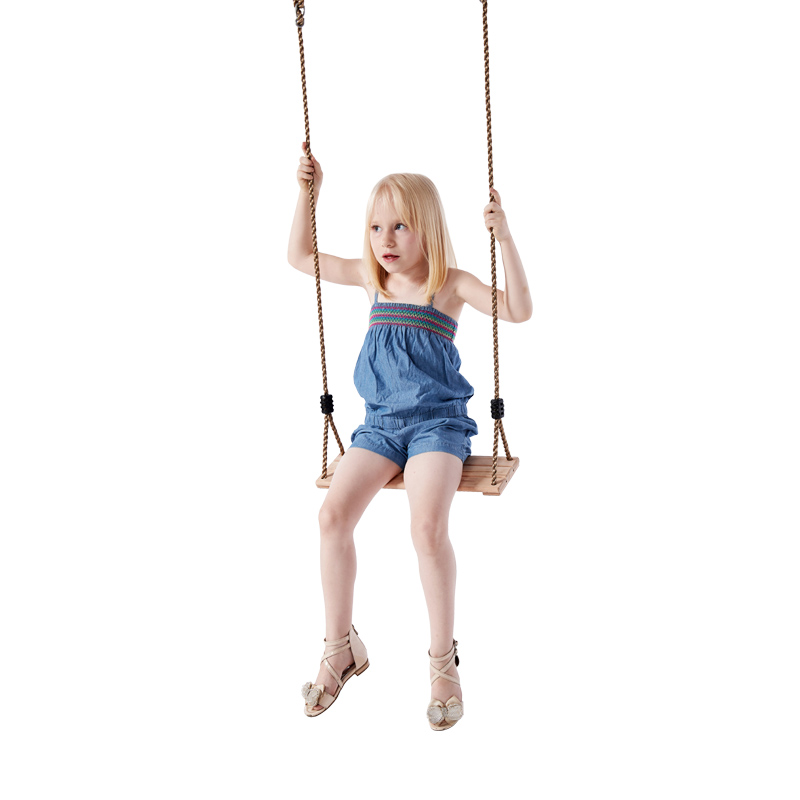
Swinging is one of the most effective and naturally engaging forms of whole-body exercise for young children. The rhythmic motion activates multiple muscle groups and physiological systems simultaneously, making it far more developmentally rich than stationary play equipment.
Core Muscle Strength and Postural Control
Maintaining balance on a swing requires constant micro-adjustments from the core muscles of the abdomen, back, and hips. Children who swing regularly develop stronger trunk stability, which directly supports their posture during seated activities such as writing and reading. Research in pediatric occupational therapy has associated regular swinging with measurable improvements in postural endurance in children aged 3 to 8.
Gross Motor Skills and Coordination
Pumping a swing — learning to shift body weight rhythmically to build momentum — is one of the first self-directed motor challenges children encounter. This action develops:
- Bilateral motor coordination (synchronizing movements on both sides of the body)
- Timing and sequencing of physical actions
- Spatial awareness and body-in-space perception
- Grip strength and shoulder stability from holding the ropes or chains
Cardiovascular Activity and Energy Expenditure
A 20-minute swing session at moderate intensity elevates heart rate comparably to light jogging for young children. For children who spend increasing amounts of time in front of screens, a backyard or playground swing provides an accessible, low-barrier entry point into regular physical activity — contributing to the 60 minutes of daily moderate physical activity recommended by major pediatric health organizations.
Sensory-Motor Development: A Key Benefit Often Overlooked
Among all the developmental advantages of swings, their impact on the vestibular and proprioceptive sensory systems is perhaps the most significant and the least commonly understood by parents.
Vestibular Stimulation
The vestibular system, located in the inner ear, governs balance, spatial orientation, and the sense of motion. It is one of the first sensory systems to develop in infants and continues maturing through early childhood. Swinging provides consistent, rhythmic vestibular input that:
- Strengthens the child's ability to process movement and gravitational change
- Supports attention regulation and the ability to focus in classroom settings
- Calms the nervous system, reducing anxiety and overstimulation responses
- Improves visual tracking and eye-hand coordination by training the eyes to follow moving horizons
Occupational therapists frequently incorporate swinging into sensory integration therapy programs for children with sensory processing difficulties, ADHD, and autism spectrum conditions, precisely because the controlled vestibular input helps regulate arousal levels and behavioral responses.
Proprioceptive Feedback
Proprioception — the body's awareness of its own position and movement in space — is continuously engaged when a child grips swing ropes, adjusts posture mid-arc, and lands or dismounts. This feedback loop builds the child's internal body map, which underpins handwriting ability, sports performance, and physical self-confidence throughout childhood.
Cognitive and Emotional Benefits of Regular Swinging
The benefits of swing seats extend well beyond the physical. The psychological and cognitive advantages of regular outdoor swinging are supported by developmental research and observed consistently in educational settings.
Stress Reduction and Emotional Regulation
Rhythmic, repetitive motion is a natural self-soothing mechanism for humans at all ages, but especially for young children. The back-and-forth motion of swinging activates the parasympathetic nervous system, reducing cortisol (the primary stress hormone) and promoting a calm, focused mental state. Many parents and educators report that children who swing for 10–15 minutes before school or homework time show noticeably improved concentration and emotional readiness.
Social Skills and Cooperative Play
Swings in community playgrounds and kindergartens naturally facilitate social interaction. Children learn turn-taking, patience, verbal communication ("higher!", "my turn next"), and cooperative play through the shared social norms of swing use. Pushing a younger sibling or friend on a swing requires empathy and physical awareness of another person's reactions — valuable early social lessons.
Confidence and Risk Tolerance
Learning to swing independently — from requiring a push to pumping independently — is a meaningful mastery experience for young children. The progressive challenge of swinging higher and faster within a safe, controlled environment builds confidence, encourages risk tolerance within acceptable limits, and supports a child's growing sense of autonomy and capability.
Creativity and Imaginative Play
Unlike screen-based entertainment or structured toys, a swing is an open-ended play platform. Children routinely transform swings into spaceships, horses, boats, and adventure vehicles, fueling rich imaginative play that develops narrative thinking, creativity, and language skills through spontaneous, self-directed storytelling.
Material Choices: Plastic vs. Wood Swings
Two primary material approaches dominate the children's swing market — blow-molded plastic swings and natural wooden swings — each offering distinct advantages suited to different environments, age groups, and installation preferences.
| Feature | Blow-Molded Plastic Swing | Natural Wood Swing |
|---|---|---|
| Construction Method | Blow-molding (impact-resistant) or injection-molding (smooth finish) | Carbonized crack-resistant wood board |
| Suspension System | Anti-aging PE rope or rust-resistant steel chain | Adjustable PE rope (1.2–2 m height range) |
| Weight | Lightweight — easy to install and relocate | Moderate — natural feel and stability |
| Weather Resistance | Excellent — UV-stable, non-absorbent | Good — carbonizing process reduces moisture absorption and cracking |
| Eco-Friendliness | Eco-friendly material options available | Natural renewable material |
| Best Suited For | Kindergartens, community parks, high-use environments | Home gardens, tree installation, nature-themed play spaces |
| Safety Certification | EN71 / ASTM | EN71 / ASTM |
Blow-Molded Plastic Swings
Blow-molding creates a hollow, thick-walled seat with outstanding impact resistance — essential for the rough-and-tumble use patterns of young children in shared play environments. The seamless outer surface eliminates sharp edges, and the inherent flexibility of the plastic absorbs impact without cracking. Injection-molded variants offer a smoother, glossier finish with tighter dimensional tolerances for components that require precise ergonomic shaping, such as bucket-style infant seats with leg holes and back support.
Natural Wood Swings with Carbonized Treatment
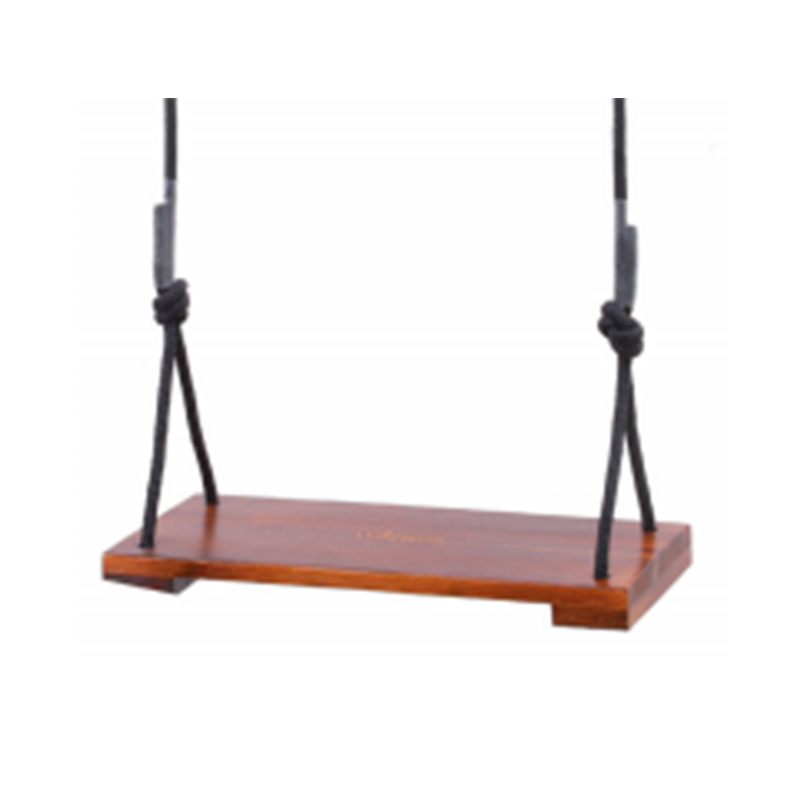
Wooden swings appeal to parents seeking a natural aesthetic and eco-conscious material choice. The key technological enhancement is carbonization — a controlled heat treatment that chars the surface layer of the wood, dramatically reducing moisture absorption, cracking, and biological degradation. Carbonized wood is harder, more dimensionally stable, and more resistant to mold and insect damage than untreated wood, making it a genuinely practical choice for year-round outdoor use.
The adjustable PE rope system — spanning 1.2 to 2 meters in height — allows the same swing seat to grow with the child and to be adapted to different tree branch heights or frame configurations without replacing any hardware.
Durability and Weather Resistance: Long-Term Reliability
One of the most practical benefits of modern swing seats is their engineered resistance to environmental degradation. A swing installed in a garden or playground is exposed to UV radiation, rain, humidity, temperature extremes, and sustained mechanical load — all simultaneously. The material and hardware choices in quality swing products are designed to handle these conditions over a multi-year lifespan.
Anti-Aging PE Rope
Polyethylene (PE) rope used in quality swing products is formulated with UV stabilizers and antioxidants that slow the chain-scission degradation process caused by prolonged sun exposure. Unlike standard nylon or natural fiber ropes, anti-aging PE rope maintains its tensile strength, flexibility, and surface integrity after years of outdoor use. The material is also non-absorbent, preventing the waterlogging, mold growth, and rotting that compromise untreated rope over time.
Rust-Resistant Steel Chains
For chain-suspended swing seats, rust resistance is a critical safety parameter. Galvanized or stainless steel chains with protective polymer coatings resist corrosion even in coastal salt-air environments. Chain links should be inspected for elongation (a sign of metal fatigue) and any plastic coating for cracks that allow moisture ingress. Quality rust-resistant chains maintain their rated load capacity over 5 or more years of outdoor exposure without requiring periodic refinishing.
Lightweight Yet High Load Capacity
Blow-molded plastic seats achieve an excellent strength-to-weight ratio — their hollow construction keeps the seat light for easy handling by children and caregivers, while the structural geometry of the molded form distributes load efficiently across the seat surface. This combination of low weight and high load capacity makes plastic swing seats practical for installation by a single adult without specialized tools or equipment.
Safety Standards and Certifications: Why They Matter
Swing seats certified to EN71 (European toy safety standard) and ASTM F1148 / ASTM F2373 (American consumer product safety standards for home and public playground equipment) have been independently tested against a comprehensive set of safety criteria. Understanding what these standards require helps parents and buyers make informed decisions.
What EN71 and ASTM Testing Covers
- Mechanical and physical properties: Tensile strength of ropes and chains, load-bearing capacity of the seat, resistance to deformation under dynamic swinging loads
- Entrapment hazards: Openings in the seat and suspension system are evaluated for head, neck, and limb entrapment risks using standardized test probes
- Sharp edges and protrusions: All accessible surfaces are checked for edges or points that could cause cuts or punctures
- Chemical safety: Materials are tested for heavy metals, phthalates, and other restricted substances to ensure they are safe for contact with children's skin
- Fall zone requirements: Standards define minimum safe fall zones around swings to guide installation, typically extending 2× the height of the swing pivot point in both the forward and backward direction
- Fatigue and durability: Products undergo accelerated cycling tests simulating years of use to verify that hardware connections, welds, and attachment points do not fail prematurely
For buyers sourcing swings for kindergartens, schools, or community playgrounds, these certifications are typically mandatory for insurance compliance and local authority approval. For home use, they provide evidence-based assurance that the product meets independently verified safety requirements — not just manufacturer claims.
Installation Flexibility: Homes, Kindergartens, and Community Spaces
One of the practical benefits of modern swing seats is their adaptability across very different installation environments. The same seat design can serve a backyard tree, a dedicated garden frame, a kindergarten play area, or a community park — adapting through the suspension system and mounting hardware rather than requiring different seat designs for each context.
Tree Installation
Adjustable PE rope systems spanning 1.2 to 2 meters allow swing seats to be hung from tree branches at varying heights, accommodating different tree structures and child age groups. Tree-hung swings have a natural, organic character that many families prefer for home garden environments. Key installation requirements include selecting a branch with a minimum diameter of 20 cm, using tree straps rather than ropes that could girdle the branch over time, and confirming branch health with visual and tap-sound inspection before installation.
Dedicated Swing Frames
For gardens without suitable trees, standalone A-frame or crossbar structures accept swing seats directly. Frame-mounted installations have the advantage of defined, predictable fall zones and are easier to anchor securely to the ground than tree installations. They are the preferred option for kindergartens and schools, where formal safety compliance documentation is required.
Community Playground Integration
Swing seats designed to EN71 and ASTM standards are compatible with standard playground swing beam systems using universal S-hooks, swivel connectors, or bearing hangers. This compatibility simplifies procurement for local authorities and housing developments, as certified swing seats can be integrated into existing multi-bay swing structures without specialized fabrication.
Benefits by User Group: Who Gains the Most?
The benefits of swing seats vary by age group and context. The table below summarizes which benefits are most relevant for different users and settings:
| User Group | Primary Benefits | Recommended Swing Type |
|---|---|---|
| Infants (6–24 months) | Vestibular stimulation, sensory development, parent-child bonding | Full-bucket plastic swing with leg holes and back support |
| Toddlers (2–4 years) | Balance development, gross motor skills, sensory regulation | Half-bucket or belt swing with side supports |
| Young Children (4–8 years) | Independent pumping skills, social play, confidence, physical fitness | Belt swing (plastic or wood seat) |
| Kindergartens / Schools | Group play facilitation, structured physical activity, sensory therapy | EN71/ASTM-certified plastic swings on frame structures |
| Community Parks | Inclusive outdoor recreation, multi-age physical activity | Multi-seat frame with mixed seat types for different ages |
| Home Gardens (Older Children) | Outdoor leisure, creative play, stress relief | Natural wood swing with adjustable rope |
Eco-Friendly Materials and Responsible Manufacturing
Modern families and institutions increasingly evaluate children's products not just on performance but on their environmental impact. Swing seats made with eco-friendly plastic materials and renewable natural wood address this concern while maintaining full safety compliance.
Eco-conscious plastic swing seats use polymers formulated without harmful additives such as lead-based stabilizers or restricted phthalate plasticizers — both of which are screened in EN71 chemical safety testing. This ensures the product is safe not only structurally but also in terms of the chemical environment children are in contact with during use.
Natural wooden swings offer the inherent benefit of using a renewable, biodegradable material. The carbonization heat treatment that enhances durability uses no chemical preservatives, relying instead on physical modification of the wood surface — a process with minimal environmental impact compared to traditional pressure-impregnated wood treatments.
For buyers prioritizing sustainability alongside safety, the combination of eco-friendly materials, chemical-compliant production, and durable construction that extends product lifespan (reducing replacement frequency and associated waste) represents a genuinely responsible product choice.
Maintenance Tips to Maximize Swing Seat Longevity
Even the most durable swing seat benefits from basic periodic maintenance to ensure continued safety and extend its service life. The following routine checks are recommended:
- Monthly visual inspection: Check rope and chain for fraying, kinking, or corrosion; inspect the seat for cracks, deformation, or UV-induced brittleness; verify that all connection hardware (S-hooks, shackles, swivel joints) is intact and shows no signs of elongation or opening.
- Rope tension check: Adjustable PE ropes should be re-tensioned periodically as they may stretch slightly with use. Confirm that both sides of the seat are level to prevent uneven load distribution and twisting during use.
- Hardware lubrication: Metal swivel hangers and chain links benefit from a light application of waterproof lubricant twice a year to prevent corrosion and reduce friction-induced wear at pivot points.
- Wood surface care: Carbonized wood swings should be wiped down and allowed to dry completely after prolonged wet weather. Applying a light coat of teak oil or outdoor wood conditioner once a year maintains surface integrity and appearance.
- Winter storage consideration: In climates with harsh winters, storing swing seats indoors during non-use periods significantly extends the lifespan of both the seat and suspension system by eliminating months of UV and freeze-thaw cycling.
Ningbo Yongxu: Quality-Assured Children's Swing Manufacturing
Ningbo Yongxu Industrial Product Manufacturing Co., Ltd. is a professional Children Swing Seats and Swing Chairs manufacturer and custom factory based in China. The company's production capabilities span injection-molded plastic products, metal hardware components, and sprayed surface finishes — covering the complete bill of materials for a modern swing seat from seat body through to metal suspension hardware.
What distinguishes the company's quality assurance approach is its fully equipped measurement room, which includes a coordinate measuring machine (CMM) for three-dimensional dimensional verification, a tensile testing machine for rope and chain load capacity confirmation, a digital optical projector for precision geometry inspection, and a salt spray test chamber for accelerated corrosion resistance evaluation of metal hardware. This integrated inspection capability covers injection-molded, metal, and sprayed products at every stage of the production process.
A particularly notable operational capability is the company's urgent inspection response time of under 30 minutes — ensuring that quality holds and production line decisions can be made rapidly without the delays that often compromise delivery schedules in high-volume manufacturing. For buyers sourcing certified swing products to EN71 and ASTM standards at scale, this level of quality infrastructure provides the traceability and process control documentation that institutional and retail customers require.