 Eng
Eng
 Español
 عربى
عربى Deutsch
 русский
 Français
Content
- 1 Sensory Integration and Vestibular Development
- 2 Physical Development: Core Strength, Balance, and Coordination
- 3 Social Benefits: Cooperative Play and Shared Experience
- 4 Confidence Building and Emotional Development
- 5 Relaxation and Stress Relief for Adults
- 6 Design Versatility: Configurations for Every Space and Need
- 7 Safety Features That Support Confident Play
- 8 Benefits for Therapeutic and Special Needs Applications
- 9 Long-Term Value: Durability, Portability, and Return on Investment
- 10 Quality Assurance: Why Manufacturing Standards Matter for Swing Safety
The Nest & Saucer Swing offers a uniquely broad set of benefits that set it apart from conventional playground swings: it supports sensory development, builds core strength and balance, encourages social play, accommodates multiple users simultaneously, and provides a safe, confidence-building outdoor experience for children of nearly all ages and abilities. Beyond child development, it also delivers comfort and relaxation for adults, making it a genuine multi-generational outdoor leisure product rather than a single-purpose children's toy.
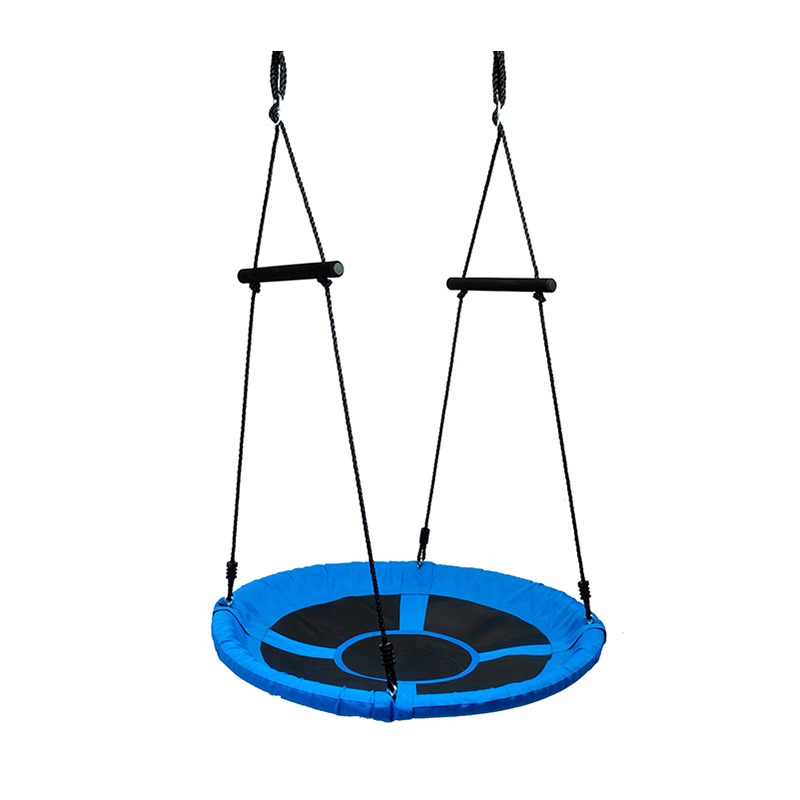
Unlike a traditional flat-seat swing that moves only forward and backward, the wide circular or square platform of a Nest or Saucer Swing allows multi-directional movement — swinging, spinning, and rocking — which engages the body and senses in ways that conventional swings simply cannot match. This combination of physical, developmental, and social benefits explains why Nest and Saucer Swings have become one of the most popular outdoor play additions for homes, schools, and public playgrounds worldwide.
Sensory Integration and Vestibular Development
One of the most scientifically documented benefits of Nest and Saucer Swings is their powerful positive impact on sensory processing, particularly vestibular development. The vestibular system — located in the inner ear — governs the body's sense of balance, spatial orientation, and motion. It is one of the foundational sensory systems that children must develop during their early years, and swinging is one of the most effective natural ways to stimulate and strengthen it.
Why Multi-Directional Swinging Outperforms Traditional Swings
A conventional belt swing produces movement in a single arc — forward and back. The Nest and Saucer Swing, by contrast, allows movement in all planes simultaneously: linear forward-back motion, side-to-side rotation, spinning, and combined circular arcs. Each plane of movement activates different components of the vestibular system, producing richer and more comprehensive sensory input with every session.
Occupational therapists who specialize in sensory integration therapy have widely incorporated nest swings into their clinical toolkits. Research in sensory processing development indicates that regular vestibular stimulation through swinging can improve attention span, reduce sensory-seeking behaviors, and support emotional regulation in children — benefits that extend well beyond the playground into academic and social performance. Children with sensory processing differences, including those on the autism spectrum, frequently show measurable improvements in focus and calmness following structured swing sessions.
Proprioceptive Input and Body Awareness
In addition to vestibular benefits, the Nest Swing provides rich proprioceptive input — feedback from muscles and joints about the body's position and movement in space. When a child reclines, adjusts their weight, grips the edges, or shifts position to control the swing's motion, every adjustment sends proprioceptive signals that build body awareness and spatial reasoning. These foundational skills support coordination, handwriting, posture, and many other physical and academic competencies that develop through early childhood.
Physical Development: Core Strength, Balance, and Coordination
The physical demands of the Nest and Saucer Swing differ fundamentally from those of a traditional swing. Instead of simply holding a chain and pumping legs, a child using a nest swing must continuously engage their core muscles to maintain position and control movement across multiple axes. This active stabilization is an effective and enjoyable form of functional physical training.
Core Muscle Activation
Maintaining a stable position on a wide, freely moving platform requires constant micro-adjustments from the deep stabilizing muscles of the trunk — the same muscles targeted in physiotherapy and athletic core conditioning programs. Unlike structured exercise, children engage these muscles unconsciously while focused on play — achieving effective core strengthening without any awareness that they are "exercising." For younger children whose core strength is still developing, this unstructured engagement is particularly valuable.
Balance and Postural Control
The dynamic, unpredictable motion of a nest swing — especially when shared with other children — challenges the postural control systems in ways that static or single-axis movement cannot. Children who regularly use nest swings often demonstrate improved balance scores in developmental assessments. The ability to maintain balance on an unstable surface, to recover from unexpected perturbations, and to predict and anticipate motion consequences are all skills that transfer directly to sports, cycling, gymnastics, and everyday physical activity.
Upper Body and Grip Strength
Gripping the rope edges, pulling oneself upright, and controlling the swing's motion through arm and shoulder muscles all contribute to upper body strength development. For children in early and middle childhood — when grip strength and upper body coordination are actively developing — the varied grip positions required by a nest swing provide excellent progressive training. PE specialists note that grip and upper body strength correlate with academic outcomes including handwriting quality, making this physical benefit also academically relevant.
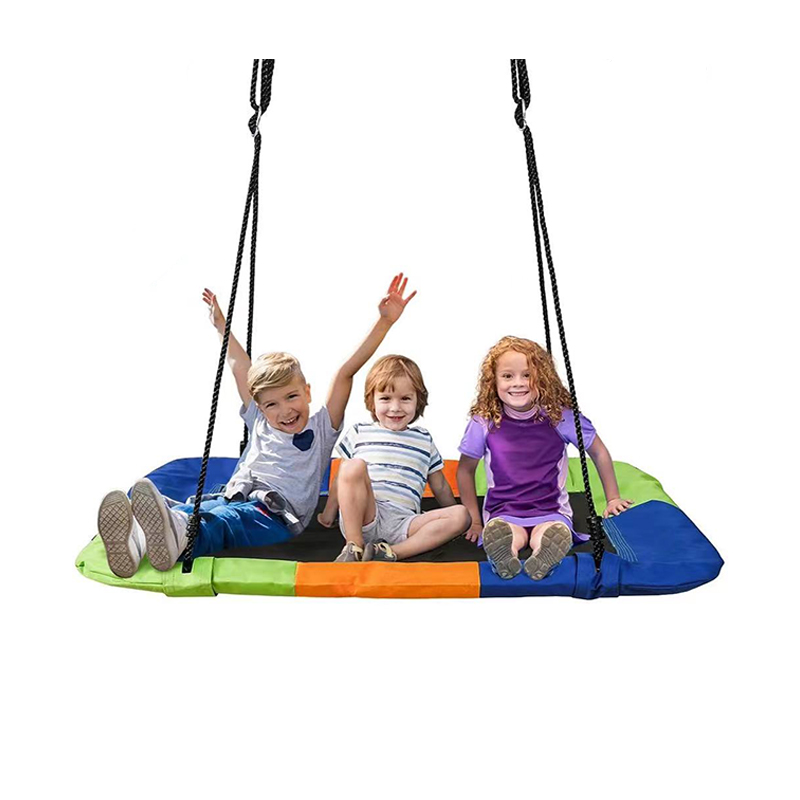
The oversized platform of the Nest and Saucer Swing is one of its most socially significant design features. Where a traditional swing carries one child in isolation, a nest swing accommodates two to four children simultaneously — or one child and an adult — creating a shared physical experience that naturally generates cooperation, communication, and social bonding.
Cooperation and Negotiation Skills
Multiple children on a nest swing quickly discover that their individual movements affect everyone on the platform. Managing those effects — deciding together how fast to spin, who pushes, how to balance weight — requires genuine negotiation and cooperation. These micro-social interactions, repeated across many play sessions, build the collaborative skills that underpin healthy peer relationships. Playground research consistently identifies shared equipment as a catalyst for prosocial behavior, and the nest swing's communal nature makes it particularly effective in this role.
Inclusive Play for Mixed Ages and Abilities
The reclined, low-to-ground position of a nest swing makes it accessible to a much wider range of children than conventional swings. Toddlers who lack the strength or balance to use a belt swing safely can lie comfortably in a nest swing with gentle adult supervision. Older children and adults can use it simultaneously. Children with physical differences, mobility challenges, or sensory processing needs often find the nest swing's supportive, enveloping design more accessible and less anxiety-provoking than vertical-hanging conventional swings. This inclusivity makes the nest swing a genuinely accessible piece of play equipment rather than one designed only for typically developing, school-aged children.
Parent-Child Bonding
The nest swing's capacity and comfort allows parents and caregivers to sit or recline with young children, transforming the swing from a child-only apparatus into a shared relaxation and bonding space. The gentle rocking and swinging motion is soothing for adults as well as children — creating a shared sensory experience that supports emotional closeness in a natural outdoor setting. Many parents report that the nest swing becomes one of the most-used outdoor items in the garden precisely because it enables genuine shared time rather than adult supervision from a distance.
Confidence Building and Emotional Development
The Nest and Saucer Swing functions as what child development specialists sometimes call a "courage training ground" — a safe environment in which children can voluntarily expose themselves to controlled physical challenges that build confidence and emotional resilience.
Graduated Risk and Self-Regulation
Children naturally calibrate the intensity of their swinging experience — starting gently, then pushing further as confidence grows. This process of self-regulated risk-taking is psychologically important. It teaches children to assess their own limits, to push incrementally beyond their comfort zone, and to experience the satisfaction of mastering a challenge through persistence. Developmental psychologists have linked access to controlled physical risk in play — including swinging at height and speed — to the development of resilience, frustration tolerance, and self-efficacy in other domains of life.
Emotional Regulation Through Rhythmic Motion
The repetitive, rhythmic motion of swinging has a well-documented calming effect on the nervous system. Rocking and swinging activate the parasympathetic nervous system, reducing cortisol levels and promoting a state of relaxed alertness. Children who are overstimulated, anxious, or emotionally dysregulated often instinctively seek out swinging as a self-regulation strategy. The enveloping, nest-like design of this particular swing type enhances the calming effect by providing a sense of containment and security — similar to the comfort provided by a cradle for infants — making it especially beneficial for children who struggle with emotional regulation.
Achievement Milestones Through Play
Each new height reached, each spin mastered, and each balance challenge overcome represents a measurable achievement for a child. These small but meaningful milestones — learning to pump legs to maintain momentum, mastering the balance needed to sit upright while spinning, coordinating with a partner to swing in unison — build a sense of physical competence that contributes to overall self-esteem and motivation.
Relaxation and Stress Relief for Adults
The benefits of the Nest and Saucer Swing are not limited to children. The generous platform dimensions — with circular models ranging from 60 cm to 120 cm in diameter and square models offering 120×80 cm and 150×80 cm platforms — provide enough space for adults to recline comfortably. The load capacity of high-quality nest swings reaches 300 kg, ensuring full structural safety for adult use.
For adults, the nest swing offers:
- A passive relaxation space — lying back in a gently swaying nest swing with a view of the sky is an effective low-stimulation rest that many adults find genuinely restorative
- Stress and anxiety reduction — the same neurological calming mechanisms that benefit children apply equally to adults; rhythmic swinging reduces physiological stress markers including heart rate and cortisol
- Outdoor mindfulness — the multisensory experience of lying in a garden swing — feeling the motion, hearing ambient sounds, seeing open sky — naturally supports a present-moment awareness that has proven mental health benefits
- A reading and leisure space — the stable, supportive platform is comfortable enough for extended reading, listening to music, or simply resting outdoors on warm days
This multi-generational utility is a significant practical benefit that justifies the investment in a quality nest swing. Rather than serving only a few years of a child's development before being outgrown, a well-built nest swing becomes a permanent fixture of outdoor family life used by everyone in the household.
Design Versatility: Configurations for Every Space and Need
One of the practical advantages of the Nest and Saucer Swing category is the breadth of design options available, allowing homeowners and facility managers to select configurations precisely matched to their space, user profile, and aesthetic preferences.
| Design Type | Typical Dimensions | Seating Capacity | Best For |
|---|---|---|---|
| Circular Oxford Fabric | Ø60–120 cm | 1–3 users | Home gardens, younger children, comfort-focused use |
| Circular PP Mesh | Ø60–120 cm | 1–3 users | Hot climates; breathable surface for warm-weather play |
| Woven PE Rope (4-segment) | Standard circular | 1–2 users | Portable setups; compact storage; travel or camping |
| Woven PE Rope (8-segment) | Larger circular | 2–3 users | Playgrounds; adventure parks; group use |
| Square Model (Standard) | 120×80 cm | 2 users | Side-by-side child-adult play; sibling pairs |
| Square Model (Large) | 150×80 cm | 2–3 users | Larger families; commercial play spaces |
Frame and Material Benefits
The structural frame of quality nest swings uses galvanized steel construction, providing long-term rust resistance in outdoor environments without requiring regular repainting or protective treatment. Galvanized steel frames used in nest swings typically maintain their structural integrity for 10–15 years or more in standard garden conditions, making the swing a long-term garden investment rather than a disposable seasonal item.
The seating surface materials each offer specific advantages:
- UV-resistant Oxford fabric — resists sun bleaching and fabric degradation; maintains color and structural integrity through multiple seasons; provides a smooth, comfortable surface suitable for all ages including toddlers
- Breathable PP mesh — allows air circulation, preventing the surface from becoming uncomfortably hot in direct sunlight; self-draining after rain, allowing use to resume quickly after wet weather
- Woven PE rope — provides excellent tactile grip and texture; highly durable and weather-resistant; the open weave construction is both visually appealing and allows full drainage
High-strength straps and rust-proof connectors used in premium nest swing assembly ensure that the structural performance of the frame and platform is maintained over years of outdoor use and repeated load cycling through normal family play.
Safety Features That Support Confident Play
The safety profile of the Nest and Saucer Swing is one of its most compelling benefits for parents and facility managers. Several structural and design features work together to create a genuinely safe play environment that supports confident, unsupervised play rather than requiring constant adult intervention.
Low Center of Gravity and Enclosed Platform
The wide, flat, or gently concave platform of a nest swing distributes body weight across a large surface area and keeps the child's center of gravity low. This is significantly safer than the narrow seat of a conventional swing, which requires constant active balance and allows a child to swing off the seat much more easily. The nest-like rim of circular models additionally provides a natural handhold and a physical boundary that prevents rolling off the edge during vigorous motion.
High Load Capacity With Safety Margin
Quality nest swings with 300 kg load capacity provide a substantial safety margin beyond the actual loads experienced in family use. Engineering standards for playground equipment typically require a safety factor of at least 3–5× the intended working load, meaning a 300 kg rated swing is structurally designed and tested to handle forces far exceeding that figure. This overhead provides confidence that the structure will not fail under the dynamic and unpredictable loads of energetic child play.
Reclining Position Reduces Fall Impact Risk
When children use a nest swing in a reclined or semi-reclined position — which is the most natural position for younger users — the risk of a high-energy fall is considerably lower than with upright conventional swings. The lower hanging height relative to frame size, combined with the enclosing platform shape, means that even an unplanned exit from the swing involves a much shorter fall distance and a less abrupt impact than falling from a conventional swing seat.
Accessible for Toddlers and Younger Children
Standard belt swings are not safely usable by children much younger than 3–4 years without constant physical support, because they require active grip and postural strength. A nest swing, by contrast, can be safely enjoyed by children as young as 12–18 months when placed in the reclined position with gentle adult-supervised motion — dramatically broadening the age range that benefits from the equipment without requiring dedicated infant swing hardware.
Benefits for Therapeutic and Special Needs Applications
The Nest and Saucer Swing has gained significant traction in therapeutic and special needs contexts, where its combination of sensory richness, physical support, and gentle motion offers benefits that purpose-built therapeutic equipment provides at far greater cost and in less naturally motivating formats.
Specific therapeutic applications and their associated benefits include:
- Sensory Processing Disorder (SPD) — the multi-directional vestibular input from a nest swing is a standard sensory integration therapy intervention; many occupational therapists recommend home nest swings as a cost-effective complement to clinical therapy sessions
- Autism Spectrum Disorder (ASD) — many autistic children respond very positively to the predictable, controllable sensory experience of swinging; the enclosed, nest-like form factor provides a sense of safety and containment that open belt swings cannot; swinging has been associated with reduced anxiety and improved focus in autistic individuals
- ADHD — the calming neurological effects of rhythmic swinging motion can help children with attention and hyperactivity challenges achieve a state of regulated alertness; research has found that brief periods of vestibular stimulation before tasks requiring focused attention can improve subsequent concentration in children with ADHD
- Anxiety and emotional dysregulation — the proprioceptive and vestibular stimulation from swinging activates the parasympathetic nervous system, creating a physiological calming response that can interrupt anxiety cycles and help children return to regulated emotional states
- Physical rehabilitation — the stable, supportive platform enables children with limited mobility or postural challenges to experience swinging safely; the low-effort entry (no need to climb or mount a narrow seat) makes it accessible for children whose mobility is limited by physical conditions
Long-Term Value: Durability, Portability, and Return on Investment
Beyond the developmental and social benefits, the practical long-term value of a quality Nest and Saucer Swing compares very favorably against other outdoor play investments. The key factors contributing to long-term value are durability, age range coverage, portability options, and low maintenance requirements.
Broad Age Range Coverage
Unlike slides, climbing frames, or conventional swings that have relatively narrow age windows of peak use, the Nest Swing is usable from approximately 18 months through adulthood. This breadth of usable life means the purchase serves a family continuously for a decade or more, rather than being outgrown after a few years. The same swing that a toddler uses lying flat with parental support becomes the centrepiece of middle childhood group play and later a relaxation hammock for teenagers and adults.
Portable Options for Flexible Deployment
Woven PE rope versions designed in modular 4-segment or 8-segment portable configurations can be disassembled for storage, transport, or relocation. This portability is a significant practical benefit for families who move frequently, for schools and nurseries that need flexible equipment arrangements, or for outdoor event organizers who want to deploy play equipment temporarily. The portability also allows the swing to be moved indoors during winter months, extending its usable life by protecting it from prolonged cold and wet exposure.
Low Maintenance Requirements
Galvanized steel frames, UV-stable fabric, and weather-resistant PE rope require minimal ongoing maintenance compared to wooden play equipment that needs regular repainting, treating, or replacement of rotted sections. A quality nest swing typically requires nothing more than periodic hardware inspection and tightening, occasional cleaning of the fabric or rope surface, and replacement of consumable components such as connecting hardware if wear is observed. This low maintenance burden makes the nest swing a genuinely passive investment rather than a recurring drain on time and resources.
Quality Assurance: Why Manufacturing Standards Matter for Swing Safety
The benefits described throughout this article are only fully realized when the nest or saucer swing is manufactured to consistently high quality standards. Structural failures, premature material degradation, and hardware fatigue in low-quality swings not only eliminate the benefits but introduce genuine safety hazards — making the manufacturer's quality control processes a critical factor in the purchase decision.
Ningbo Yongxu Industrial Product Manufacturing Co., Ltd. is a professional China Children Nest Swing & Saucer Swing Manufacturer and Custom Children Nest Swing & Saucer Swing Factory, applying comprehensive quality inspection throughout the entire production process for injection molded products, metal components, and sprayed surface products. The company's measurement room is equipped with advanced inspection instruments including a coordinate measuring machine (CMM), tensile testing machine, digital optical projector, and salt spray test chamber — providing the full analytical capability needed to verify dimensional accuracy, load-bearing performance, and long-term corrosion resistance of every component that goes into the finished swing. Critically, the response time for urgent quality inspections is less than 30 minutes — ensuring that no quality concern can persist undetected through production without rapid investigation and resolution.
For parents and buyers, the practical implication is clear: a nest swing backed by this level of manufacturing quality control delivers not just the developmental and recreational benefits described in this guide, but the confidence that those benefits will be delivered safely and consistently throughout the full service life of the product. The combination of thoughtful design, high-specification materials, and rigorous production quality is what separates a Nest and Saucer Swing that genuinely transforms outdoor family life from one that simply occupies space in the garden.