 Eng
Eng
 Español
 عربى
عربى Deutsch
 русский
 Français
Content
- 1 What Makes Up a Children's Climbing Rope
- 2 Common Types of Climbing Rope Configurations
- 3 Developmental Benefits of Climbing Rope Play
- 4 Safety Standards and Load Capacity Considerations
- 5 Age Appropriateness and Height Considerations
- 6 Maintenance Practices That Support Long-Term Safety
- 7 Where Children's Climbing Ropes Are Commonly Installed
- 8 Who Should Prioritize Quality When Choosing a Climbing Rope
A children's climbing rope is a play equipment component, typically made from durable braided or twisted fiber, designed to be mounted vertically or at an angle on a playground structure so children can practice climbing, gripping, and balancing skills in a safe, controlled way. These ropes are engineered specifically for outdoor and indoor play settings, differing from utility or industrial rope in their softer hand feel, secure anchoring hardware, and construction standards aimed at supporting a child's body weight safely during repeated climbing sessions. Child development research commonly referenced in early physical education notes that climbing activities support gross motor skill development, upper body strength, and spatial awareness, making climbing ropes a practical addition to both home play areas and public playground installations.
What Makes Up a Children's Climbing Rope
A properly constructed climbing rope for children combines specific material choices and hardware components designed to balance durability, grip comfort, and safety across repeated outdoor use.
Core Construction Elements
- Braided or twisted synthetic fiber core that resists fraying and stretching under repeated load
- A textured but comfortable outer surface that provides secure grip without causing rope burn during use
- Reinforced end fittings and anchor points rated to support dynamic climbing loads rather than static weight alone
A well-made Children Climbing Rope typically uses weather-resistant synthetic materials such as polypropylene or polyester blends, since these fibers hold up better against sun exposure and moisture than natural fiber ropes when installed outdoors on a play structure.
Common Types of Climbing Rope Configurations
Climbing ropes for children come in several configurations, each offering a different level of challenge and supporting different physical skills as a child progresses in ability and confidence.
Configuration Comparison
| Rope Type | Typical Difficulty Level | Skills Supported |
| Single vertical climbing rope | Higher, requires grip strength and coordination | Upper body strength, grip endurance |
| Knotted climbing rope | Moderate, knots provide foot and hand holds | Sequential coordination, balance |
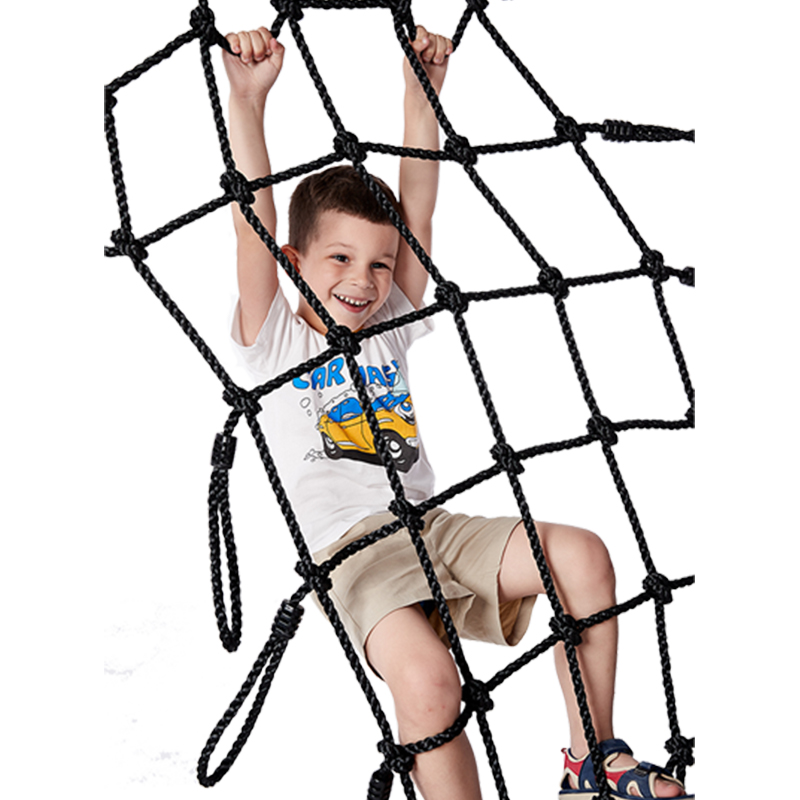
| Angled or net-style rope structure | Lower, more accessible for younger children | Spatial awareness, problem solving |
Knotted ropes are often introduced first for younger or less experienced climbers, since the evenly spaced knots provide natural resting points and hand holds that make the climbing sequence more approachable before progressing to a smooth vertical rope.
Developmental Benefits of Climbing Rope Play
Beyond simple physical activity, climbing ropes support several specific areas of childhood development that structured play equipment is often specifically designed to encourage.
Physical Development Benefits
- Building grip strength and upper body muscle engagement through repeated climbing motion
- Improving balance and core stability as children coordinate hand and foot placement while ascending
- Developing spatial awareness as children judge distance, height, and body positioning during the climb
Beyond the physical benefits, successfully navigating a climbing rope also supports confidence building, since children experience a tangible sense of achievement each time they progress further up a rope or complete a climb they previously found challenging.
Safety Standards and Load Capacity Considerations
Because climbing ropes support active, dynamic body weight rather than simple static loads, understanding the safety specifications behind a quality rope helps parents and playground designers select equipment appropriate for its intended use.
Key Safety Specifications to Check
- Rated dynamic load capacity that accounts for the additional stress of climbing movement, not just stationary hanging weight
- Anchor hardware rated for outdoor exposure and repeated stress cycling over years of use
- Rope diameter appropriate for the target age group's hand size, ensuring a secure, comfortable grip
Playground equipment manufacturers typically design climbing ropes to meet recognized safety standards for outdoor play equipment, and verifying this compliance is an important step before installing any climbing rope accessible to children.
Age Appropriateness and Height Considerations
Selecting the right climbing rope configuration and installation height depends significantly on the target age range of the children who will be using the equipment.
Matching Rope Difficulty to Age Group
Younger children generally benefit from shorter, angled rope structures with additional hand holds, while older children with more developed grip strength and coordination can typically progress to taller, smooth vertical ropes that present a greater physical challenge.
Installation Height and Fall Surface Safety
Regardless of rope type, installation height should always be paired with appropriate impact-absorbing ground surfacing beneath the climbing area, since falls are a normal part of the learning process as children build climbing skill and confidence over time.
Maintenance Practices That Support Long-Term Safety
Like any outdoor play equipment, climbing ropes require periodic inspection and maintenance to ensure they continue performing safely across years of repeated use and weather exposure.
Routine Inspection Points
Checking for fraying along the rope's length, inspecting anchor hardware for corrosion or loosening, and confirming knots remain secure and evenly spaced are all important maintenance tasks that should be performed on a regular schedule, particularly for equipment installed in public playground settings with high daily usage volume.
Where Children's Climbing Ropes Are Commonly Installed
Climbing ropes appear across a range of settings wherever active outdoor or indoor play equipment is designed to support physical development in children.
Common Installation Settings
Public playgrounds, school physical education areas, daycare outdoor play spaces, and residential backyard play structures all commonly incorporate a Children Climbing Rope as part of a broader play equipment layout, often paired with climbing walls, ladders, or net structures to create a varied, engaging physical activity area.
Who Should Prioritize Quality When Choosing a Climbing Rope
Parents setting up home play equipment, school facility managers, and playground designers overseeing public installations should all prioritize verified load ratings and weather-resistant construction when selecting a children's climbing rope, given the equipment's direct role in child safety during active play. Facilities installing equipment for younger or less experienced climbers should particularly consider knotted or angled rope configurations that offer a more gradual introduction to climbing skill development before progressing to more challenging vertical rope designs.