 Eng
Eng
 Español
 عربى
عربى Deutsch
 русский
 Français
Content
- 1 Material Composition and Its Impact on Durability
- 2 Environmental Factors That Accelerate Wear
- 3 Lifespan Benchmarks by Material and Environment
- 4 Safety Certifications and Their Role in Longevity
- 5 Installation Variables That Extend or Reduce Lifespan
- 6 Maintenance Practices That Maximize Service Life
- 7 Signs That Your Swing Chair Needs Replacement
- 8 Maximizing Value: Cost-Per-Year Analysis
A well-constructed outdoor swing chair typically lasts 5 to 15 years, depending on material quality, environmental exposure, and maintenance frequency. Blow-molded plastic swings paired with weatherproof PE ropes and rust-resistant chains can reach the upper end of this range, while untreated wooden models in harsh climates may require replacement after 3 to 5 years. The key to maximizing lifespan lies in selecting UV-stabilized, impact-resistant materials certified to EN71 and ASTM safety standards, combined with a proactive seasonal maintenance routine.
Material Composition and Its Impact on Durability
The lifespan of an outdoor swing chair is fundamentally determined by the materials used in its construction. Different manufacturing processes and raw material grades create significant performance gaps when exposed to continuous outdoor conditions.
Plastic Swing Seats: Blow-Molding vs. Injection-Molding
Plastic swing seats are manufactured using two primary techniques. Blow-molding produces hollow, impact-resistant seats with uniform wall thickness, making them exceptionally durable against sudden forces and temperature-induced expansion. Injection-molding creates solid components with a smoother surface finish, offering superior comfort but slightly lower impact absorption. When paired with anti-aging additives and UV stabilizers, blow-molded plastic seats maintain structural integrity for 8 to 12 years even under direct tropical sun exposure.
Wooden Swing Seats: Carbonization and Crack Resistance
Natural wooden swings rely on carbonization treatment — a controlled heating process that removes moisture and organic compounds susceptible to rot. This treatment increases dimensional stability and reduces cracking by up to 60% compared to untreated timber. However, wood remains vulnerable to moisture cycling. In humid coastal regions, even carbonized wood may develop surface checking within 2 to 4 years without regular sealing. In arid climates, the same wood can last 6 to 8 years before significant degradation appears.
Suspension Components: Ropes and Chains
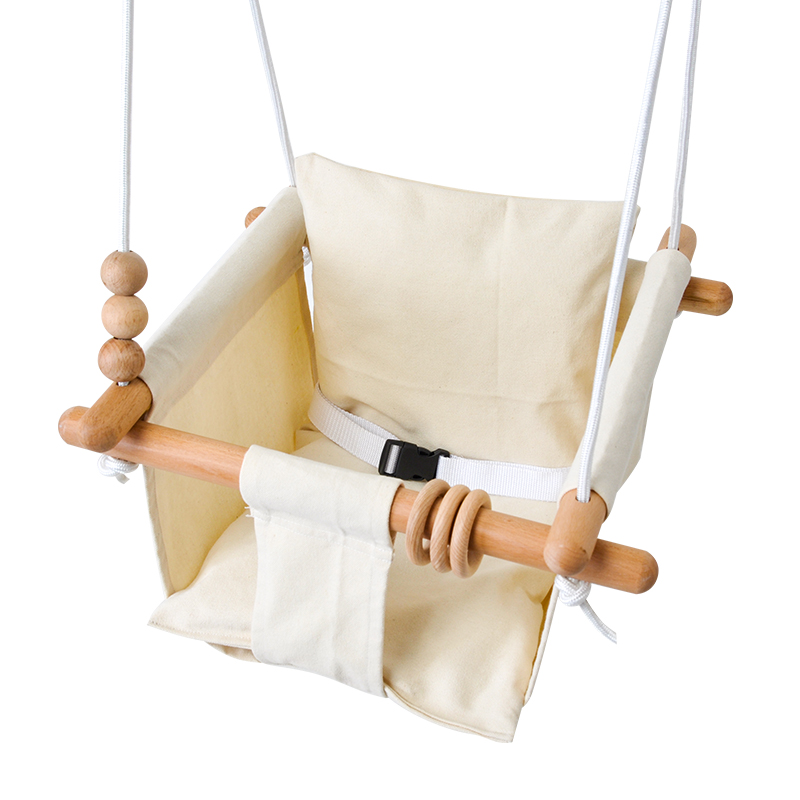
The suspension system is often the first component to fail. Weatherproof PE (polyethylene) ropes resist UV degradation and moisture absorption better than natural fiber alternatives. High-grade PE ropes with braided outer sheaths and core reinforcement maintain 80% of their original tensile strength after 5 years of outdoor exposure. Rust-resistant chains — typically zinc-plated or stainless steel — prevent the link corrosion that compromises load-bearing capacity. Chain systems generally outlast ropes by 2 to 3 years but require periodic lubrication to prevent squeaking and link seizure.
Environmental Factors That Accelerate Wear
Outdoor swing chairs face a relentless combination of environmental stressors. Understanding how each factor contributes to degradation allows owners to implement targeted protective measures.
UV Radiation and Photodegradation
Ultraviolet radiation is the single most destructive force for outdoor play equipment. UV photons break polymer chains in plastic seats and ropes, causing embrittlement, color fading, and surface chalking. In regions with annual UV indexes above 8 for extended periods, unprotected plastic can lose 40% of its impact resistance within 3 years. UV-stabilized formulations containing hindered amine light stabilizers (HALS) and carbon black pigments can extend plastic lifespan by 50 to 70% compared to non-stabilized alternatives.
Moisture, Humidity, and Freeze-Thaw Cycles
Water penetration initiates multiple failure modes. In wooden components, moisture absorption swells fibers; subsequent drying causes shrinkage cracks that deepen with each cycle. In metal chains, trapped moisture accelerates galvanic corrosion at contact points. Freeze-thaw environments are particularly severe — water expanding in microcracks can split wooden seats and degrade rope fibers from the inside out. Swing chairs in climates with more than 30 annual freeze-thaw cycles typically experience 25% shorter lifespans than those in temperate zones.
Salt Air and Industrial Pollution
Coastal installations within 5 kilometers of the ocean face accelerated corrosion from airborne salt particles. Salt deposits on chains and metal hardware create electrolytic cells that pit and weaken structural connections. Similarly, industrial atmospheres containing sulfur dioxide or nitrogen oxides acidify surface moisture, attacking both metal and certain plastic additives. In these environments, even rust-resistant chains may show significant surface oxidation within 18 to 24 months without regular washing.
Lifespan Benchmarks by Material and Environment
The following benchmarks represent realistic lifespan expectations based on field observations and accelerated aging tests. These figures assume moderate use (1 to 2 hours daily) and basic maintenance (seasonal inspection and cleaning).
| Material Type | Mild Climate | Moderate Climate | Harsh Climate |
|---|---|---|---|
| Blow-Molded Plastic (UV-Stabilized) | 12 - 15 years | 8 - 12 years | 5 - 8 years |
| Injection-Molded Plastic | 10 - 13 years | 6 - 10 years | 4 - 6 years |
| Carbonized Wood (Sealed Annually) | 8 - 10 years | 5 - 8 years | 3 - 5 years |
| Untreated Natural Wood | 4 - 6 years | 2 - 4 years | 1 - 2 years |
| PE Ropes (Weatherproof Grade) | 8 - 10 years | 5 - 7 years | 3 - 5 years |
| Rust-Resistant Chains | 10 - 15 years | 7 - 10 years | 4 - 7 years |
Mild climates are defined as temperate zones with moderate humidity, minimal freeze-thaw cycling, and low UV exposure. Moderate climates include areas with seasonal extremes and average UV indexes. Harsh climates encompass coastal regions, tropical high-UV zones, and areas with severe winters or industrial pollution.
Safety Certifications and Their Role in Longevity
Certifications such as EN71 (European toy safety standard) and ASTM F1487 (American standard for playground equipment) do more than verify immediate safety — they establish minimum material and construction benchmarks that directly influence long-term durability. Products meeting these standards must pass rigorous tests including impact resistance, load capacity verification, and accelerated aging simulations.
Key Certification Requirements Affecting Lifespan
- Load testing: Seats and suspension must support minimum 150 kg static load without deformation, ensuring the structure does not fatigue prematurely under normal child use
- Impact resistance: Blow-molded seats must withstand repeated drops from specified heights without cracking, confirming material toughness over years of dynamic loading
- Chemical safety: Restrictions on heavy metals and phthalates prevent additive degradation that could otherwise accelerate material breakdown
- Entrapment prevention: Rope and chain configurations must eliminate pinch points that could cause localized wear concentrations
Swing chairs lacking these certifications may use inferior resins or thinner wall sections that appear identical initially but degrade 2 to 3 times faster under identical environmental conditions. The certification mark is therefore a reliable proxy for expected service life.
Installation Variables That Extend or Reduce Lifespan
How a swing chair is installed significantly affects its longevity. Poor installation creates stress concentrations and exposure patterns that accelerate localized failure.
Tree-Mounted vs. Frame-Mounted Installations
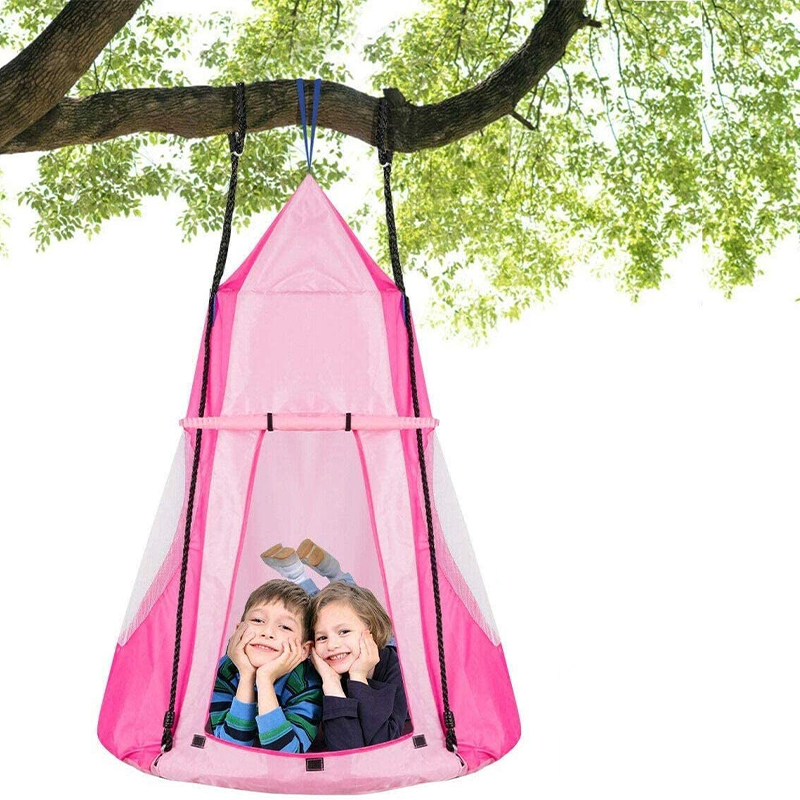
Tree-mounted installations using adjustable PE ropes (typically adjustable from 1.2 to 2 meters) offer natural shock absorption from branch flex. However, bark moisture and sap can degrade rope fibers in contact points. Rope sleeves or tree protectors extend rope life by 30 to 40% in these setups. Frame-mounted installations provide consistent geometry and better drainage but transmit full impact forces to the seat and suspension. Frames should use powder-coated steel or aluminum to resist corrosion at ground contact points.
Height and Angle Adjustments
Adjustable rope lengths allow the seat to hang at optimal heights for different age groups — typically 35 to 45 cm from ground level for toddlers and 45 to 60 cm for older children. Proper height reduces the scraping and ground contact that abrades seat undersurfaces. Additionally, ensuring the seat hangs vertically without tilt prevents uneven rope wear; a seat tilted by more than 5 degrees concentrates load on one rope strand, potentially halving its effective lifespan.
Maintenance Practices That Maximize Service Life
Proactive maintenance can extend a swing chair's functional lifespan by 30 to 50% beyond baseline expectations. The following schedule aligns with seasonal weather patterns common to temperate regions.
Seasonal Maintenance Checklist
- Spring inspection: Check for winter damage — cracked plastic from freeze-thaw, rope stiffness from cold storage, and chain link corrosion from road salt exposure. Tighten all hardware and verify seat level
- Summer UV protection: Apply UV-protectant spray to plastic seats and wooden components. Inspect for color fading as an early indicator of photodegradation. Ensure ropes have not developed flat spots from prolonged tension in heat
- Autumn cleaning: Remove leaf litter and organic debris that trap moisture against wooden seats and chain links. Re-seal wooden surfaces before winter moisture arrives
- Winter storage or protection: In severe climates, store removable components indoors. If left outside, use breathable covers that prevent condensation while blocking UV. Lubricate chain links to prevent freeze-seizure
Component Replacement Intervals
Even with excellent maintenance, certain components wear predictably and should be replaced before failure. PE ropes should be replaced every 5 to 7 years regardless of visible condition, as internal fiber degradation is not externally apparent. Chain links showing more than 10% reduction in cross-sectional diameter from wear or corrosion must be replaced immediately. Plastic seats developing surface crazing (fine cracking networks) have reached the end of their safe service life, as impact resistance drops precipitously once crazing initiates.
Signs That Your Swing Chair Needs Replacement
Recognizing end-of-life indicators prevents accidents and ensures continuous safe play. Some warning signs are obvious; others require close inspection.
| Warning Sign | Component Affected | Recommended Action |
|---|---|---|
| Surface crazing or deep cracks | Plastic or wood seat | Replace seat immediately |
| Fraying, flattening, or stiffness | PE ropes | Replace ropes within 30 days |
| Visible rust or link deformation | Metal chains | Replace chain assembly |
| Seat wobble or tilt beyond 5° | Hardware or suspension | Inspect and retighten or replace |
| Color fading with chalking | Plastic seat surface | Monitor closely; plan replacement |
| Squeaking or grinding during motion | Bearings or chain links | Lubricate or replace affected parts |
When multiple warning signs appear simultaneously, the entire assembly likely approaches end-of-life. Replacing individual components on a degraded frame or seat is a temporary solution at best. A full system replacement ensures that EN71 and ASTM safety margins are fully restored.
Maximizing Value: Cost-Per-Year Analysis
Evaluating a swing chair purely by purchase price ignores the substantial differences in service life. A higher initial investment in UV-stabilized blow-molded plastic, weatherproof PE ropes, and rust-resistant chains typically delivers lower cost per year of safe use than budget alternatives requiring frequent replacement.
Consider a typical scenario: a premium certified swing chair with a 12-year lifespan versus a basic uncertified model lasting 4 years. Even if the premium unit costs twice as much upfront, its annualized cost is 33% lower when spread across the service life. This calculation excludes the hidden costs of premature replacement — installation labor, disposal fees, and the safety risks of using degraded equipment. For homes, kindergartens, and community playgrounds where liability and child safety are paramount, the economic argument for quality construction is overwhelming.