 Eng
Eng
 Español
 عربى
عربى Deutsch
 русский
 Français
Content
- 1 Understand Who Will Use It and How
- 2 Bar Material: Wooden vs. Plastic and When to Choose Each
- 3 Bar Length and Handle Shape: Matching Dimensions to the User
- 4 Suspension Type: PE Rope vs. Coated Chain
- 5 Frame Compatibility and Installation Requirements
- 6 Safety Standards and Weight Capacity: What the Numbers Mean
- 7 Comparing Key Swing Trapeze Configurations Side by Side
- 8 Maintenance Checklist to Keep Your Trapeze Safe Long-Term
To choose the best swing trapeze, focus on four core criteria: the user's age and weight, the intended use (play vs. fitness training), the material of the bar and suspension, and the installation environment. A child-oriented plastic trapeze bar with adjustable PE ropes suits a garden play set, while a multi-layered hardwood bar with a coated chain is the right choice for adult core training and pull-up workouts. Getting these four factors right first makes every other decision straightforward.
Understand Who Will Use It and How
The single most important starting point is defining the primary user and their activity. Swing trapezes serve a wide range of purposes — from toddler play and parent-child bonding to serious upper-body and core fitness training — and the right specification differs substantially between them.
- Young children (ages 3–8): Prioritize lightweight frames, smooth edges, and low height adjustment. Plastic bars with textured non-slip grips are ideal, as they are lightweight, splinter-free, and easy to clean.
- Older children and teenagers (ages 9–16): A balance of play and entry-level fitness. Wooden bars offer better grip for more dynamic movements such as hanging knee raises and simple aerial transitions.
- Adults using for fitness: Hardwood or steel bars with ergonomic grips, coated chains, and a minimum static load rating of 150 kg are required to safely support pull-ups, levers, and core training movements.
- Mixed family use: Look for adjustable rope or chain length systems that accommodate different heights, and select a weight capacity that covers the heaviest adult user with a safety margin of at least 30%.
Bar Material: Wooden vs. Plastic and When to Choose Each
The bar material determines grip quality, durability, weight capacity, and how the trapeze feels in use. The two primary options each have clear advantages and are suited to different use cases.
Wooden Bars
Multi-layered hardwood bars are constructed from laminated timber sheets bonded under pressure, which prevents the splitting and cracking that occurs in solid wood bars over time. The natural texture provides a tactile grip that many users — particularly those doing fitness exercises — prefer over synthetic materials. Hardwood bars are better suited to dynamic loading from pull-ups and swinging movements, and they absorb hand moisture during extended training without becoming slippery.
- Best for: fitness training, older children, long-term outdoor installations
- Requires: periodic sanding and sealing if exposed to rain; check for splinter formation annually
- Typical weight capacity: 100–200 kg depending on lamination quality and bar diameter
Plastic Bars
Reinforced polypropylene (PP) bars with textured, non-slip grip surfaces are the preferred choice for younger children and portable setups. They are lightweight, weather-resistant without any maintenance, and free of splinter risk. The textured grip pattern on quality PP bars prevents hands from sliding even when wet. Plastic bars are generally not recommended for adult fitness use, as dynamic loading from pull-ups and hanging exercises can stress the material over time beyond its design intent.
- Best for: young children, playground equipment, portable or seasonal installations
- Requires: minimal maintenance; UV-stabilized grades resist color fading and brittleness from sun exposure
- Typical weight capacity: 60–100 kg for reinforced PP models
Bar Length and Handle Shape: Matching Dimensions to the User
Bar length directly affects grip comfort and the range of exercises or play movements possible. Standard options are typically 45 cm and 58 cm rod lengths. Choosing the wrong length reduces comfort and limits usability.
| Bar Length | Recommended User | Best Use Case | Handle Shape Options |
|---|---|---|---|
| 45 cm | Children ages 3–10 | Play swinging, coordination, parent-child bonding | Round handle, triangular handle |
| 58 cm | Teenagers and adults | Pull-ups, core training, wide-grip hanging | Round handle, straight bar |
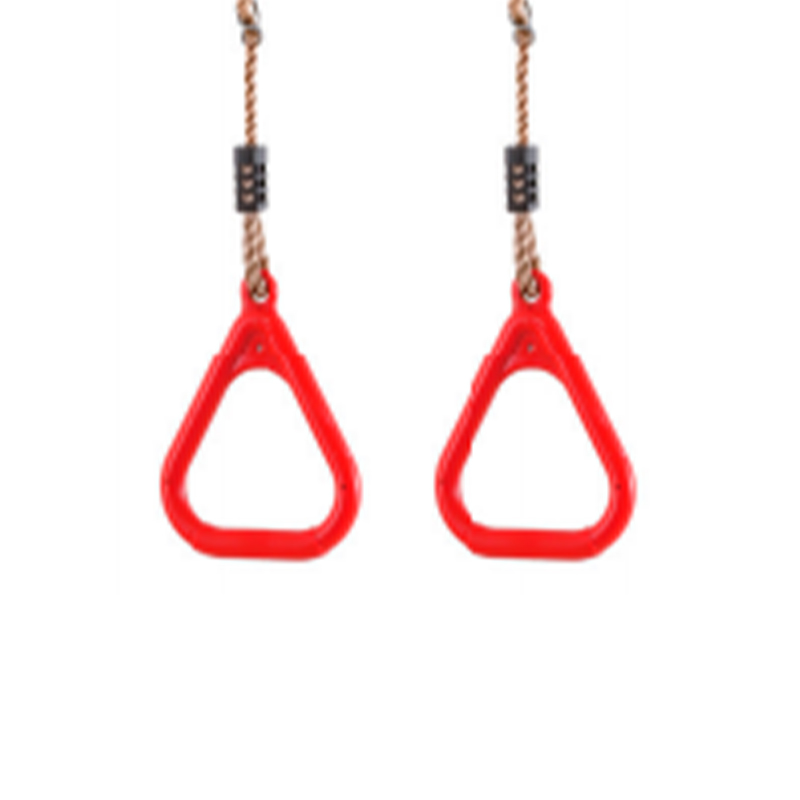
Handle shape also plays a role in comfort. Round handles distribute grip pressure evenly and are the most versatile choice for general use. Triangular handles allow the wrist to rotate naturally, reducing forearm fatigue during extended hanging, which makes them particularly popular for younger users whose grip strength is still developing.
Suspension Type: PE Rope vs. Coated Chain
The suspension connects the bar to the swing frame or overhead attachment point and is a critical safety component. The two common options are adjustable PE (polyethylene) rope and coated steel chain, each with distinct characteristics.
Adjustable PE Rope
Wear-resistant PE rope is lightweight, soft to the touch, and safe for environments where children may accidentally grab the suspension. High-quality PE rope resists UV degradation and does not become brittle in cold temperatures. Adjustable knotted or clamp-style PE rope systems allow height modification in 5–10 cm increments, making them ideal for growing children or shared family use. Inspect rope for fraying, discoloration, or stiffness every 3–6 months, as UV and mechanical wear accumulate invisibly inside the braid.
Coated Steel Chain
Galvanized or powder-coated steel chains offer superior load capacity and virtually unlimited service life compared to rope. The plastic or rubber coating eliminates the pinch hazard of exposed metal links and prevents rust in outdoor environments. Coated chains are the recommended suspension for adult fitness use, as they can withstand repeated dynamic loading without elongation. Look for chains with a zinc-plated inner link and a PVC outer coating at least 2 mm thick for optimal corrosion resistance in humid or coastal environments.
Frame Compatibility and Installation Requirements
A swing trapeze is only as safe as the structure it hangs from. Before purchasing, confirm that your existing swing set frame or overhead beam meets the load requirements.
- Overhead clearance: Allow a minimum of 50 cm above the highest suspension point and at least 200 cm of free swing arc in front and behind the bar to prevent collision injuries.
- Beam or frame rating: The attachment point must be rated to handle at least 3× the maximum user weight to account for dynamic impact forces during active use. A 70 kg adult generates peak loads of 180–210 kg during pull-up or swing movements.
- High-strength metal frames: Steel A-frame swing sets with cross-bracing are the most stable base for trapeze attachments. Check that the frame is anchored to the ground with stakes or concrete footings to prevent tipping under lateral swing loads.
- Indoor ceiling attachment: For indoor use, attach only to structural joists or beams, never to drywall or plasterboard. Use rated eye bolts with a minimum M10 thread diameter and confirm joist integrity before loading.
Safety Standards and Weight Capacity: What the Numbers Mean
Weight capacity ratings on swing trapezes refer to static load — the maximum stationary weight the product is tested to hold. Dynamic loads generated during active swinging or pull-ups are typically 2–3× the user's body weight, so the stated weight capacity should exceed your body weight by at least that margin to remain within the safe operating envelope.
When evaluating safety compliance, look for products tested against recognized playground or fitness equipment standards. Key indicators of a safety-conscious product include:
- Clearly stated static weight capacity with test standard reference
- No sharp edges, protrusions, or entrapment gaps on bar ends or hardware
- Locking hardware (such as S-hooks or carabiners) that cannot open under load
- Age or user-weight range clearly specified by the manufacturer
Comparing Key Swing Trapeze Configurations Side by Side
| Configuration | Bar Material | Suspension | Weight Capacity | Ideal For |
|---|---|---|---|---|
| Children's play trapeze | Reinforced PP plastic | Adjustable PE rope | 60–80 kg | Ages 3–10, garden play sets |
| Youth training trapeze | Multi-layer hardwood | Adjustable PE rope | 100–120 kg | Ages 9–16, mixed play and training |
| Adult fitness trapeze | Multi-layer hardwood | Coated steel chain | 150–200 kg | Adults, pull-ups, core training |
| Portable travel trapeze | Reinforced PP plastic | Adjustable PE rope | 60–90 kg | Camping, seasonal use, travel |
Maintenance Checklist to Keep Your Trapeze Safe Long-Term
Even a well-chosen trapeze will degrade without regular inspection. A brief monthly check takes under five minutes and prevents failures that would otherwise occur without warning during active use.
- Inspect the bar surface — check wooden bars for splinters, cracks, or delamination; check plastic bars for stress whitening or cracks near rope attachment holes
- Examine rope or chain condition — look for fraying, discoloration, kinking, or corrosion at connection points; replace PE rope showing any surface fiber damage
- Check all hardware — confirm that carabiners, S-hooks, and swivel connectors are fully closed and have not deformed under load
- Verify the overhead attachment point — inspect bolts, knots, or frame connections for movement, corrosion, or loosening
- Treat wooden bars annually — apply linseed oil or a suitable outdoor wood sealant to maintain moisture resistance and prevent splitting
- Remove from service immediately if any component shows cracking, significant wear, or deformation — do not attempt repairs on load-bearing suspension components