 Eng
 Español
 عربى
 Deutsch
 русский
 Français

Content
- 1 Before You Compare Suppliers, Write Down Five Numbers
- 2 How a Complete Equipment Package Fits Together
- 3 Hardware Is Where Service Life Is Decided
- 4 Materials and Finishes: Questions That Reveal Real Cost
- 5 Installation, Inspection and Safety Documentation
- 6 Sampling, Lead Time and the Ordering Sequence
A park operator installing a swing zone usually finds out what adventure park equipment really costs on the second site visit, not the first. The frames look right, the seats hang level, and then someone notices a 25 mm polypropylene strap rated for 80 kg attached to an anchor bracket that was never specified for a moving load. The fix usually is not a new supplier. It is a tighter equipment specification written before the purchase order.
Most problems that surface in year two come from three places: the anchor and connection hardware, the material grade of the wear parts, and a purchase list that named products without naming loads, mounting conditions or the standard the design was meant to satisfy. The sections below are organised around closing those three gaps first, then deciding what to buy.
Before You Compare Suppliers, Write Down Five Numbers
You will get more useful quotations in one week with five figures on paper than in a month of catalogue browsing. These are the numbers that decide almost every technical question a factory will ask you back.
- Maximum user weight per seat or platform, not the average user.
- Simultaneous users in the same zone, because frames, beams and anchors carry combined dynamic load.
- Free fall height, which sets the depth and type of surfacing under the equipment.
- Mounting substrate: compacted soil, concrete pad, timber deck or a living tree.
- The inspection interval you can realistically sustain, meaning how often someone will actually walk the site with a torque wrench.
A coastal holiday park and an inland campsite with the same footprint often order identical swing seats and then diverge completely on hardware. Salt air pushes the specification towards 304 stainless or hot dip galvanised parts and a shorter recoating cycle, while an inland site can stay with electroplated fittings and a longer maintenance window. Same product family, different bill of materials, and the difference shows up in the quotation only if you state the environment.
How a Complete Equipment Package Fits Together
Adventure park equipment is best bought as connected groups rather than single items, because a seat without a matching hanger and anchor is an unfinished installation. Most orders break down into four groups: ride elements, climbing elements, interactive accessories, and the hardware and frames that hold everything up.
Swing Zones
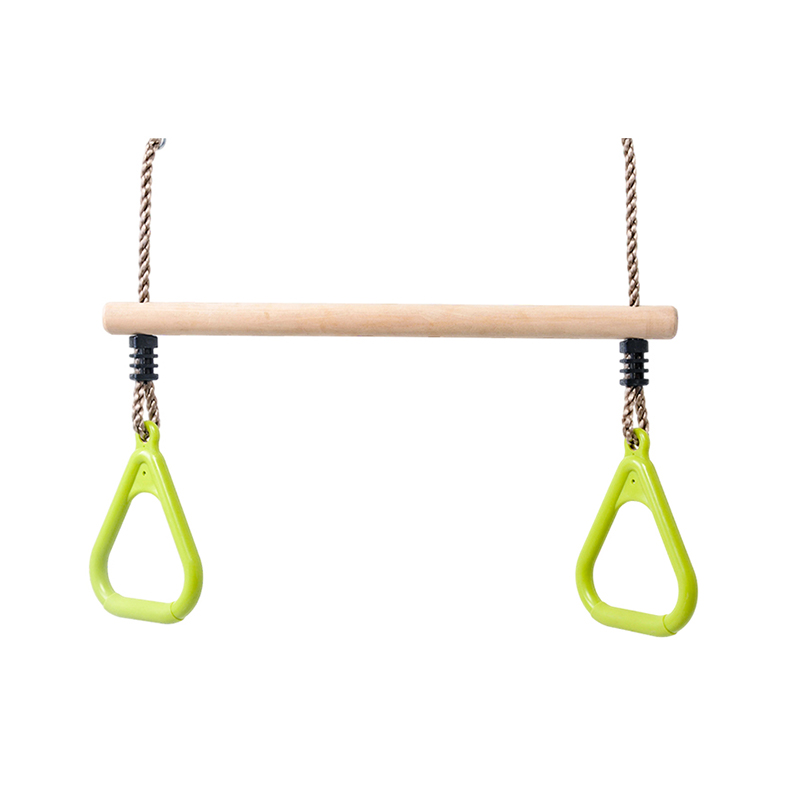
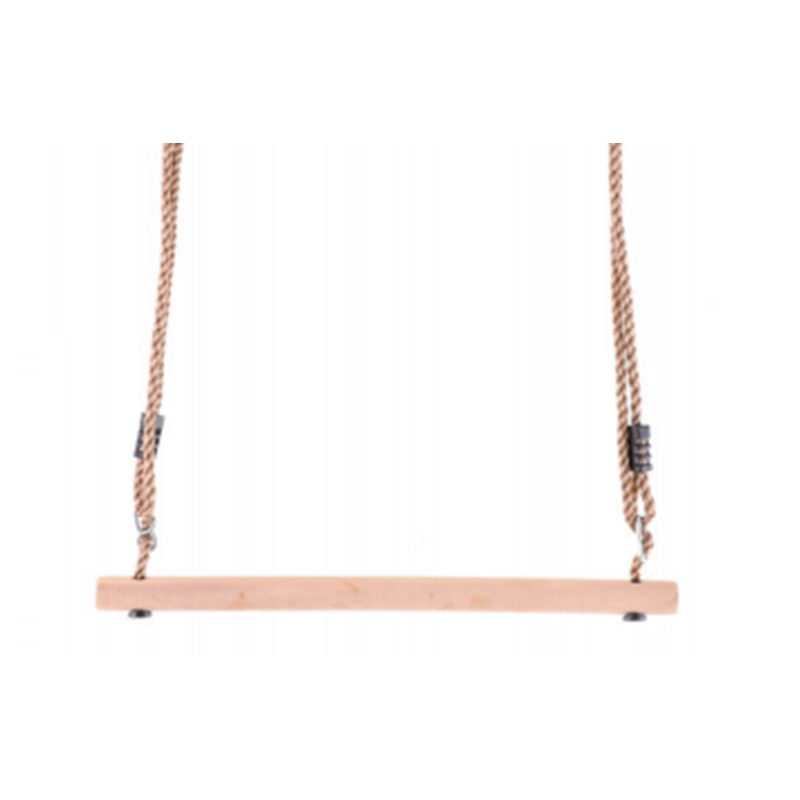
Swing zones carry the highest repeat use on most sites. Seat choice ranges from blow moulded plastic for wet climates, to EVA soft board, to four plank hardwood, to nest and saucer shapes that allow several children at once. Whatever the seat, keep at least 600 mm clear between adjacent seats and check the figure against the standard you are designing to, since seat spacing drives both collision risk and the width of the frame you need.
Climbing and Vertical Play
Climbing nets, rope ladders and moulded climbing holds add height without adding motors or power. The specification details that matter are rope diameter, tensioning method and UV stabilisation. A 14 mm to 16 mm polyester or polypropylene rope with UV inhibitors will hold its length far better than an untreated line, and tensioning hardware at the top anchor point saves a rebuild when the net relaxes in its first summer.
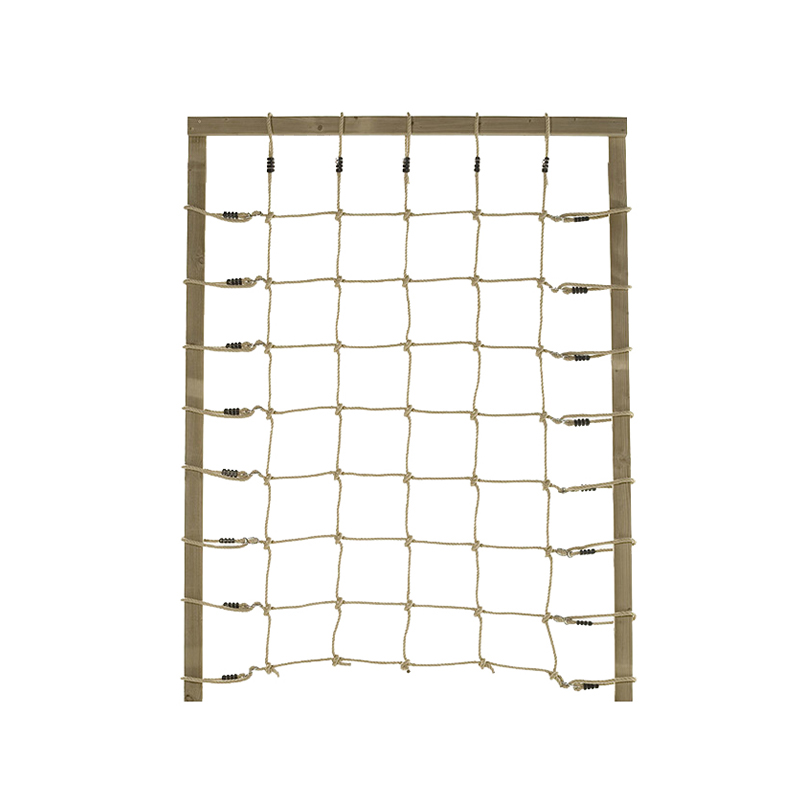 Hand-Woven PE Climbing Net YXS-CN03A hand-woven 10 mm PE climbing net with 25 cm grids, adjustable 30°–90° mounting and custom sizing for wood-frame play areas.View Product →
Interactive and Role Play Pieces
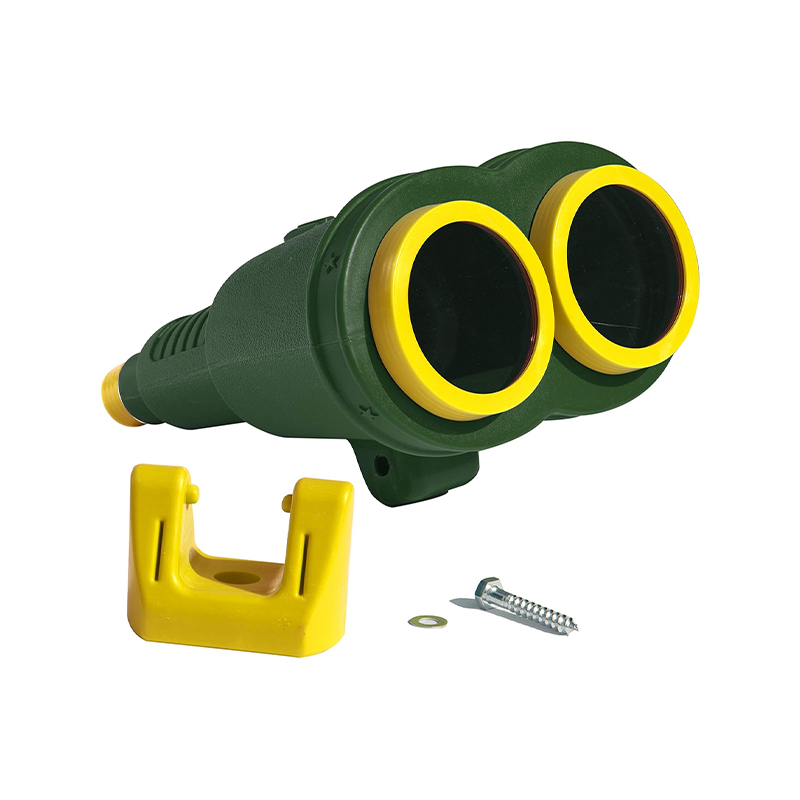
Steering wheels, periscopes, binoculars and spinner panels cost little per unit but carry hidden cost in installation and repair. A wheel bolted through a 18 mm panel is a ten minute fix; the same wheel bolted through thin cladding becomes a recurring vandalism item. Buy accessories with a mounting plate or a documented bolt pattern, not just a shell.
| Equipment group | Typical items | What drives the price |
|---|---|---|
| Ride elements | Swing seats, nest swings, gliders, slides | Seat material, mould size, load rating, chain or rope length |
| Climbing elements | Climbing nets, rope ladders, holds, climbing discs | Rope diameter and UV grade, mesh size, tensioning fittings |
| Interactive pieces | Steering wheels, periscopes, telescopes, spinner panels | Mould cost, mounting hardware, colour fastness |
| Structure and hardware | Frames, hangers, anchors, bolts, straps, brackets | Steel grade, coating system, test reports, packaging weight |
Hardware Is Where Service Life Is Decided
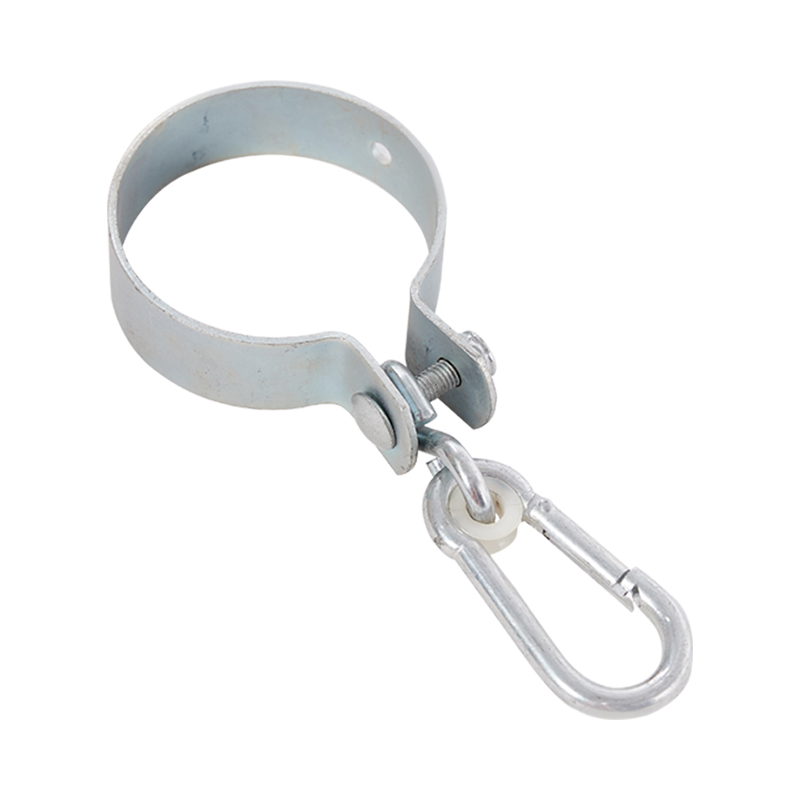
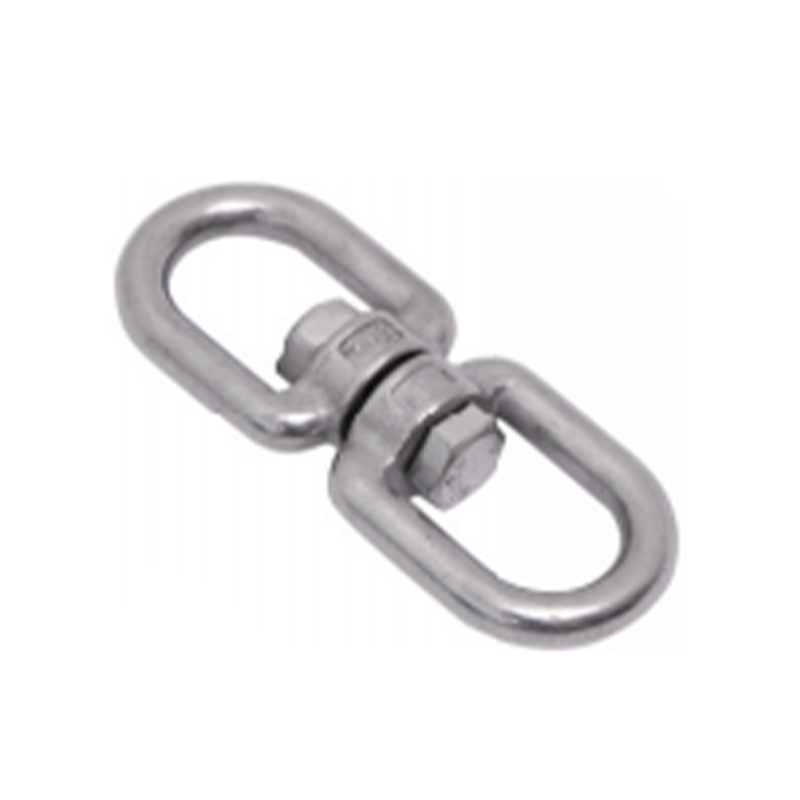
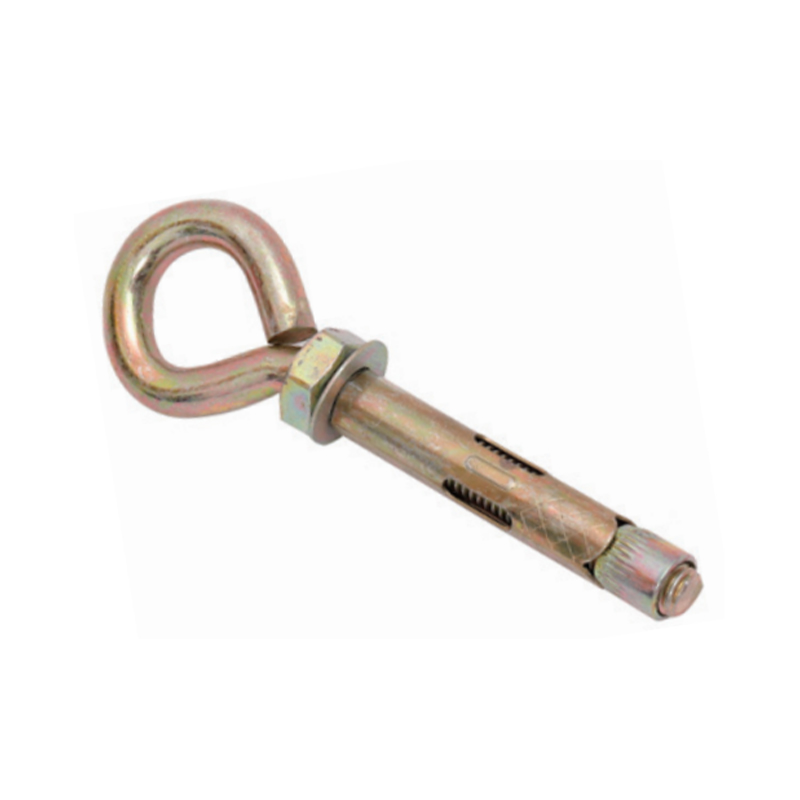
Seats and nets fail visibly. Anchors fail quietly, which is the reason to over-specify them. The components that decide whether a swing bay is still level in five years are the ones nobody photographs: the ground anchor, the expansion bolt, the quick link, the swivel and the suspension strap.
A sensible rule is that every connection in the load path should be rated above the working load of the element it carries, and every anchor should suit the substrate it enters. A split ground anchor driven into soft ground behaves differently from a chemical anchor set into a cured concrete pad, and mixing the two on one site is how inspections start finding movement. For buyers assembling a mixed order, it helps to review the full swing hardware range alongside the ride elements so that ratings, thread sizes and coatings match across the whole installation.
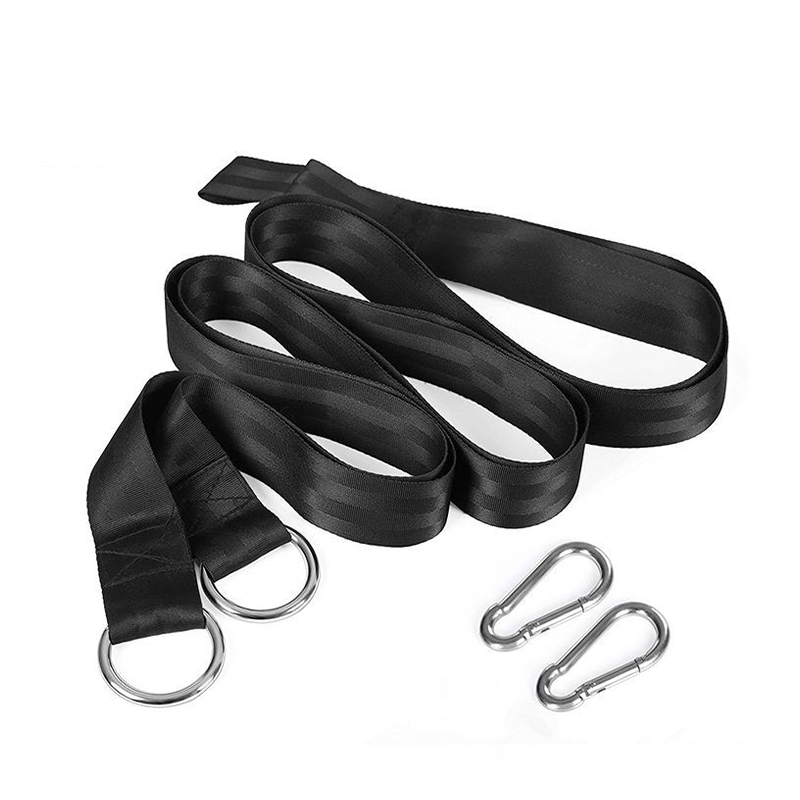 High-Strength Nylon Suspension Strap YXS-M25A 1.0 mm woven nylon strap for swings, hammocks and climbing nets, available in three anti-slip textures and custom sizes for matched hardware.View Product →
| Component | Specification to confirm | Failure mode to prevent |
|---|---|---|
| Suspension strap | Width, woven load rating, UV treatment | Fraying and stretch at the tree or beam contact point |
| Swivel ring | Stainless grade, working load, rotation under load | Chain twist and uneven seat wear |
| Ground anchor | Length, galvanising, stake configuration | Gradual lift and lean in soft ground |
| Quick link or clip | Thread type, safe working load, coating | Accidental opening and corrosion seizure |
| Corner bracket | Plate thickness, hole pattern, weld quality | Frame racking at the joint under side load |
Materials and Finishes: Questions That Reveal Real Cost
Two suppliers can quote the same swing seat at very different prices and both be honest. The difference is usually in the resin, the stabiliser package, the wall thickness and the coating system, none of which appear in a product name. Ask for these four details in writing.
- Plastic parts: whether the resin is blow moulding or injection grade, the wall thickness, and whether a UV stabiliser such as UV8 is added.
- Timber parts: species, moisture content at packing, and the oil or preservative finish, since beech and pine behave differently outdoors.
- Steel parts: electroplated, hot dip galvanised or stainless, plus the coating thickness in microns for powder coated items.
- Test evidence: salt spray hours for coated parts and a tensile figure for straps, ropes and load bearing plates.
Coastal and high humidity sites deserve a longer salt spray figure and stainless hardware on anything a user touches. Dry inland sites with heavy footfall usually benefit more from thicker coating on the frame than from upgrading every small fitting.
Installation, Inspection and Safety Documentation
Equipment arrives as parts, so the documentation that ships with it matters as much as the parts themselves. Ask which standard the design is intended to satisfy, such as EN 1176 or ASTM F1487, and ask for the drawings, torque values, footing dimensions and the recommended inspection schedule in the same package. A supplier who can send a load rating but not a footing drawing has not finished the job.
On site, split inspection into three rhythms: a weekly visual walk for wear, missing bolts and damaged seats; a monthly check of hangers, clips and swivels; and an annual check of anchors and frame joints, including a pull test on a sample of ground anchors. Writing those three tasks into the maintenance plan before opening day is cheaper than discovering them after a complaint.
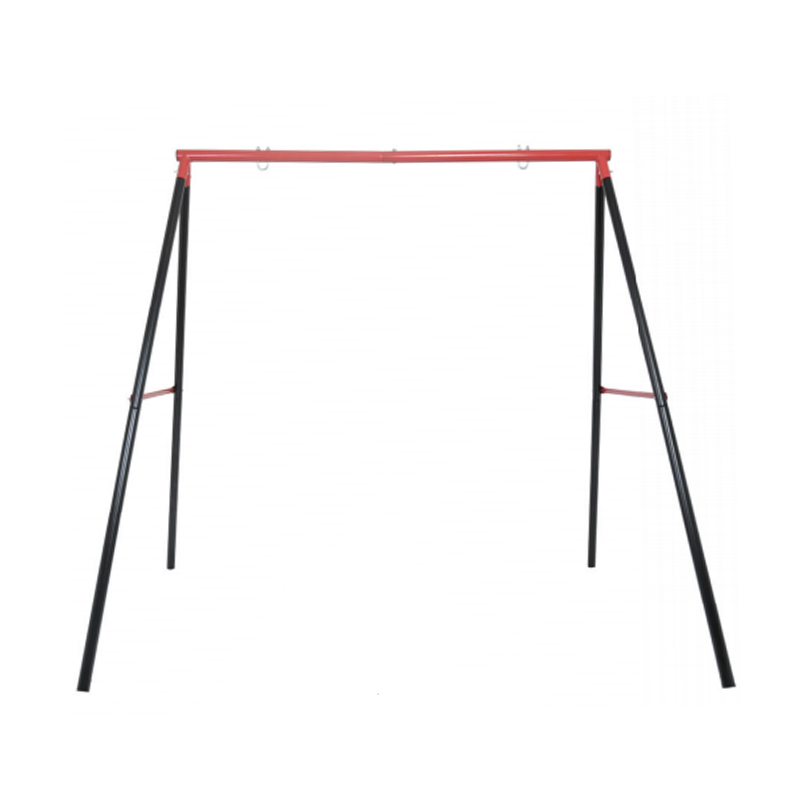 Heavy-Duty Double Swing Frame with Rust-Proof CoatingA self-supporting double A-frame in 1.5 mm steel with UV-resistant coating, pre-drilled anchor holes and two size options for outdoor swing sites.View Product →
Where there is no suitable tree or beam, a self-supporting frame does the work of both structure and anchor. Comparing a heavy duty double frame against a single frame early in the process usually clarifies the footprint, the surfacing area and the installation crew size you will need.
Sampling, Lead Time and the Ordering Sequence
For a first order with a new manufacturer, the sequence that causes the fewest surprises runs like this.
- Send the site plan with the five numbers from the start of this article, plus photos of the mounting points.
- Request a sample of the seat or net you will order in volume, and inspect the stitching, moulding and hardware fit.
- Confirm the bill of materials line by line, including bolts, clips and touch up paint, so nothing is assumed to be included.
- Agree packaging, carton marking and spare parts ratio, since a park without spare seats will run a broken swing for weeks.
- Book the production slot and confirm the loading plan against your container size.
Lead time on moulded and rope products usually depends on tooling and colour runs rather than assembly, so a colour change can add more days than a quantity change. Raising those details early, or sending them through the contact page together with your drawings, keeps the quotation comparable instead of approximate.
Good adventure park equipment decisions are mostly made on paper. Fix the loads, the substrate, the maintenance rhythm and the standard you are designing to, then choose seats, climbing pieces and frames that match those constraints. The hardware deserves as much attention as the visible elements, because that is where quiet failures begin and where a modest upgrade in specification buys the longest service life.