 Eng
 Español
 عربى
 Deutsch
 русский
 Français

Content
- 1 Accessibility Has Three Layers, and Only One of Them Is the Equipment
- 2 The Route and the Surfacing Take Most of the Budget
- 3 Swing Seats, Hangers and the Transfer Height
- 4 Ground Level Components Do More for Inclusion Than Ramps Do
- 5 Specification Checks by Play Component
- 6 Questions to Put to a Supplier
- 7 Where Accessible Playground Equipment Gets Expensive
Accessible playground equipment is usually judged in a single moment: whether a child using a wheelchair, a walker or crutches can reach a piece of equipment and get onto it without an adult lifting them. That moment is decided long before anything is bolted down. It is decided by the route across the site, the surface beneath the equipment, the height of the seat at the point of transfer, and the hardware that holds the seat in place.
What follows is how we work through that question with buyers, installers and park authorities, including the specifications worth writing into a purchase order and the places where budgets most often go wrong.
Accessibility Has Three Layers, and Only One of Them Is the Equipment
Buyers frequently ask for a special needs swing and consider the job complete. One specialised seat satisfies very little on its own. A workable accessible play area needs three layers present at the same time.
- Physical access. A firm, stable route from the car park or building to the play space, wide enough for a wheelchair, with flush transitions and no loose gravel or bark at the entry point.
- Usable design. Equipment a person can actually transfer onto or roll up to, with support in the right place and grips, panels or controls within seated reach.
- Social inclusion. Equipment where children with and without disabilities play together, at the same level, rather than in a separate corner of the site.
Most complaints we hear from site managers trace back to the first layer. The equipment was chosen carefully, the route was not.
The Route and the Surfacing Take Most of the Budget
Loose fill such as bark, sand or pea gravel is cheap and widely used, but it is not a firm and stable surface, so it cannot carry a wheelchair or a walking frame. Where access matters, the route and the use zone under each piece of equipment generally need a unitary surface: poured rubber, rubber tiles or a mat system. Two specification points matter more than the product name.
First, impact attenuation. The surface must be rated to the critical fall height of the equipment above it, tested to EN 1177 or ASTM F1292 depending on the market. A thick tile with the wrong rating is no safer than a thin one with the right rating, and it costs more.
Second, transitions. A ramp at 1:12 is the common legal minimum in many jurisdictions, and 1:20 is far easier for a self-propelled wheelchair user. Either way, the joint where the ramp meets the play surface is where wheels catch. Keep it flush, and keep gaps small enough that a 25 mm caster cannot drop in.
Swing Seats, Hangers and the Transfer Height
Swings are the most requested item in inclusive play areas and the easiest to get wrong, because the useful variable is not the seat type but the height of the seat surface at the moment of transfer. A common working range is 280 to 300 mm from the surfacing to the top of the seat, measured with the seat empty, which is roughly level with the seat of a manual wheelchair. Hold that figure across the whole play area to within about 20 mm and a child learns one transfer motion instead of guessing at every structure.
Seat design then decides how much support is available once the transfer is finished. A moulded high back seat with harness slots gives trunk and head support for younger children or children with low muscle tone, and it can be used with or without a harness depending on the supervision policy of the operator.
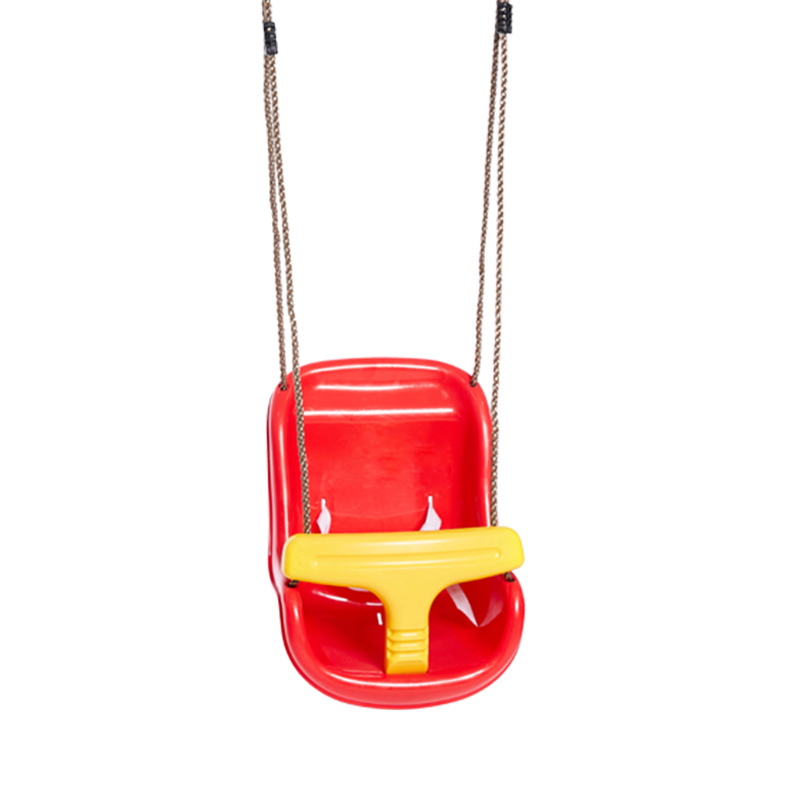 High Back Infant Swing with Adjustable Safety HarnessMoulded high back and neck support, T-handle and adjustable harness for infants 7–36 months; useful where supported seating is needed.View Product →
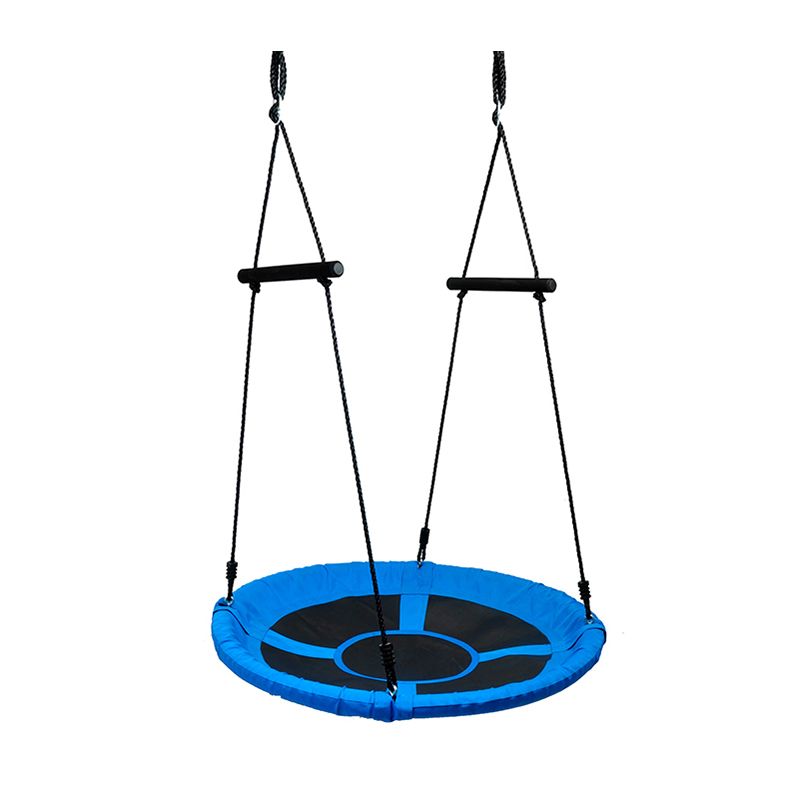
Nest and saucer seats do a different job. Their width lets a child lie back, sit sideways with the legs supported, or ride with two or three friends, which is why they carry so much of the social inclusion load on a modern playground. A 60 cm net nest is a practical size for shared use without dominating a small site.
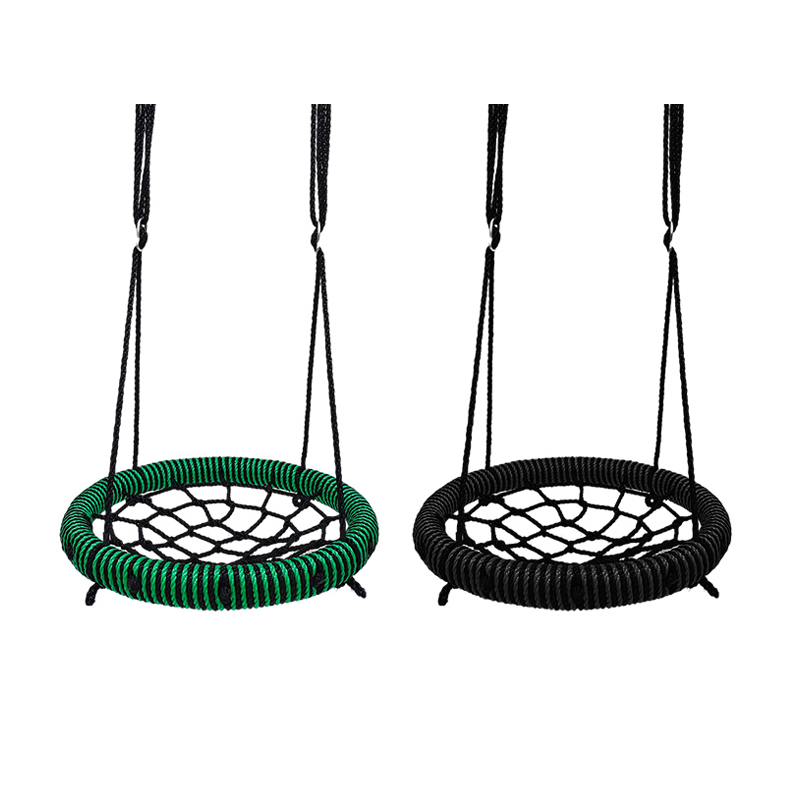 60 cm Nest Net Swing for Backyard and Park60 cm PE nest swing with reinforced steel tube, soft interwoven ropes and 272 kg limit; a compact option for backyard or park hanging.View Product →
Height adjustment lives in the suspension, not the seat. A nylon suspension strap can be set in short increments and is quiet and gentle on the hands, while a chain is harder wearing in heavy public use. Either way, pair it with a swivel so the chains or straps do not twist into a knot after a morning of use, and with quick connect clips so maintenance staff can swap an infant seat for a flat seat in seconds rather than removing shackles.
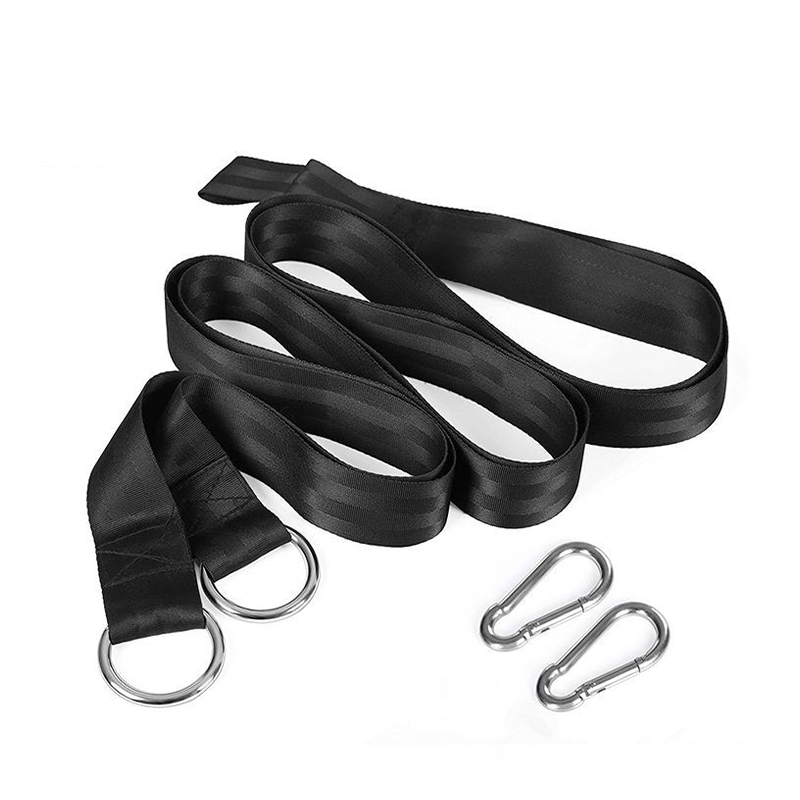 High-Strength Nylon Suspension Strap for Swing Height AdjustmentWoven nylon suspension strap in three anti-slip textures and standard or custom sizes, pairs with quick-connect clips and swivel rings for swing height adjustment.View Product →
Ground Level Components Do More for Inclusion Than Ramps Do
A ramped structure with an elevated deck looks impressive in a render, but the ADA Standards for Accessible Design and comparable national rules treat ground level play as the core requirement. The principle is straightforward: for every elevated play component, a proportion of ground level components must also be reachable by an accessible route. Ground level play is cheaper, easier to maintain and usable by a wider age range.
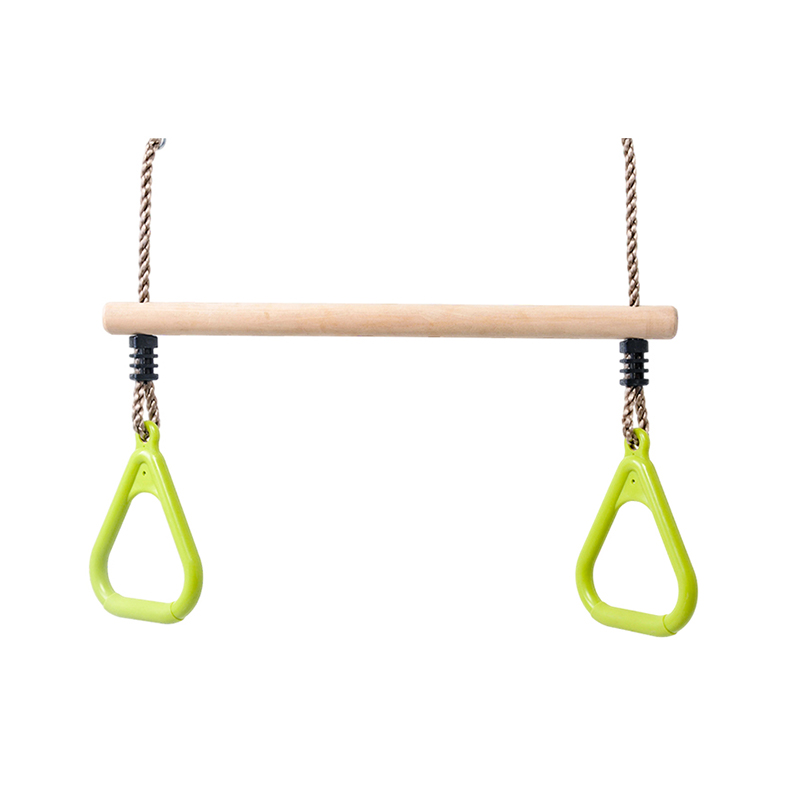
Climbing is where this becomes practical rather than theoretical. Rope nets, rope ladders and climbing holds mounted at low heights let a child who cannot stand pull themselves up from a seated position, and they let ambulant children and wheelchair users work on the same element at the same time. Rope diameter, mesh size and anchor hardware are the three details to fix in the specification, because a net that sags or a hold that spins turns a good idea into a maintenance complaint within a season.
We covered the detail of rope based climbing separately in this note on what makes a safe and durable climbing system for kids.
Specification Checks by Play Component
The table below is the checklist we run through when a project specifies accessible playground equipment. It is not a substitute for local code, but it catches the items that are expensive to correct after installation.
| Play component | Accessibility role | What to confirm before ordering |
|---|---|---|
| Nest or saucer swing | Lets a child lie back or sit with support, and ride with others | Frame load rating, seat diameter, hanger type, use zone depth |
| High back infant seat | Trunk and head support for young or low tone users | Harness slot positions, plastic wall thickness, UV stability |
| Suspension strap or chain | Sets the transfer height of the seat | Working load, strap width, abrasion and UV resistance |
| Swivel ring and quick clip | Stops chain twist and allows fast seat swaps | Stainless grade, gate opening, load test report |
| Climbing net and rope ladder | Low level challenge reachable from a wheelchair | Mesh size, rope diameter, anchor and tensioning hardware |
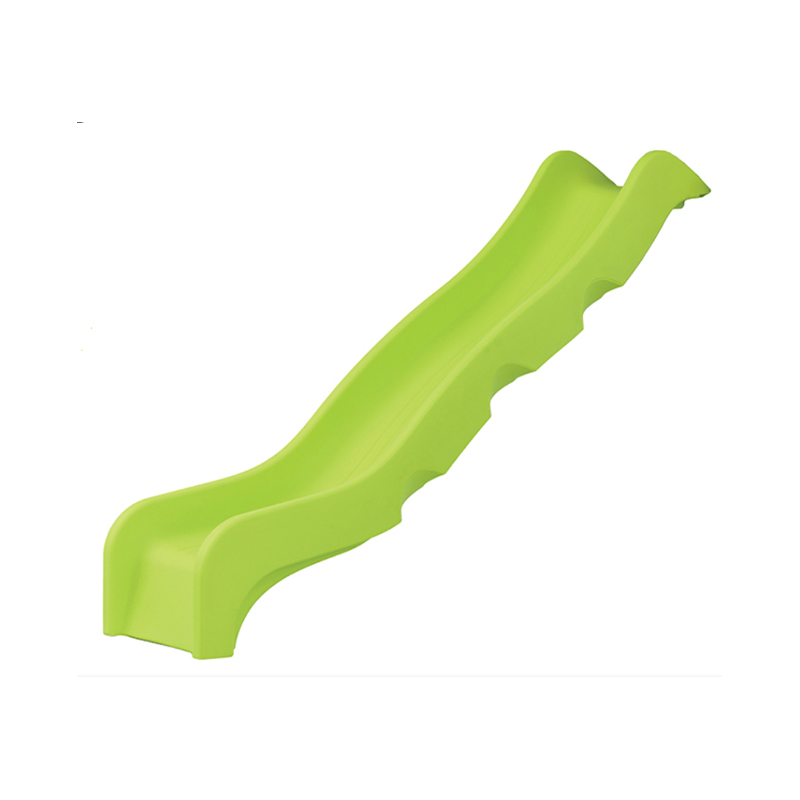
| Slide with transfer platform | Independent entry at deck level | Platform size, transfer step height, handhold position |
| Activity panel | Seated reach and sensory play | Panel height above surfacing, mounting depth, fastener type |
Questions to Put to a Supplier
The answers to these six questions separate a manufacturer from a trader with a catalogue and a freight forwarder.
- Static and dynamic load test reports for seats, hangers and frames, not just a generic compliance certificate.
- Stainless steel grade: 304 for general outdoor use, 316 where coastal salt exposure is high.
- Galvanizing standard, normally ISO 1461 for hot dip parts, plus neutral salt spray hours for painted or plated items.
- Assembly drawings with tolerances, so the installer knows the permitted gap at a transfer platform.
- Spare parts availability and minimum order quantity for replacement seats, straps and clips.
- Packaging dimensions and container loading, because a nest swing frame often sets the loading efficiency of the whole order.
Where Accessible Playground Equipment Gets Expensive
Almost never at the seat. In a typical inclusive project, the swing seat, the hangers and the hardware together are a small fraction of the total cost. The money goes into unitary surfacing, the accessible route, transfer platforms and the engineering work needed to fit them onto an existing site. That has two practical consequences for buyers.
First, spend design time on layout. Moving a swing two metres closer to an existing path can save more than switching to a cheaper seat. Second, standardise the hardware. A seat built around a common hook and clip pattern can be replaced, raised or swapped for a different model later without changing the frame, which matters when an ageing play area has to serve a changing age profile over the next decade.
If a project is on your desk now, the fastest route to a reliable answer is to send the layout, the age range and the target market. We can come back with the seat, hanger and hardware combination that matches the transfer height you need, together with drawings and load data for the installer. You can reach our team here and we will respond with a specification rather than a catalogue page.