 Eng
 Español
 عربى
 Deutsch
 русский
 Français

Content
A playground can look finished and still fail its first safety review when the surface and the equipment are specified as separate purchases. The best playground material is not one product. It is a system: a surfacing layer that matches the fall height, a drainage detail that keeps that layer working, and equipment built from materials that suit the climate and the age group.
For most outdoor play areas, engineered wood fiber offers the best balance of impact absorption, installed cost, and natural appearance. Rubber systems become the better choice when accessibility and low maintenance outrank budget. For swings, climbing frames, and connections, the right material depends on the part: plastic for molded seats, powder-coated steel for frames, stainless or galvanized steel for exposed hardware, and nylon or chain for suspension.
Start With Fall Height, Not With a Material Name
Fall height is the vertical distance from the highest designated play surface to the ground below, not simply the height of the frame. A swing seat, a climbing platform, and a slide exit can each create a different fall height. The surfacing must be selected and installed for the highest credible fall in each use zone.
This is where many budget plans go wrong. A supplier may quote a loose-fill depth that works for a low deck but not for a swing beam. The installed depth must match the equipment, the test data, and the expected level of use. A nine-inch layer is not a universal answer. It may be enough for one structure and insufficient for another.
- Measure the highest platform or pivot point that a child can reach.
- Check the use zone dimensions for each structure and allow for sliding, swinging, and running exits.
- Ask for fall height test information for the exact product and installation depth.
- Confirm drainage, edging, and access routes before comparing material prices.
- Plan for topping up, raking, or repairing the surface after installation.
Grass, dirt, and concrete are not suitable fall protection materials, even when they are the cheapest option on site. They may look tidy, but they do not provide the predictable impact absorption that a play area needs.
Compare Common Playground Surfacing Materials
The table below compares the materials most often considered for parks, schools, backyards, and commercial play areas. Installed cost varies by region, site access, drainage, and sub-base work, so compare delivered and installed performance rather than bag price alone.
| Material | Best use | Fall protection | Installed cost | Maintenance | Watch-outs |
|---|---|---|---|---|---|
| Engineered wood fiber | Public playgrounds, schools, and home play areas | Good when installed at the tested depth | Moderate | Rake, top up, and keep loose | Migration, packing, and moisture |
| Rubber mulch | Low-maintenance fall zones | Good, but depth and test data still matter | Moderate to high | Occasional raking and depth checks | Heat in direct sun and scatter outside edging |
| Poured-in-place rubber | Schools, parks, and accessible routes | Good when the full system is specified | High | Wash and repair damaged areas | High upfront cost and professional installation |
| Rubber tiles | Roof decks, indoor areas, and modular play spaces | Good when the tile system matches the fall height | High | Sweep and replace damaged tiles | Seams, lifting, and base preparation |
| Synthetic turf | Visual finish with a shock pad underneath | Good only with the correct shock-absorbing layer | High | Brush, clean, and manage infill | Heat, infill loss, and replacement cost |
| Sand | Low-cost casual play and digging areas | Limited and depth-dependent | Low | Rake, sift, and replace | Tracking, debris, and accessibility limits |
| Pea gravel | Drainage beds and decorative borders | Not suitable for high fall zones | Low to moderate | Rake and contain | Scatter, hard packing, and poor mobility access |
For a home backyard, engineered wood fiber or rubber mulch often gives the most practical balance of cost and safety. For a school or public park where wheelchair access and low daily maintenance are priorities, poured-in-place rubber or rubber tiles can justify the higher budget. For a wet site, drainage design may matter more than the surface brand or color.
Match the Material to the Site and the Users
A material that works for a shaded family garden may fail at a coastal resort or a busy preschool. The deciding factors are usually traffic, climate, age group, and inspection capacity.
- Home backyard: choose a surface that one person can rake and top up, with edging that keeps loose fill inside the play zone.
- School or public playground: prioritize accessible routes, documented fall height performance, and a maintenance plan that names who checks depth and damage.
- Coastal or humid site: specify corrosion-resistant hardware and a surface that drains rather than holds water.
- Commercial or theme setting: consider appearance and repair speed, not just the initial square meter price.
- Indoor or rooftop play space: rubber tiles or a tested synthetic system may be easier to contain and clean.
Buyers should also separate the surfacing decision from the equipment decision. A safe play area needs both to work together. The best surfacing in the world will not compensate for a loose anchor, a cracked seat, or a frame that moves under load.
Equipment Materials Matter Just as Much
For swings and climbing structures, the best material is component-specific. Seats need to resist rot, splinters, UV exposure, and repeated cleaning. Frames need stable footing and a finish that survives weather. Hardware needs to hold the load without corroding or working loose.
High-density polyethylene is a practical choice for infant and public swing seats because it resists moisture and is easy to wipe down. Hardwood and pine seats offer a traditional look, but they need inspection for cracks, splinters, and finish wear. EVA soft board can improve comfort, yet the attachment points and UV resistance still deserve a close review.
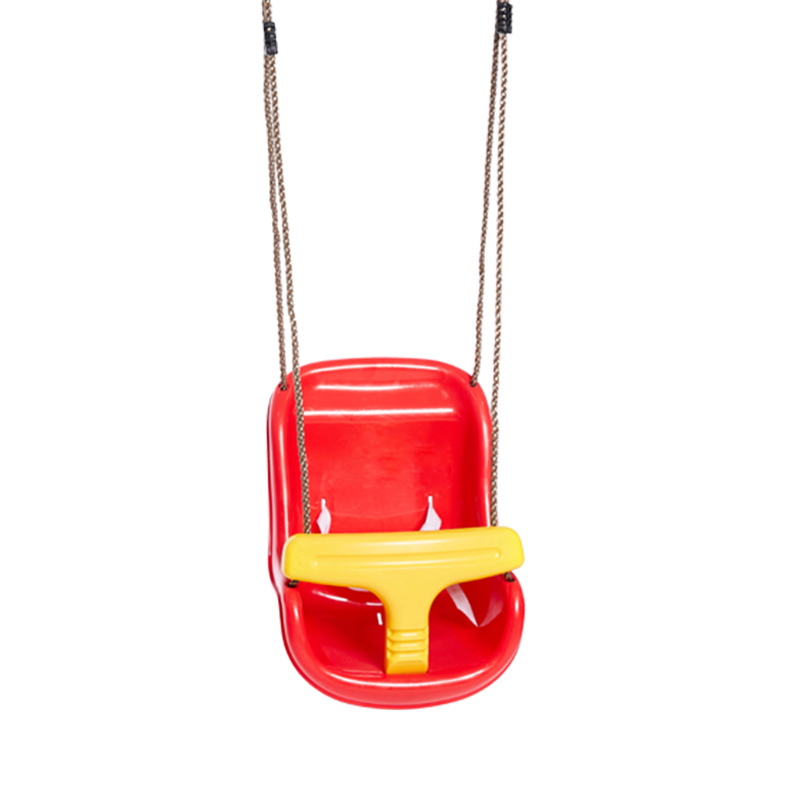 High-Back Plastic Infant Swing SeatFor infant and public swing seating, this PP/PE chair has a high back, harness, and 34 kg limit; check frame and anchors separately.View Product →
Frames are usually powder-coated steel for outdoor use. Check wall thickness, base plates, bracing, and anchor compatibility rather than relying on a rustproof label. A double frame with broad spacing needs a level base and footings that suit the soil. On soft ground or high-wind sites, the anchor design is as important as the frame tube.
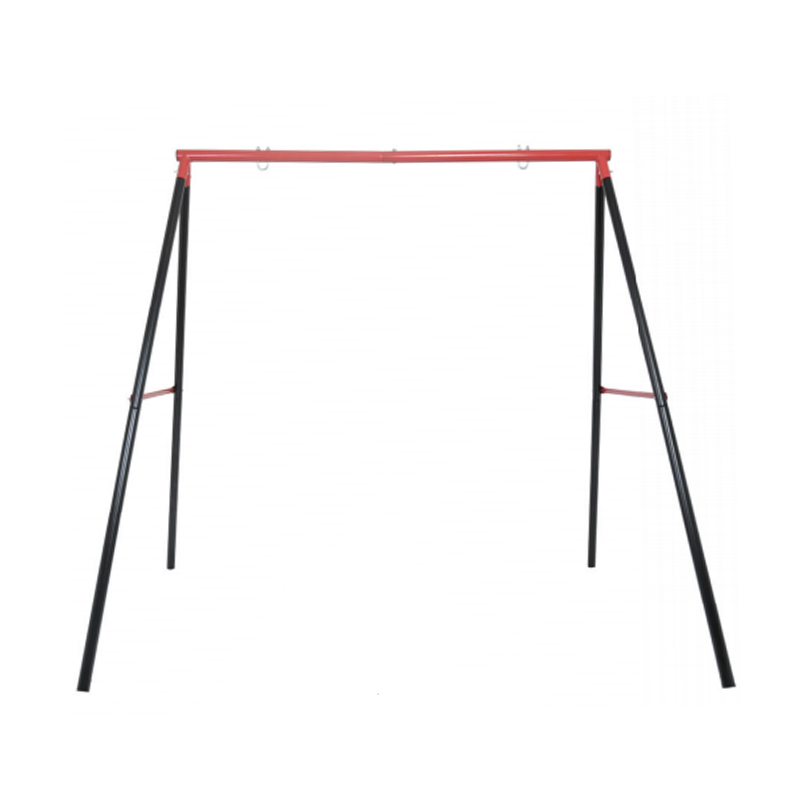 Heavy-Duty Double Swing Frame for Outdoor UseFor dual or parent-child swinging, this powder-coated steel A-frame uses 1.5 mm tubes and pre-drilled holes for ground anchors; verify base and footing.View Product →
Connections deserve the same attention. Stainless steel is useful for coastal or high-humidity sites. Galvanized steel can suit general outdoor use when the coating is intact. Nylon suspension straps can reduce noise and protect tree branches, but the load rating, UV stability, and stitching quality must be confirmed. Swivel rings, quick clips, and anchors should be matched to the expected motion and inspection cycle.
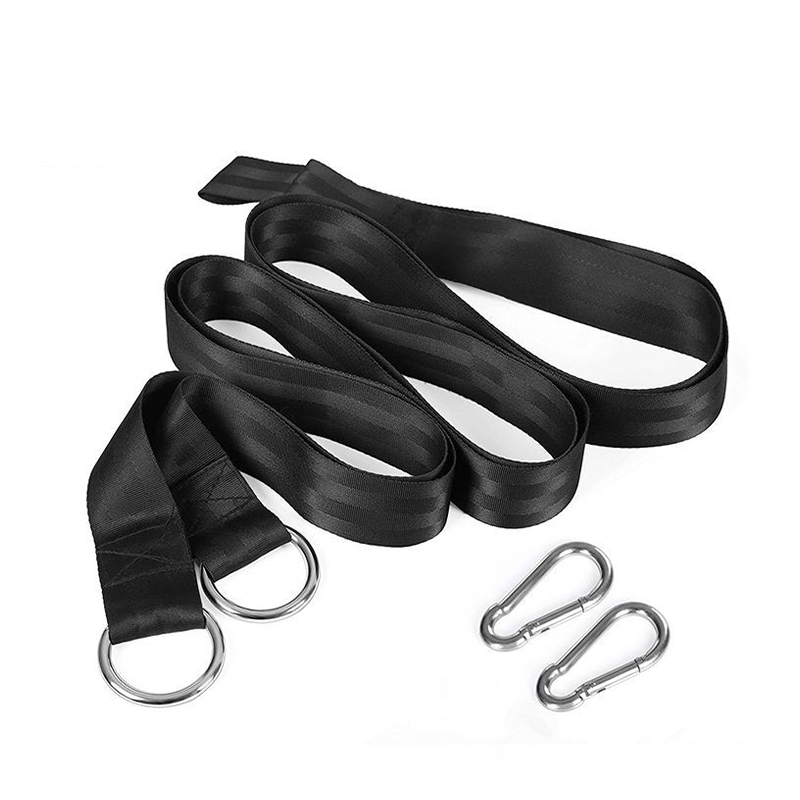 High-Strength Nylon Suspension Strap for Swings and HammocksFor swing and hammock connections, this woven nylon strap comes in three anti-slip textures and custom sizes; confirm load rating and UV stability.View Product →
For a project that combines surfacing and equipment, share the fall height, age group, climate, and maintenance plan with the supplier before requesting a quote. You can contact the manufacturer to review a specification and reduce the risk of buying parts that do not fit together.
Installation and Maintenance Details That Decide Performance
Most surface failures are installation failures, not material failures. Loose fill that is too shallow, a base that holds water, or edging that has moved will reduce performance long before the material itself wears out.
- Prepare a draining sub-base and use geotextile where the specification requires separation.
- Install edging and depth markers so inspectors can check loose-fill depth quickly.
- Keep engineered wood fiber loose and replenish worn areas under swings and slide exits.
- Use wear mats at high-traffic points, but confirm they are compatible with the surfacing system.
- Inspect seats, chains, straps, clips, and anchors on a written schedule.
- Replace damaged tiles, torn turf, or compacted loose fill instead of patching around a problem.
A simple logbook with installation depth, inspection dates, and replacement records makes handover easier and supports long-term safety management.
A Practical Specification Checklist
- Record the fall height for each structure and use zone.
- Confirm accessibility goals and local code requirements.
- Compare installed cost, including base work and edging.
- Ask for test information for the exact surface and depth.
- Check drainage, climate exposure, and expected traffic.
- Select seat, frame, and hardware materials by part and site condition.
- Confirm load ratings, finishes, and anchor compatibility.
- Set a maintenance schedule before the play area opens.
Bottom Line
The best playground material is the one that matches the fall height, drainage, access needs, and maintenance capacity of the site. Engineered wood fiber is often the strongest all-round value. Rubber systems are worth the premium when accessibility and low maintenance are essential. For the equipment itself, choose plastic, wood, steel, and suspension materials by function and exposure, then verify that every connection is rated for the load.