 Eng
 Español
 عربى
 Deutsch
 русский
 Français

Content
- 1 Plan Play Zones Before You Open a Catalogue
- 2 Let the Site Conditions Set the Layout
- 3 Swing Bays: Frames, Hangers and the Hardware Between
- 4 Fall Zones, Surfacing and the Standard You Quote
- 5 Climbing, Sliding and Interactive Additions
- 6 Materials and Hardware: Where Budgets Quietly Leak
- 7 What to Put in the Enquiry
- 8 Installation, Inspection and Handover
A school with a 60 square metre courtyard, a fixed grant and one summer to spend it gets two quotes. The first covers a swing set, a slide and a climbing frame. The second covers the same items plus ground anchors, a drainage sump and 40 square metres of impact surfacing. Two years later only one of those playgrounds is still level, and it is the one whose invoice looked expensive on day one.
That gap is what building playgrounds really comes down to. The equipment list is the easy part. What decides whether a site works for ten years is the order of decisions: play zones first, then site conditions, then fall zones and surfacing, and only then the frames, hangers and anchors that carry the load.
Plan Play Zones Before You Open a Catalogue
Start with how children move through the space, not with the product list. A layout for a school, park or resort usually divides into zones, each with its own footprint and supervision needs:
- Swinging zone: the highest wear and the widest clearances, usually the first zone occupied and the last one vacated.
- Climbing zone: nets, ladders and holds, needing a generous fall zone and a clear sight line from seating.
- Sliding zone: an exit run that stays clear and a return route that does not cross the slide outlet.
- Spinning and balancing zone: smaller items placed between the big pieces to slow movement down.
- Quiet and role play zone: panels, steering wheels and binoculars, best sited near seating and away from the fast loop.
Age banding matters as much as zoning. Toddler equipment and equipment for 5 to 12 year olds need separate footprints but the same sight lines from the bench, which keeps collisions down and helps fall zones fit the plot.
Let the Site Conditions Set the Layout
Ground conditions, drainage and shade change a drawing more than any design preference. Loose fill over clay holds water, a slope of a few degrees moves surfacing downhill, and a shaded corner stays damp long enough to grow moss on timber and painted steel.
Trees are often the wrong answer. A tree swing needs a sound horizontal limb, a healthy collar and a clear arc that misses the trunk and neighbouring branches. If any of those is missing, a frame is the cheaper decision.
Access matters too: leave a route for a wheelbarrow, a delivery pallet and, eventually, a maintenance vehicle.
Swing Bays: Frames, Hangers and the Hardware Between
Swing bays are where playgrounds most often underperform, and the seat is rarely the reason. Failures cluster at the connection points: undersized hooks, hangers that wear through a chain link, anchors that pull out of soft ground after a wet winter.
For a frame supplied as a kit, confirm four things in writing: tube wall thickness, the galvanising system, the footing size and the rated load per bay. A 3 m double top bar typically needs footings at least 300 mm across and 600 mm deep in firm ground, set in concrete, with the bar level enough that both seats hang at the same height. Keep about 2 m of clear space in front of and behind each seat and roughly 600 mm between adjacent seats.
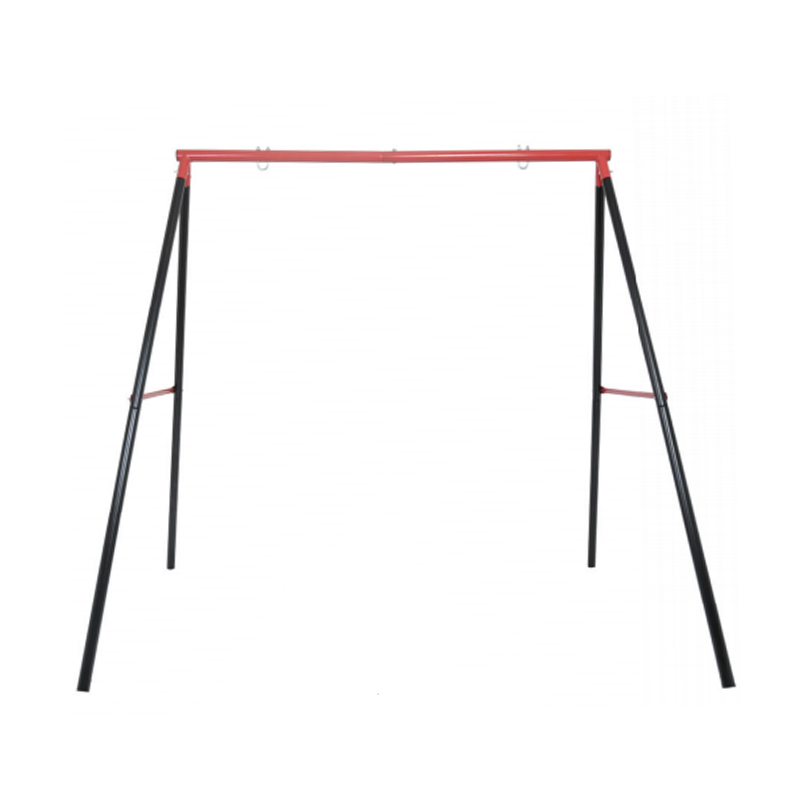 Heavy-Duty Rust-Proof Double Swing FrameA 1.5 mm steel frame with UV-resistant powder coating, stabilising crossbars and anchor-ready holes; check model dimensions and footing requirements before ordering.View Product →
On trees and timber beams a wide webbing strap spreads the load and avoids the damage a chain leaves on bark. UV stabilised nylon at least 25 mm wide with a stated working load is the practical choice, and the strap should be checked each season where it passes over the branch.
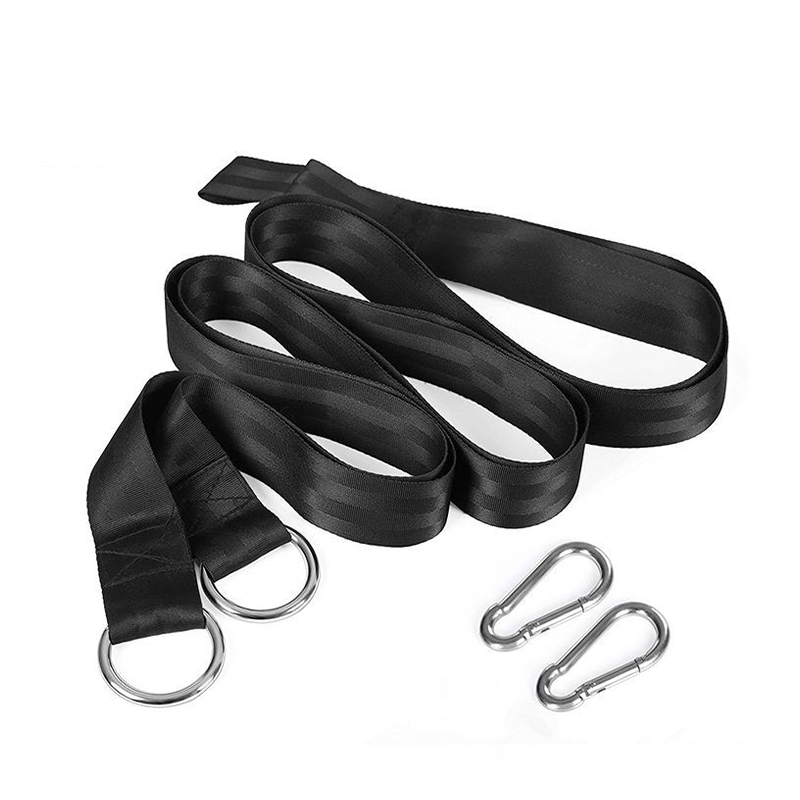 High-Strength Nylon Suspension Strap YXS-M25Woven nylon strap with three anti-slip textures and standard sizes, pairs with swivel rings and quick-connect clips; confirm width and load for the hanging setup.View Product →
A 360 degree swivel ring between the strap and the seat stops the chain twisting and slows the wear that eventually opens a hook. Stainless hardware costs a little more and lasts noticeably longer outdoors, especially near a coast.
Fall Zones, Surfacing and the Standard You Quote
Quote the standard at the start, not at the end. EN 1176 is the usual reference in Europe and much of Asia, ASTM F1487 in North America, and both work the same way: measure the free height of fall from each item, then provide a fall zone and surfacing depth to match it.
As a working rule, keep 1.5 m around static equipment and 2 m around swings, measured from the outer edge of the seat at rest. Loose fill needs a retaining edge and a drainage path, otherwise the depth you paid for disappears into the subsoil in one season. Where space is tight, a tested synthetic surface gives a shallower profile, but only over a properly prepared base.
Climbing, Sliding and Interactive Additions
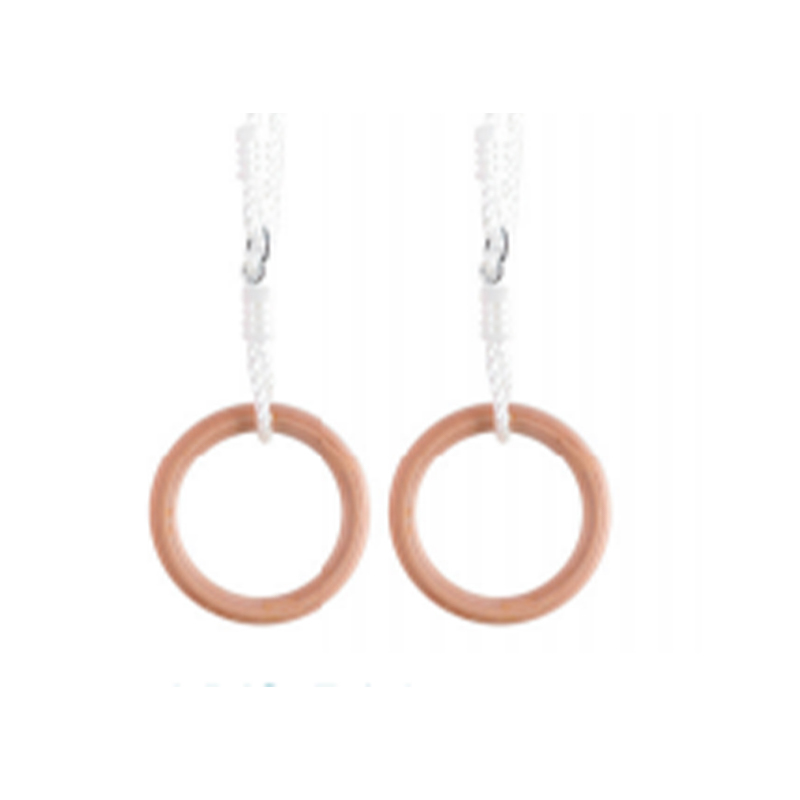
Climbing carries the second largest load and the second largest maintenance bill. Rope nets, ladders and climbing holds need a documented fixing pattern and fixings you can reach to retighten. If a layout mixes rope, timber and moulded elements, the design logic in this article on safe and durable climbing systems for kids is a useful check before you approve a drawing.
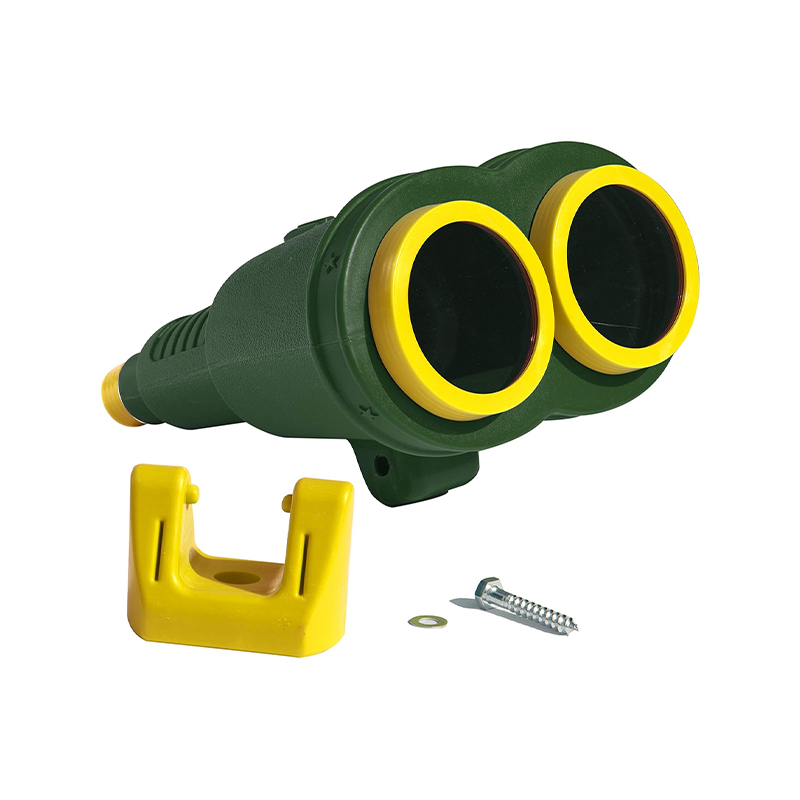
Slides need a clear exit run and a shading decision, because dark plastic in full sun becomes unusable. Play panels, steering wheels and binoculars are cheap per unit, valuable per square metre, and they slow children down between the big pieces.
Materials and Hardware: Where Budgets Quietly Leak
Most overruns are not in the big items. They arrive as replacements bought one at a time for hardware that was never specified. The table below lists what is worth pinning down in the purchase order.
| Component | What to confirm | Why it matters |
|---|---|---|
| Suspension strap | Width, stated working load, UV stabilised webbing | Spreads load on branches and beams without cutting into bark |
| Swivel ring | 304 stainless, full 360 degree rotation | Prevents chain twist and reduces wear at the hanger |
| Hook or quick link | Rated load, galvanised or stainless, size matched to chain | Cheapest part to replace, most common point of failure if undersized |
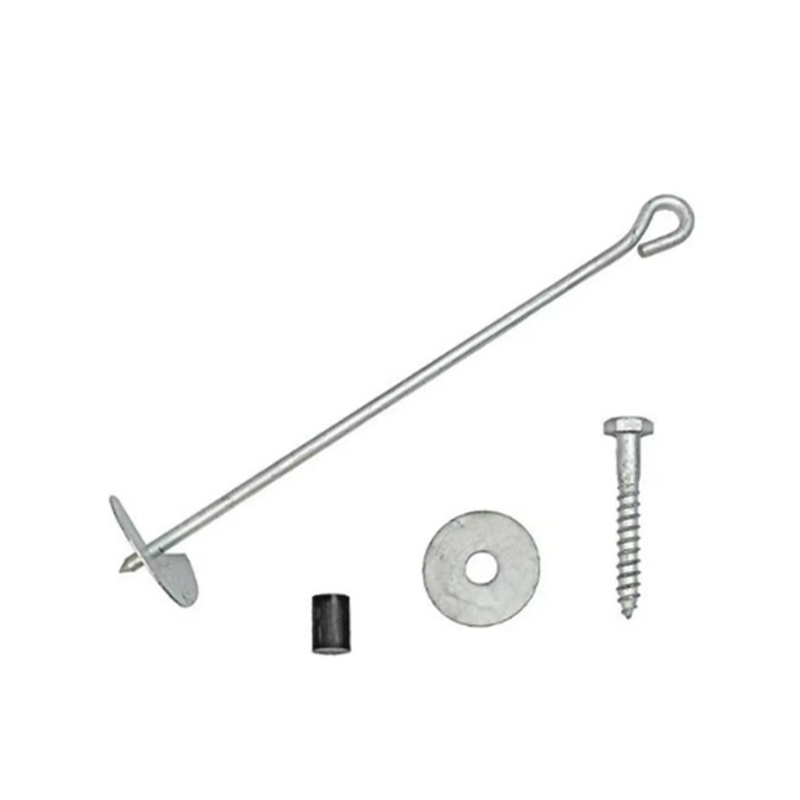
| Ground anchor | Hot dip galvanised, or expansion bolt for hard surfaces | Holds frames level through wet seasons and frost |
| Frame tube | Wall thickness and coating system in writing | A powder coat hides preparation problems underneath it |
| Seat | Material, thickness, hardware included, spares available | Seats wear first, so the spare parts list matters |
A powder coated finish is only as good as the preparation under it, and galvanising only as good as its thickness. Ask for the coating system and nominal thickness in writing, and for hot dip galvanising on anything that stays in the ground.
What to Put in the Enquiry
Suppliers quote what they are asked to quote. A precise enquiry gets comparable prices; a vague one gets a price for a different product. Include the item, the dimensions or drawing, material and finish, the required standard, quantities, packing, destination port and delivery window.
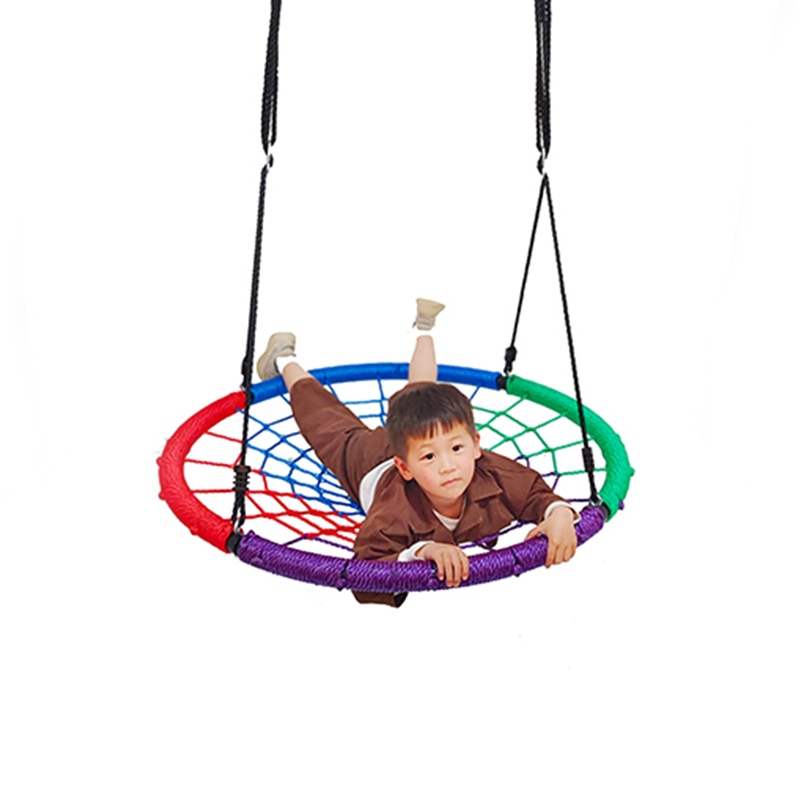
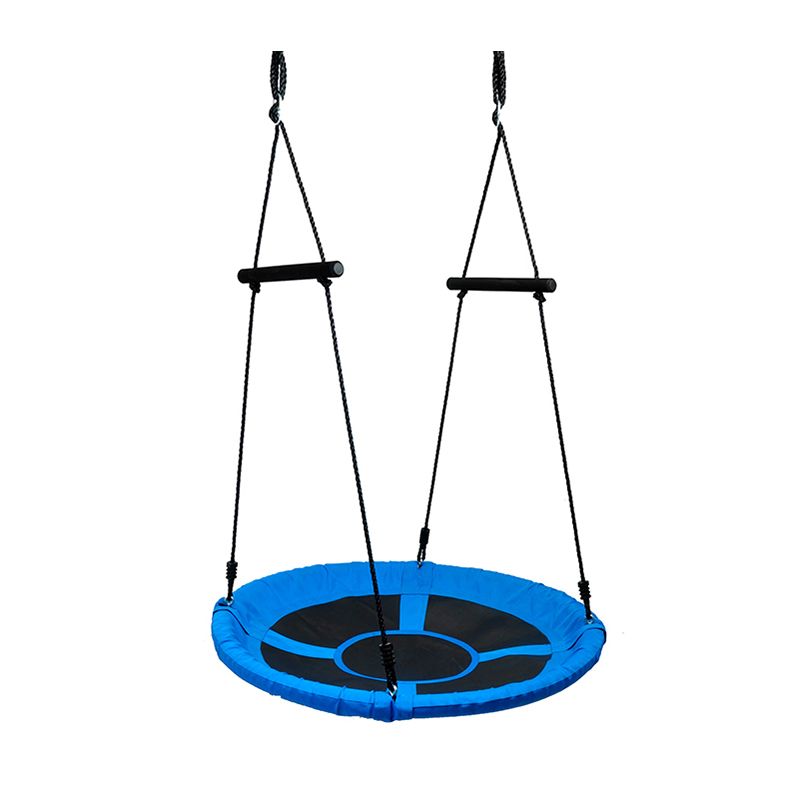
Popular items are often specified by size and material alone, so it helps to name the format. A large saucer swing, for example, is usually ordered by diameter and fabric, with the hanger hardware listed separately so nothing is assumed.
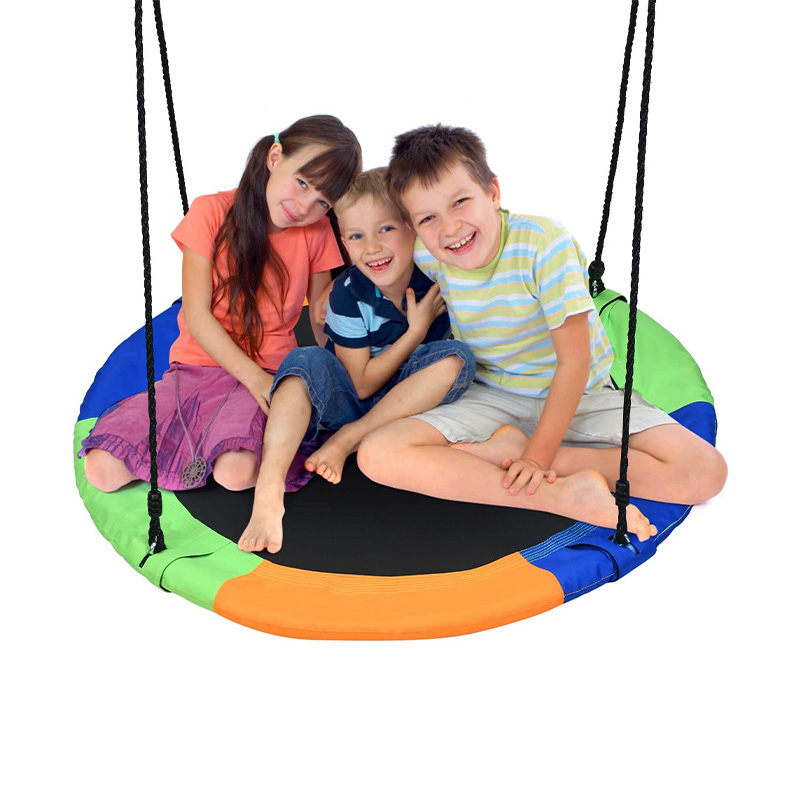 40-Inch Giant Oxford Saucer Swing YXS-BF04Oxford-fabric saucer swing in 40 and 45 inch sizes with a 272 kg limit, reinforced stitching and braided ropes; confirm diameter, fabric and hanger hardware.View Product →
For a multi element project, send one consolidated enquiry grouped by zone instead of six separate ones, and ask for the rated load and the spare parts list with the quote. If a specification is unclear, contact our team before the order goes out rather than after.
Installation, Inspection and Handover
The last stage decides whether the paperwork means anything. Before the site opens:
- Check every footing against the drawing and confirm the concrete has cured before the frame is loaded.
- Torque each fixing to the supplier figure, then mark it so any movement becomes visible.
- Measure the free height of fall on site and verify surfacing depth with a probe, not from the delivery note.
- Record seat heights, clear space in front of and behind each bay, and the first components likely to need replacing.
- Photograph the finished installation and file it with the maintenance schedule and the spare parts list.
After that, inspection becomes routine: weekly checks on moving parts and surfacing depth, monthly checks on fixings and timber, and a full review before each wet season. A worn strap costs little to replace. A frame pulled out of level by a failed anchor does not.
Building playgrounds is a sequence, not a shopping list. Zones and age groups set the layout, the site sets the structure, the fall height sets the surfacing, and the hardware decides how many winters the whole thing survives. Get those four in order and the quotes become comparable, the specification writes itself, and the playground you hand over is still the one you planned three summers later.