 Eng
Eng
 Español
 عربى
عربى Deutsch
 русский
 Français
Content
- 1 Why a Combined Swing and Slide Unit Makes Sense for Commercial Spaces
- 2 Key Specifications to Evaluate Before You Buy
- 3 Safety Standards and Compliance
- 4 Installation and Anchoring Considerations
- 5 Cost Considerations Beyond the Purchase Price
- 6 How to Choose the Right Configuration
- 7 Supplier Evaluation and Procurement Tips
- 8 Practical Recommendations for Different Buyers
- 9 Final Thoughts
A public playground needs equipment that survives constant use, meets safety expectations, and still makes children want to stay for one more turn. A commercial swing set with slide is one of the most effective combinations for this purpose, because it delivers the rhythmic motion of swinging and the quick, repeatable thrill of sliding in a single footprint. The buying decision, however, is not just about picking the largest model. It is about understanding structural materials, weight limits, anchoring requirements, accessibility, and the maintenance realities that come with outdoor installation.
Why a Combined Swing and Slide Unit Makes Sense for Commercial Spaces
A combined unit reduces the amount of equipment needed to create a varied play zone. Instead of buying a separate swing frame and a standalone slide, you install one structure that serves two of the most popular playground activities. That matters for parks, schools, daycare centers, campgrounds, and residential communities where ground space and budget are both limited.
From a supervision perspective, a single unit also makes it easier for parents or staff to keep an eye on children. The play zone is more compact, so sight lines are shorter. In a commercial setting, that simplicity can translate into fewer accidents and lower liability exposure.
Another practical advantage is installation efficiency. One concrete foundation or anchoring plan supports both activities, which reduces site preparation work compared with installing separate pieces of equipment. For a municipality or a school district managing several playgrounds, that is a meaningful cost saving.
The Difference Between Residential and Commercial Equipment
Residential swing sets are designed for one or two children in a backyard. Their frames are lighter, the seats are smaller, and the hardware is not expected to withstand years of continuous use. A commercial swing set with slide, by contrast, must accommodate more children per hour, heavier loads, and rougher treatment.
The key distinctions include:
- Frame tubing thickness and diameter: commercial units usually use larger galvanized steel posts with heavier wall thickness.
- Seat materials: commercial swing seats are often made of molded plastic or reinforced rubber, not wood or thin plastic that can crack.
- Hardware quality: commercial swing hangers and chains use closed hooks, heavy-gauge chains, and self-lubricating bearings to reduce wear.
- Certification and testing: equipment intended for public use is expected to meet playground safety standards such as ASTM F1487 in the United States or EN 1176 in Europe.
- Anchoring requirements: commercial structures need deeper concrete footings or ground anchors to resist tipping and movement.
Choosing a residential-grade product for a commercial site is a common mistake. The equipment may pass a visual inspection at first, but after a single season of heavy use, welds can fail, bearings can seize, and the slide surface can become rough or faded.
Key Specifications to Evaluate Before You Buy
The specification sheet tells you more than the sales photo does. Always check the following numbers before comparing prices.
Weight Limits and Capacity
A commercial swing seat for children typically supports at least 100 to 150 pounds per seat. The overall unit should state a maximum total load. If the manufacturer does not provide a clear weight limit, treat that as a red flag. Public equipment will be used by children of different sizes, sometimes several at once. The frame must be designed for the combined force of swinging motion, not just the static weight of seated children.
Frame Material and Finish
Galvanized steel is the most common frame material for commercial playground equipment. The galvanization process adds a protective zinc coating that resists rust. Some manufacturers add a powder-coated finish on top for color and extra protection. You should ask whether the steel is hot-dip galvanized or electro-galvanized. Hot-dip galvanizing creates a thicker coating and is better suited for outdoor commercial use.
The chart above compares expected service life for common frame materials in a public environment. Hot-dip galvanized steel offers the longest service life because the thick zinc layer protects the steel even if the outer coating gets scratched. Powder-coated steel can look more attractive and resist fading, but if moisture gets under the powder coating, rust can spread quickly. Treated wood requires regular inspection for splinters, cracks, and structural weakening, which is why most commercial operators prefer metal frames for swing sets with slides.
Slide Bed Material
The slide itself is usually made of stainless steel, roll-formed galvanized steel, or rotationally molded plastic. Stainless steel slides are fast and smooth, but they can get hot in direct sunlight. Plastic slides are more common on commercial units because they offer a balance of speed, heat tolerance, and color options. A good plastic slide bed should be at least 4 millimeters thick with a smooth, seam-free surface and raised edges to guide children safely.
Swing Hangers and Connectors
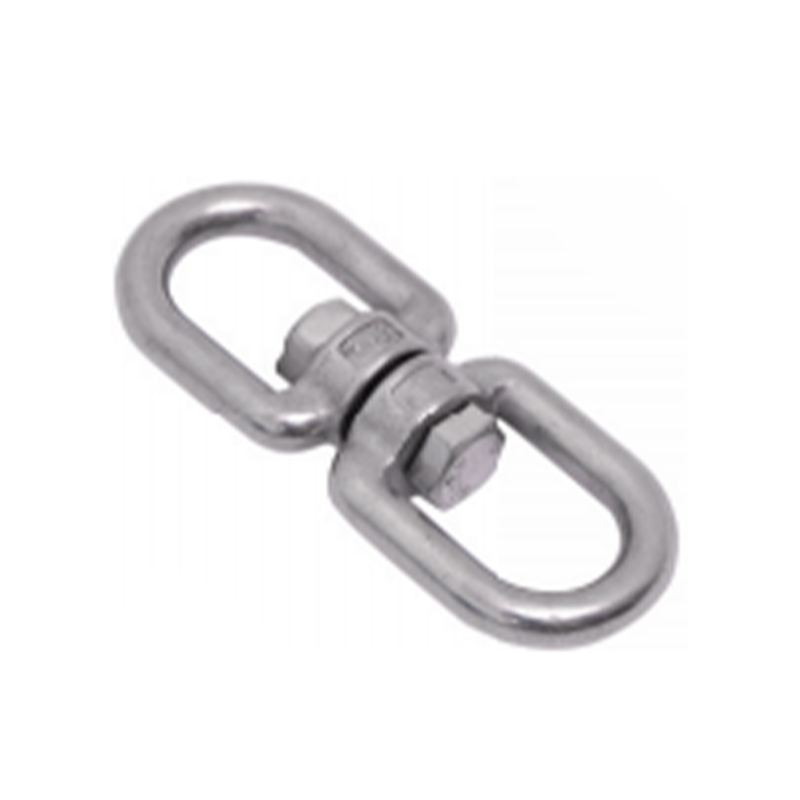
The connection between the swing seat and the frame is the most stressed part of the entire unit. Commercial swing hangers should use ball bearings or self-lubricating nylon bushings. The chain should be at least 6 millimeters thick, and the hooks should be closed and tamper-resistant. Some manufacturers offer a stainless steel 360-degree swivel ring that reduces chain twisting. This is a small component, but it has a significant effect on how smoothly the swing moves and how much maintenance the unit needs over time.
Safety Standards and Compliance
Safety is not a matter of opinion. Public play equipment must meet recognized standards that define clearance zones, entrapment risks, fall surfaces, and structural integrity. If a manufacturer cannot document compliance, the equipment should not be installed in a commercial setting.
| Standard | Region | What It Covers |
|---|---|---|
| ASTM F1487 | United States | Performance requirements for public playground equipment |
| CPSC Guidelines | United States | Playground surface, spacing, and maintenance recommendations |
| EN 1176 | Europe | Safety requirements and test methods for playground equipment |
| EN 1177 | Europe | Impact-absorbing playground surfacing |
| ISO 8124 | International | General safety requirements for play equipment |
These standards address practical risks. For example, a swing set with slide must have a fall zone that extends at least twice the height of the swing beam in front of and behind the swing. The slide exit zone needs a specified clearance area with impact-absorbing material. Openings on the structure must be sized so that a child's head cannot get trapped. When you compare different suppliers, ask which standard the unit is tested against and request a certificate or test report.
Fall Surfacing Matters More Than the Equipment Itself
The ground under and around the equipment does more to prevent serious injury than almost anything else. Loose fill materials such as engineered wood fiber, rubber mulch, or pea gravel should be installed at a depth of at least 30 centimeters for equipment up to 3 meters high. Poured rubber or rubber tiles are also acceptable, but they must be installed over a proper base layer.
Hard surfaces like concrete, asphalt, or compacted soil are not safe under any height of play equipment. Even artificial turf without an approved impact-attenuating layer below it is not acceptable. Before you finalize a purchase, measure the proposed equipment height and calculate the required fall zone so that the surfacing plan matches the unit you are selecting.
Installation and Anchoring Considerations
A commercial swing set with slide is heavy, but it is not necessarily stable on its own. Wind, swinging motion, and children climbing on the structure all create forces that can shift an unanchored unit. Most commercial frames require one of the following anchoring methods.
Concrete Footings
This is the most reliable method. The legs of the swing set are embedded into concrete piers that extend below the frost line in colder climates. Concrete footings prevent the structure from moving, but they also make relocation difficult. If you are planning a permanent playground, this is the recommended option.
Surface Anchors
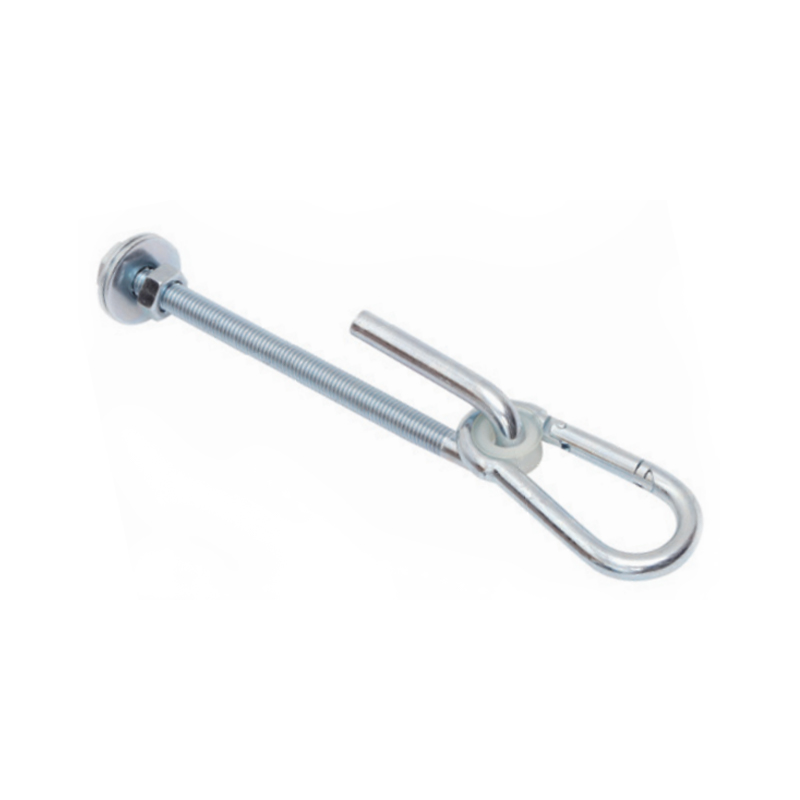
For temporary or semi-permanent installations, surface anchors can be used. These are steel stakes or auger-style anchors driven into the ground and attached to the frame with bolts or straps. The ground anchor sets used in playground projects are rated for different soil conditions. Clay and compacted soil hold anchors well, while sandy or loose soil reduces holding power significantly.
The following diagram shows how anchoring effectiveness changes with soil type and anchor design.
The values shown above are approximate ranges for a standard auger-style anchor rated for playground use. The exact holding power depends on anchor diameter, embedment depth, and whether the soil is compacted or saturated. For a commercial swing set with slide, you should always consult a site professional to verify the soil conditions. If the site has sandy soil or loose fill, consider concrete footings instead of ground anchors, because the anchoring capacity of sandy soil is often too low to secure a large swing structure safely.
Cost Considerations Beyond the Purchase Price
The purchase price of a commercial swing set with slide is only the starting point. The total cost of ownership includes delivery, site preparation, installation, safety surfacing, maintenance, and eventual replacement. A cheaper unit that requires frequent repairs is often more expensive over a ten-year lifecycle than a higher-quality unit with a longer warranty.
The chart above compares cumulative ownership costs for two hypothetical units over ten years. The premium unit costs more upfront, but its galvanized frame, commercial-grade swing hangers, and thicker slide bed reduce breakdowns and replacement parts. The budget unit looks similar in a brochure, yet its thinner metal and lower-grade bearings fail faster, leading to labor and part expenses that close the price gap. In practice, a commercial swing set with slide from a reliable manufacturer is almost always cheaper per year of service than a low-cost import that is sold without documented testing.
Maintenance Checklist
Regular maintenance extends the life of the equipment and reduces the risk of injury. A simple inspection every month should cover:
- Check swing chains and hangers for rust, deformation, or weak links.
- Inspect swing seats for cracks, sharp edges, or missing parts.
- Examine the slide surface for splinters, scratches deeper than 1 millimeter, or heat damage.
- Verify that all bolts and connectors remain tight and that no bolt cap is missing.
- Look at the anchor points for signs of lifting, corrosion, or soil erosion around the base.
- Remove any debris, glass, or loose stones from the fall zone.
Keeping a maintenance log is also a good practice. It helps you track when parts were replaced and gives inspectors or insurance auditors confidence that the equipment is being managed responsibly.
How to Choose the Right Configuration
Not all commercial swing sets with slides are the same. The number of swings, the slide height, and the overall footprint need to match the site and the age group that will use it. A unit intended for toddlers should have lower seats, short slides, and wider bucket-style seats. A unit for older children can have higher swing beams and longer slides, but it also requires a larger fall zone.
Consider these questions during your planning:
- What age range will use the equipment most often?
- How many children are expected to use the playground at peak times?
- How much space is available after the required fall zones are subtracted?
- Who will perform routine inspections and minor repairs?
- Is the site in a coastal area with salt air that speeds up corrosion?
If peak usage is high, a unit with two or three swing seats and one slide offers more capacity than a single-seat configuration. If space is tight, a compact unit with a shorter deck height may still meet the needs of younger children. The right choice depends on the specific site, not on the largest option in the catalog.
Compatibility with Existing Playground Components
A swing set with slide can stand alone, but it can also be part of a larger playground plan. When you are building a new site, look for equipment that uses similar materials, colors, and safety surfacing so the space feels cohesive. The product range from a manufacturer that also offers climbing rope ladders, nest swings, and playground accessories makes it easier to expand the site later without mixing incompatible designs.
Supplier Evaluation and Procurement Tips
Working with a manufacturer that controls its own production makes a meaningful difference in product quality and lead time. A company with in-house injection molding, metal fabrication, and coating departments can guarantee consistent quality because the critical processes are not outsourced to different suppliers. When you contact a potential supplier, ask the following questions.
- Can you provide a technical drawing or specification sheet for the swing set with slide?
- What safety standard does the unit comply with?
- What is the warranty period and what exactly does it cover?
- Can you supply spare parts for swing seats, hangers, and slide panels?
- How long does a typical production batch take?
- Do you offer custom colors or branding?
An honest supplier will answer these questions directly. A supplier that only sends marketing brochures or avoids the safety documentation may not have the manufacturing depth needed for a commercial project.
Why Customization Is Relevant
Commercial projects often require customization. A school district might want specific colors, a municipality might need a configuration that fits an odd-shaped plot, and a resort might want a slide that matches its architectural theme. A manufacturer with mold-making and in-house assembly capabilities can usually accommodate these requests more easily than a trading company that simply resells standard products.
If you are planning a custom project, request reference images of past work and ask for a pre-production sample of critical parts. The time spent on these checks is much smaller than the cost of replacing a non-compliant unit later.
Practical Recommendations for Different Buyers
Different buyers have different priorities. A school needs durability and low maintenance. A daycare needs low deck heights and comfortable seats for smaller children. A public park needs high capacity and robust anchoring. A camping ground might need a unit that suits a natural setting and can handle sandy soil conditions. Understanding your own priorities helps you narrow down the options.
The radar chart above compares priority patterns for public parks and campgrounds. Public parks tend to emphasize durability, certified safety compliance, and high capacity because they serve a large, diverse population. Campgrounds and resorts, by contrast, put more weight on appearance and ease of installation, because the equipment is part of a recreational atmosphere and may need to be moved or repositioned between seasons. A school or daycare would add another layer of priority for low entry height and the availability of infant or toddler seats. Using a chart like this internally helps you align your buying team around common criteria before comparing prices.
The Value of Reliable Component Selection
In a commercial swing set with slide, the seat hanger, chains, and bearing mechanisms are the parts most likely to fail first. Upgrading to stainless steel swivel rings and heavy-duty nylon suspension straps can prevent common complaints such as chain twisting, squeaking, and premature corrosion. While these components are not visible in the main product photo, they are often the difference between a swing set that feels smooth for years and one that constantly needs repairs.
Final Thoughts
Selecting a commercial swing set with slide is a process that rewards careful planning. Start by defining the age group, site conditions, and expected usage. Then compare units based on structural materials, safety certifications, and maintenance needs rather than price alone. A well-chosen unit will provide safe, enjoyable play for thousands of children over many seasons. If you are sourcing from a manufacturer, request technical documentation and confirm that the production process includes quality checks on welds, plastic moldings, and surface treatments. With the right equipment and a proper installation plan, a swing set with slide can become the centerpiece of a successful public play space.