 Eng
Eng
 Español
 عربى
عربى Deutsch
 русский
 Français
Content
- 1 What distinguishes a dependable commercial playground equipment brand
- 2 Material durability is the first thing a buyer notices
- 3 The product categories that define a full-range supplier
- 4 Manufacturing capability is the hidden differentiator
- 5 Choosing swing types for real commercial use
- 6 Lifecycle costs tell the real story
- 7 Questions to ask before selecting a brand
- 8 The bottom line
Two winters after a community park installed its new swing set, the hanger chains had already corroded, one seat had cracked around the bolt holes, and the brand that supplied the equipment could no longer provide replacement parts. Facilities managers know this story too well. The brand behind commercial playground equipment determines whether a project delivers years of reliable service or becomes a recurring maintenance headache. Before committing to a supplier, buyers need to look beyond the brochure price and evaluate the manufacturing depth, materials, safety compliance, and lifecycle support of each brand.
What distinguishes a dependable commercial playground equipment brand
Commercial playground equipment has a harder job than residential gear. It must endure continuous use, seasonal weather swings, and regular safety inspections, all while keeping operating costs low. A dependable brand shows its strength in four areas:
- Safety compliance. Reliable manufacturers design and test against recognized standards, such as ASTM F1487 in North America and EN 1176 in Europe.
- Material integrity. Hardware, plastics, wood, and textiles need to be selected for outdoor exposure, not for minimum cost.
- Manufacturing control. A factory with its own molding, metal, and coating lines can guarantee consistent quality far better than a brand that repackages imported goods.
- Lifecycle support. Spare parts availability, technical documentation, and responsive communication can make or break a maintenance team's ability to keep equipment safe.
Material durability is the first thing a buyer notices
The quickest way to judge a commercial playground equipment brand is to examine what its products are made of. The chart below summarizes typical service life expectations for the most common playground materials.
Stainless steel, particularly grade 304, performs best in humid, coastal, or salty environments because its natural oxide layer resists corrosion without depending on protective coatings. Galvanized steel is a reasonable choice for inland projects, but the zinc layer wears through at moving contact points over time. Blow-molded and rotationally molded plastic keeps its color and impact strength well, which is why most commercial slide and swing seats use it. Treated wood remains the budget option, yet it demands periodic refinishing and close checking for splinters and cracks. Fabric and webbing parts, including suspension straps and soft seat covers, always wear out fastest and should be budgeted as consumables. For a commercial buyer, the practical conclusion is simple: a brand that specifies 304 stainless hardware and virgin-grade plastic is designing for years of service, not just for the warranty period.
The product categories that define a full-range supplier
A commercial playground project rarely depends on one piece of equipment. Most sites need swing seats, a stable frame, hanging hardware, climbing elements, and interactive accessories from the same supplier to ensure compatible fittings and consistent quality. When you evaluate a brand, look for depth inside each category instead of a catalog that stops at a few generic models. A useful product catalog should cover:
- Swing seats and chairs, from high-back infant seats to flat adult-friendly seats.
- Nest and saucer swings that support inclusive group play.
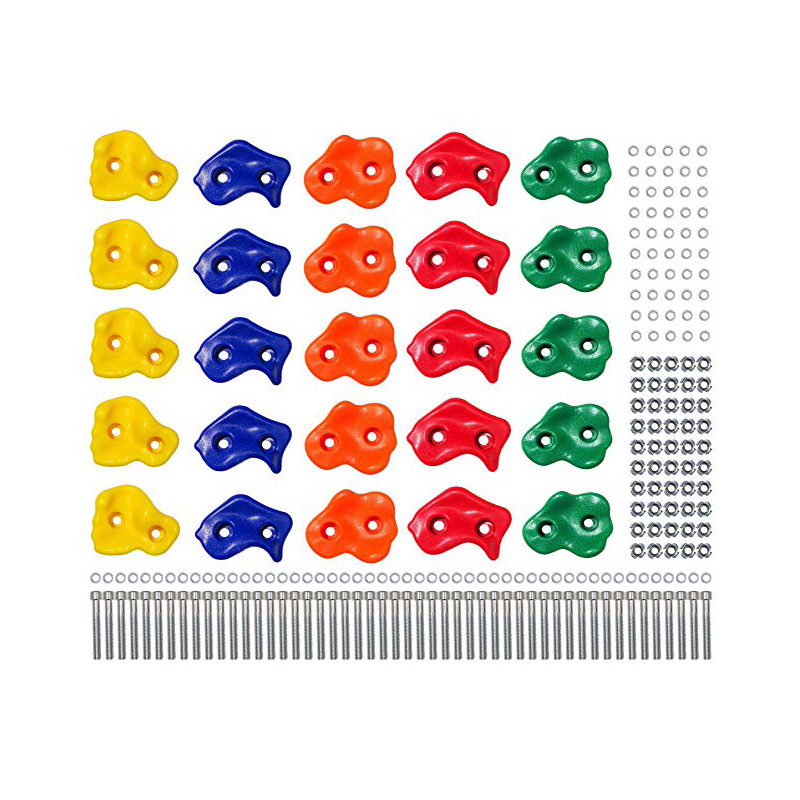
- Climbing nets, rope ladders, and rock holds for physical development.
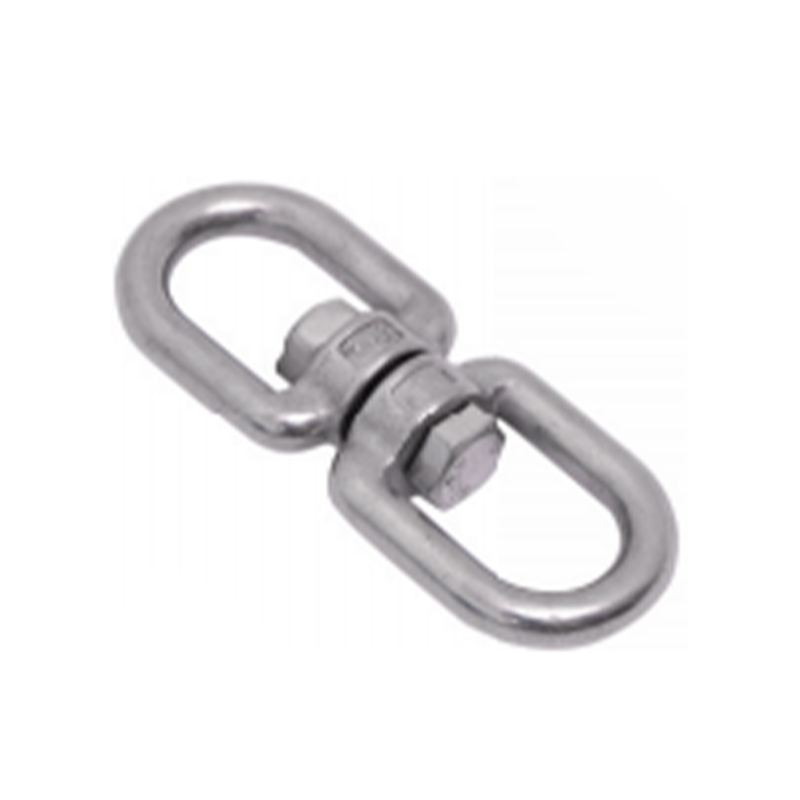
- Frames, hangers, and anchoring hardware that keep everything stable.
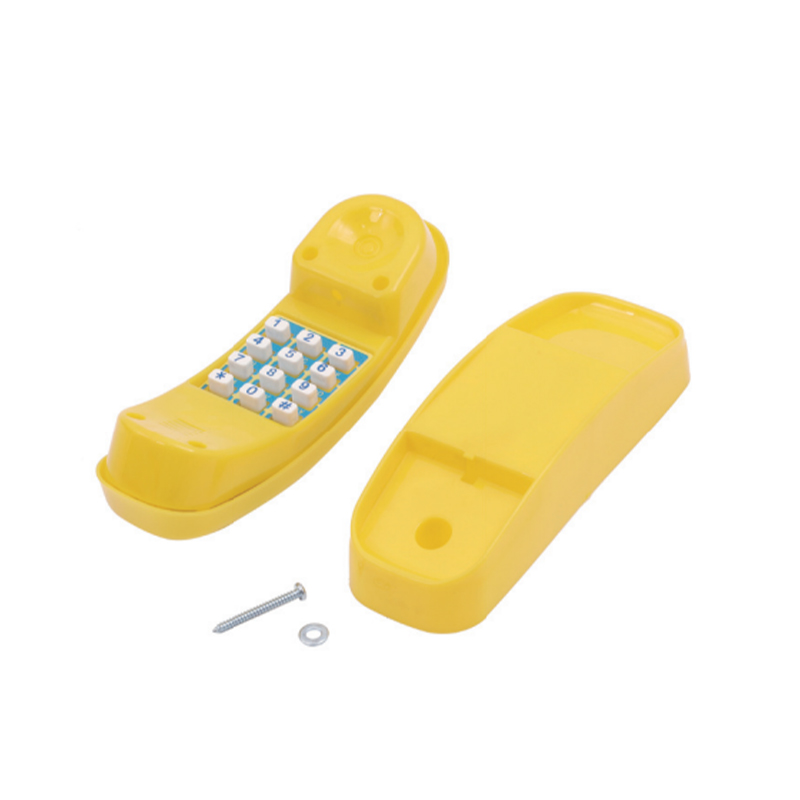
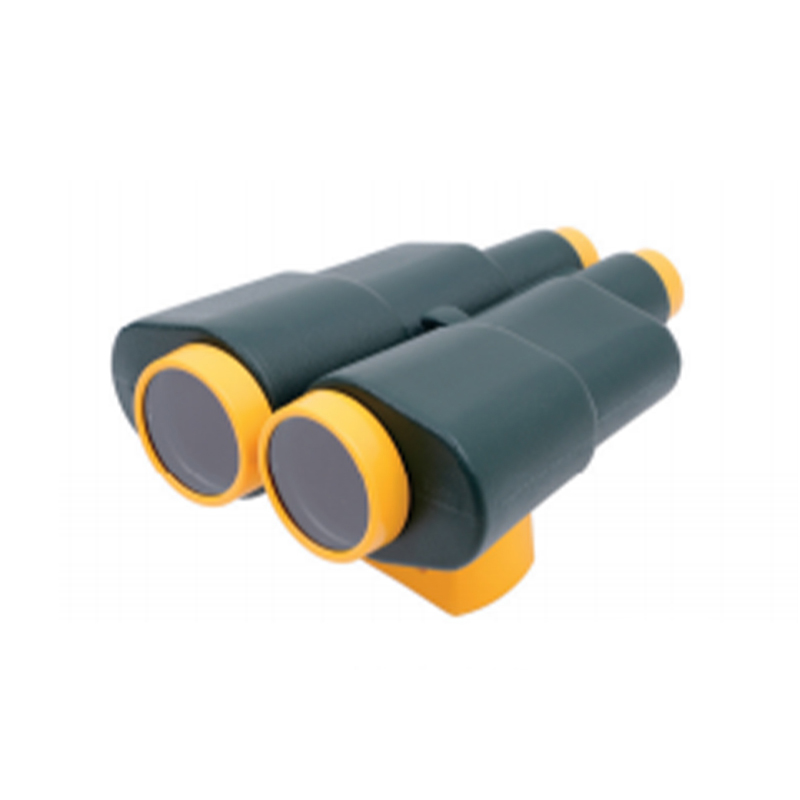
- Interactive accessories such as steering wheels, telescopes, and game panels.
Take climbing elements as an example. A commercial-grade climbing ladder needs braided synthetic rope that resists abrasion, rungs made of solid wood or durable polymer, and connections that do not loosen after months of heavy use. The engineering judgments behind safe and durable climbing systems for kids are exactly what a buyer should check before ordering.
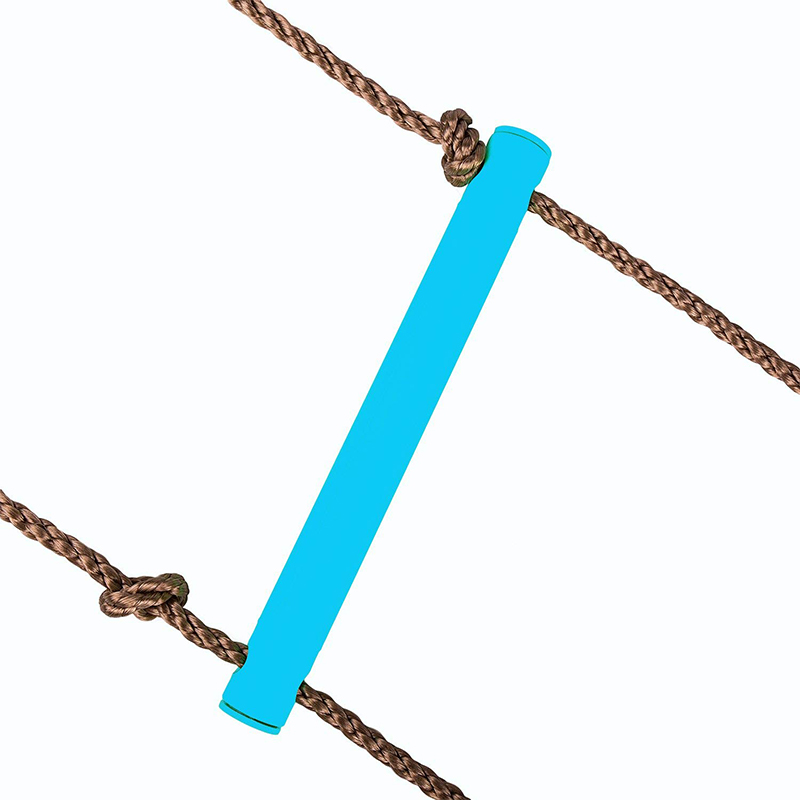 Rainbow Polypropylene Rope Ladder for Kids with Customizable RungsThis climbing ladder uses braided PE ropes and high-density PP rungs with fixed-knot connections, supporting up to 300 lbs. Its adjustable spacing suits ages 6-12, making it a practical choice for evaluating commercial-grade climbing durability.View Product →
A supplier whose catalog includes such climbing ladders demonstrates that it understands the demands of a busy playground.
Two brands can present very similar products, yet one is a real manufacturer and the other is a trading company that places orders with different factories. That distinction drives quality, lead times, customization, and spare parts supply. The chart below shows what experienced commercial buyers prioritize when they assess a brand.
Safety compliance heads the list, and there is no substitute for documented testing against a recognized playground standard. Durability follows closely, because replacement costs in a commercial setting are usually several times the original purchase price of the equipment. Age-inclusive design has become a mainstream requirement, as public play spaces are expected to serve toddlers, older children, and sometimes adults. OEM and ODM capability matters because a true factory can manufacture according to a buyer's drawings or samples, while a trading company can only pass the inquiry along. Lead time still matters for project scheduling, but experienced buyers treat it as a secondary factor compared with long-term reliability. A brand that scores well on these criteria is far less likely to disappoint after installation.
A manufacturer with in-house molding, metalworking, and coating lines controls the whole production sequence, which makes it easier to adjust designs, correct defects, and keep delivery promises. Buyers who work with such a brand can order custom sizes, branded colors, and modified components without worrying that the factory lacks the technical capacity to build them.
Choosing swing types for real commercial use
Swings are the most heavily used equipment on a playground, so the swing mix directly affects user satisfaction and maintenance workload. The radar chart below compares four common swing types across five practical dimensions.
Nest and saucer swings lead in inclusivity because several children can sit, lie, or kneel together, which also makes them an excellent choice for play areas that serve children with balance limitations. Belt swings remain the workhorse of commercial parks thanks to their low cost and minimal maintenance requirements. Infant bucket swings serve toddlers safely but cover a narrow age range. Tire swings offer a classic aesthetic and a generous seating capacity, yet they demand frequent inspection of the mounting chain and the condition of the tire itself. For most projects, a mix of belt swings, one or two nest swings, and an infant bucket swing gives the strongest balance between user capacity and maintenance budget. The best way to choose is to weigh the age range of your users, the expected daily traffic, and the inspection resources available to your maintenance team.
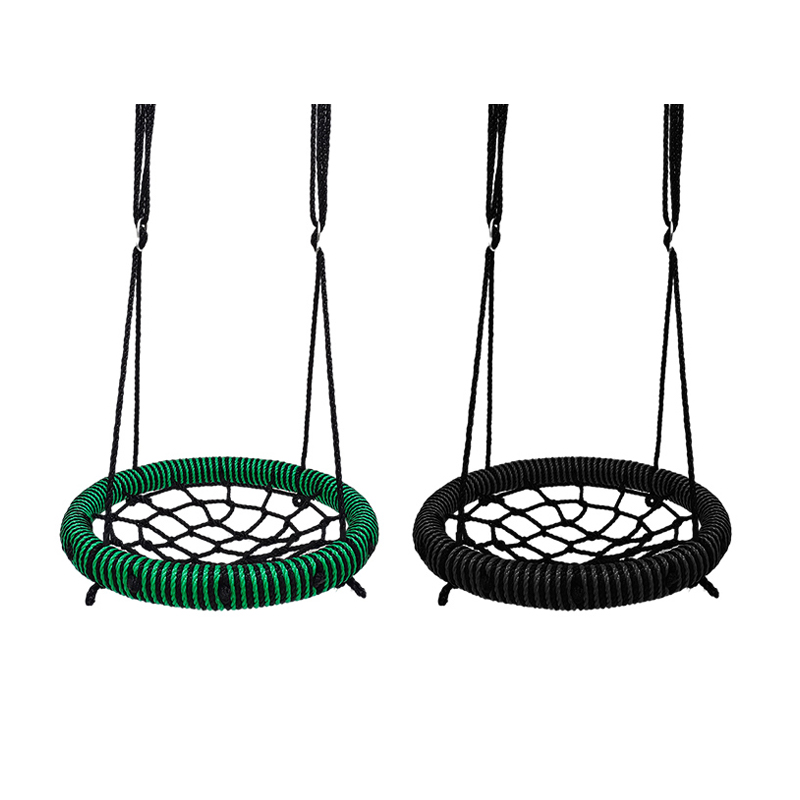 60cm Steel-Framed Nest Swing with Woven PE Rope SurfaceA compact nest swing reinforced with thickened steel pipes and a cross-woven net that passed 600-pound load testing. Its undetachable design simplifies installation, ideal for parks or backyards seeking a durable, inclusive swing option.View Product →
A well-built nest swing with a steel rim and tightly woven mesh can keep serving three children at once long after lighter models have worn out, so the structural quality of the rim and suspension points matters more than the initial look.
| Swing type | Recommended age | Typical capacity | Maintenance frequency |
|---|---|---|---|
| Belt swing | 5 years and older | 1 child | Low |
| Nest and saucer swing | 3 years and older | 3 to 4 children | Moderate |
| Infant bucket swing | 6 to 36 months | 1 child | Low |
| Tire swing | 4 years and older | 2 to 3 children | High |
Keep in mind that capacity claims vary between brands. Ask for the manufacturer's load rating and test documentation for each swing type rather than assuming that a larger seat automatically supports more weight.
Lifecycle costs tell the real story
The purchase price of commercial playground equipment is only the first line of the budget. Over a normal service life, inspection, spare parts, refinishing, and unplanned repairs often add up to more than the original invoice. The line chart below projects cumulative maintenance spending for two different supplier profiles.
A brand that uses corrosion-resistant hardware, UV-stabilized plastic, and high-strength suspension straps keeps maintenance spending modest over ten years. A cost-driven brand may win the quotation stage, but its standard-grade chains, thinner fasteners, and lower-quality bearings need attention almost from the first season. By year five, the gap between the two curves becomes impossible to ignore. By year ten, the budget brand has usually consumed more money in maintenance and replacement parts than a quality brand would have cost in total. Downtime adds another hidden expense, because a broken swing forces children onto other equipment and raises the risk of crowding and accidents. Buyers who evaluate the total cost of ownership instead of the first invoice consistently make better purchasing decisions.
Questions to ask before selecting a brand
A short list of questions separates serious manufacturers from resellers. Ask them during the first conversation and compare the quality of the answers as much as the product photos.
- Which safety standards does your equipment meet, and can you provide the test reports?
- What material grades do you use for hardware, plastic components, and swing seats?
- Do you operate your own production lines, or do you outsource manufacturing?
- Are spare parts available for at least ten years, and what is the typical lead time?
- Can you produce custom sizes, colors, or branding for a specific project?
Ask specifically about anchoring hardware, because ground stability is the most safety-critical part of any swing structure.
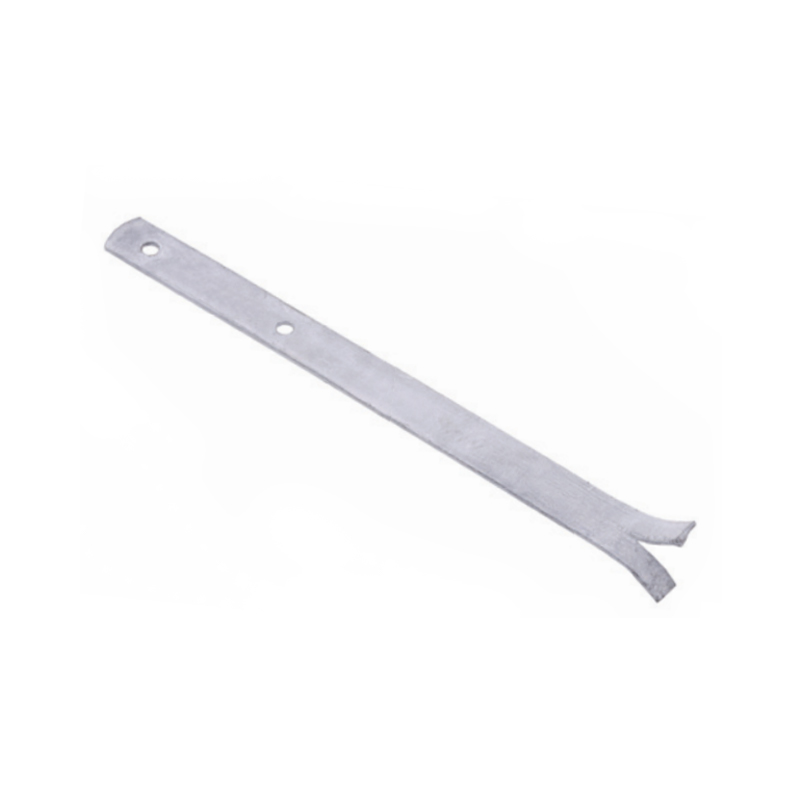 Hot-Dip Galvanized Split Ground Anchor for Playground FramesThis 2.5mm thick galvanized steel anchor secures swing sets and climbing structures through embedded concrete mounting with two bolt holes. Its corrosion-resistant split design addresses the critical need for stable, long-lasting ground anchoring in commercial play equipment.View Product →
A commercial installation relies on hot-dip galvanized ground anchors to stay level and secure for decades. A serious supplier will answer these questions without hesitation and back them up with documentation. If a brand cannot explain its material choices or show you the production process, it is better to keep looking. You can also contact the manufacturer directly to request specifications, samples, and references before you make a final decision.
The bottom line
The best commercial playground equipment brands share one characteristic: they treat long-term performance as the primary design criterion, not the sticker price. Look for documented safety compliance, transparent material specifications, genuine in-house manufacturing, and a practical approach to spare parts. These factors cost more at the start and save significantly more over the life of the playground. When those pieces are in place, the equipment keeps working reliably for the children who depend on it, and the operational budget stays predictable year after year.