 Eng
Eng
 Español
 عربى
عربى Deutsch
 русский
 Français
Content
A city parks department orders a twelve station obstacle course listed as fully galvanized. Eight months later, three suspension straps have frayed at the stitching and rust is blooming around the anchor plates. Nobody lied about the galvanizing. The purchase order simply never stated coating weight, webbing grade or pull out rating, so the supplier shipped to the loosest reasonable reading of those words.
An obstacle course is a specification problem before it is a design problem. Decide what the course must survive, who will use it and which parts carry the load, then put real numbers on the drawing. The sections below cover course types, the movement modules that repeat in most layouts, materials and hardware, safety clearances, and what to verify before a container leaves the factory.
Obstacle Course Types and What Each One Demands
Course type drives the later decisions: hardware grade, replaceable part design and how much supervision the site needs. A military assault lane and a kindergarten fitness loop can share one climbing module and still need completely different anchors.
| Course type | Typical users | Design priority | Most frequent failure |
|---|---|---|---|
| Military or assault | Adults in training | Load capacity and drainage | Corroded steel, packed footings |
| Inflatable | Children at events | Blower reliability, tie down points | Seam tears, wind tipping |
| Commercial pay to play | Public, ages 10 and up | Throughput and bolt on wear parts | Worn grips, loose fasteners |
| School or park fitness | Ages 5 to 14 | Age separation and sightlines | Vandalism, missing hardware |
| Backyard or camp | Families, small groups | Compact footprint, simple anchoring | Rot in untreated timber |
For a municipal or school project the practical question is not which type is best but which type the existing maintenance crew can actually service. A course with twenty five bolted joints needs an inspection schedule. A course built from welded, sealed assemblies needs a coating warranty instead.
The Five Movement Modules Behind Almost Every Layout
Strip away the theme and most courses reduce to five movements. Design each module from the movement backwards, then connect them so faster users do not collide with slower ones.
- Balance: low beams, wobbly bridges and stepping pods. Keep walking surfaces 200 to 400 mm above grade for young children.
- Climb: nets, rope ladders and molded holds. Grip size causes more incidents than structure height.
- Crawl and duck: tunnels and low nets. Check opening sizes against body dimensions, not against drawing scale.
- Hang and traverse: monkey bars, overhead ladders and rings. This module puts the highest load on the frame.
- Vault and step: platforms, low walls and balance logs. Rounded edges and slip resistant tops, because users jump on them.
 Hand-Woven Climbing NetPREV:Polyester Climbing Cargo Net For Kids OutdoorView Product →
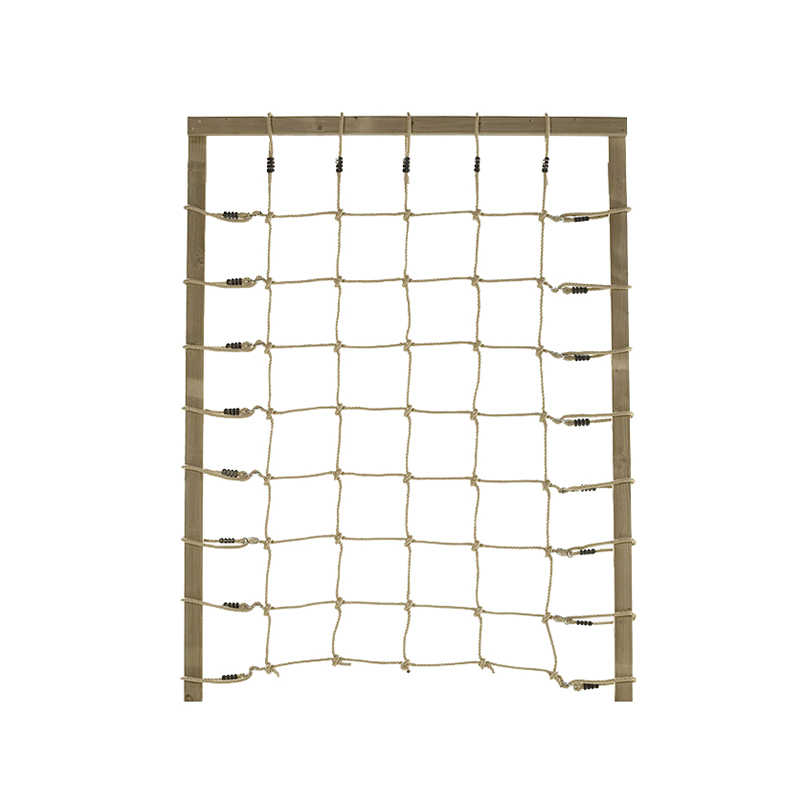
A handwoven climbing net shows why these details matter. A 16 to 20 mm rope with 40 to 60 mm openings gives a firm handhold and a place for a foot without trapping fingers. Knotted nets loosen at the corners first, which is exactly where the load concentrates. Ask for mesh size, rope fiber and UV package in writing.
Materials and Hardware That Decide Service Life
Three decisions separate a course that lasts five seasons from one that lasts two: steel protection, polymer UV stability and the load path at each anchor.
| Component | Common specification | What to state on the drawing | Typical failure mode |
|---|---|---|---|
| Steel posts and frames | Hot dip galvanized, 60 to 80 micron zinc | Coating thickness, weld dressing, drain holes | Rust at welds and cut ends |
| Bolts, clips and hooks | 304 stainless or hot dip galvanized steel | Grade, thread type, tightening torque | Loosening under vibration |
| Suspension straps | High tenacity nylon webbing, 25 to 50 mm | Breaking strength, stitch pattern, UV additive | Stitch failure at the buckle |
| Rope and netting | 16 to 20 mm polyester or polypropylene | Fiber blend, UV package, splice type | Abrasion at contact points |
| Plastic parts | UV stabilized HDPE or LLDPE | Wall thickness, regrind limit | Cracking at stress points |
| Timber elements | Kiln dried beech or pine | Moisture content, preservative, sanding grade | Splitting at bolt holes |
 High-Strength Nylon Suspension StrapPREV:No previous articleView Product →
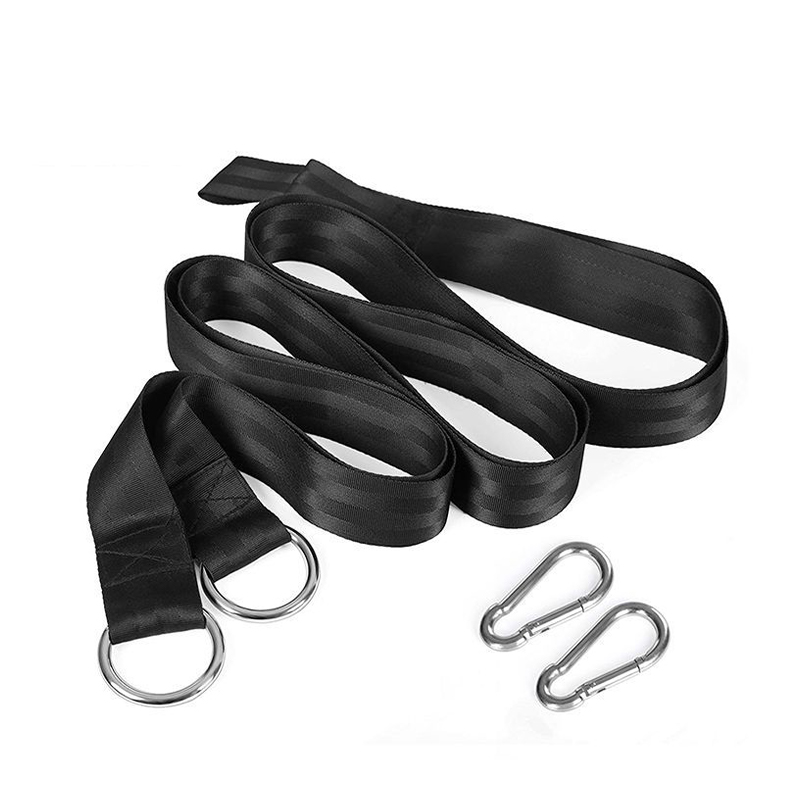
Straps are the quiet weak point of many courses. Webbing rated at 1,000 kg of straight pull can still fail when it runs over a sharp bracket edge that cuts the outer weave. Specify reinforced eyes and confirm that every bracket in the load path has a radius rather than a square corner.
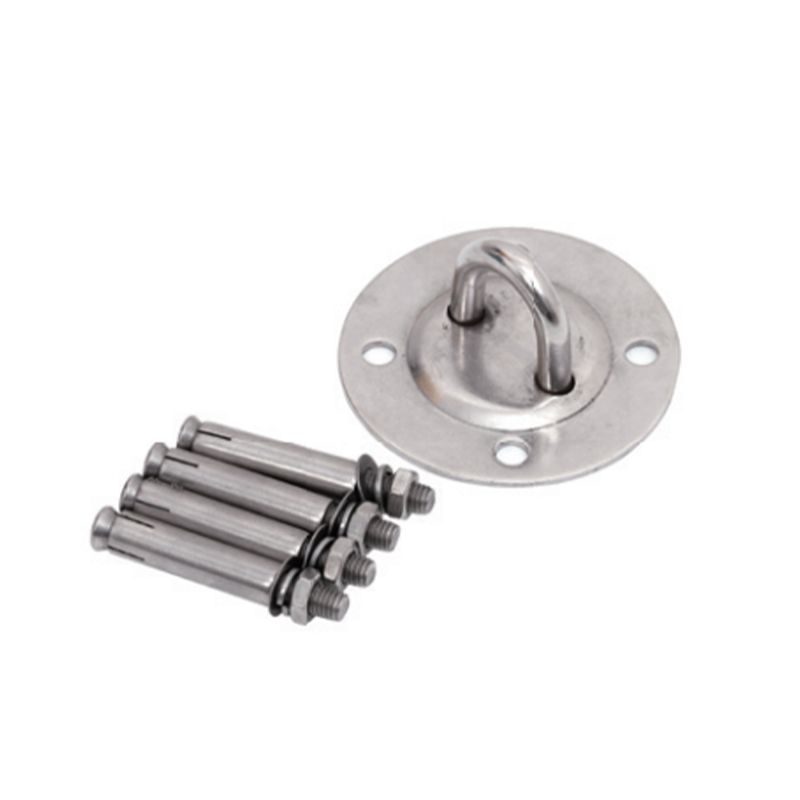 Stainless Steel Multi-Function Mounting PlatePREV:Square Swing Corner BracketView Product →
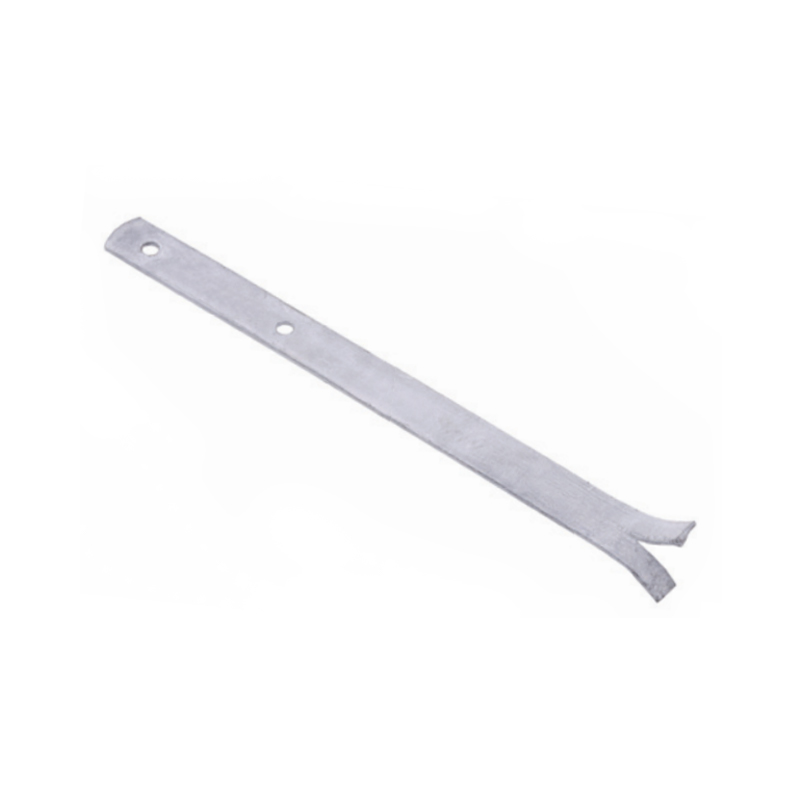
Anchor plates deserve the same care. A stainless mounting plate with several bolt positions lets an installer correct for concrete poured slightly off, and it spreads load across a wider area than a single hook. Before shipment, ask for salt spray results on the coating and tensile records for the strap and plate assemblies.
Safety, Clearances and Layout Rules
Most incidents on these structures are layout incidents rather than equipment incidents. The hardware holds. The user lands badly, collides with the next station, or steps onto surfacing that never matched the fall height.
- Free height of fall: measure from the highest designated standing or hanging surface, not from the top of the structure.
- Use zone: extend the impact area in front of and behind any traversing element, not only underneath it.
- Entrapment: test openings for head, finger and clothing traps, including gaps that appear when a net is loaded.
- Age separation: keep equipment for ages 5 to 12 apart from equipment for older users.
- Surfacing: match loose fill depth or synthetic tiles to the free height of fall, and check depth monthly in heavy traffic areas.
- Sightlines: a supervisor at the entrance should see every station without walking the route.
Plan against the standard the buyer must satisfy, such as the EN 1176 series in Europe or ASTM F1487 in the United States, and keep copies of the relevant clauses with the drawing package. Buyers who want more detail on climbing loads can review guidance on what makes a safe and durable climbing system for kids, because a climbing net follows the same load path logic as a traverse bar or a swing hanger.
Give the installer a station by station drawing with footings, torque values and surfacing depth marked on it. Courses that arrive as a box of parts and a photograph get installed to whatever standard the crew remembers that day.
Sourcing an Obstacle Course: Drawings, Samples and Inspection
Most projects need custom production rather than catalogue buying, because station spacing and footing layout are site specific. A manufacturer with its own molding, metal and coating shops can adjust all three without waiting on an outside vendor.
- Send a drawing or a physical sample, and mark which dimensions are fixed and which may flex.
- Confirm materials and finishes in writing, including zinc thickness, webbing grade and resin type.
- Approve a pre production sample and keep it as the reference for the shipment.
- Request a pre shipment inspection report with photographs of every joint type and coating test data.
- Order spare parts with the first order, especially straps, clips and plastic caps.
Packaging matters more than buyers expect. Long posts are usually damaged first in transit, so specify end caps, bundle strapping and a loading plan that keeps heavy hardware away from nets and molded parts.
Inspection and Maintenance Rhythm
A course is only as safe as the last inspection, so build the checks into the operating schedule instead of reacting to damage reports.
| Frequency | What to check | Action if found |
|---|---|---|
| Weekly | Strap condition, bolt tightness, litter and glass | Replace straps, retorque, clear debris |
| Monthly | Surfacing depth, net tension, sharp edges | Top up loose fill, re tension, dress edges |
| Quarterly | Footings, corrosion at welds, moving parts | Touch up coating, replace worn parts |
| Annually | Structural review against the original drawing | Document repairs, plan replacements |
Record every repair with a photograph and a date. When a supplier claims a coating is holding up, a two year photo history answers the question faster than any laboratory report.
An obstacle course succeeds or fails on the details that never appear in the marketing photograph: zinc thickness on a post, stitch pattern on a strap, bolt positions on an anchor plate, and a maintenance schedule that outlasts the opening ceremony. Write those details into the drawing, verify them before shipment, and the course will still be in service after the theme has been repainted twice. Buyers who want to discuss a custom layout, a sample or a full specification package can reach the manufacturer through the contact page.