 Eng
Eng
 Español
 عربى
عربى Deutsch
 русский
 Français
Content
A backyard gymnastics bar fails in a predictable order. First the bar flexes. Then the posts shift. Then the anchors pull loose. By the time the coating starts to rust, the safety problem has already been visible for months. The bar itself is rarely the weak point. The support system, the connection hardware, and the soil or concrete under the anchors decide whether the structure stays usable.
That is why buying an outdoor gymnastics bar is not a simple steel shopping decision. It is a system decision that includes bar diameter, span, height, anchoring method, coating, and the way each clamp or ring connects to the frame. A bar that feels solid in a dry test can become a loose, noisy hazard after one rainy season if the hidden parts are underspecified.
What an Outdoor Gymnastics Bar Includes
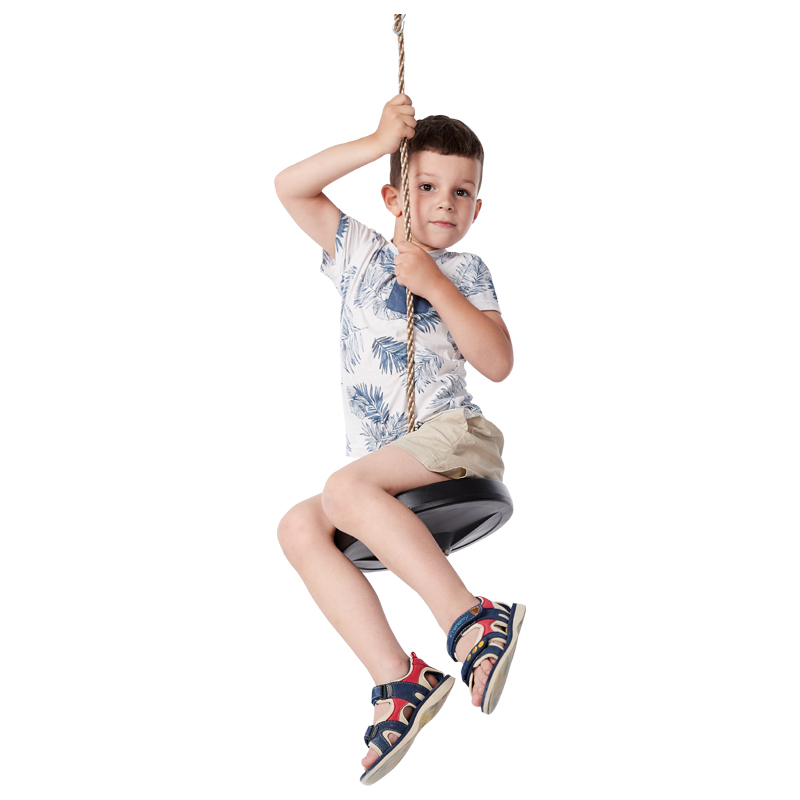
The term outdoor gymnastics bar covers several products that serve different training needs. A horizontal bar is usually a fixed or freestanding steel bar for pull-ups, swings, and basic gymnastics movements. A pull-up bar may be wall mounted, frame mounted, or part of a larger play structure. A trapeze bar and gymnastic rings are suspended from a frame or beam and add swinging and support work. A strap bar is a training bar that allows quick hand adjustments and is often used by young gymnasts.
Choosing between them starts with the user and the movement. A six-year-old swinging on a trapeze bar places very different loads on the structure than a ninety-kilogram adult doing repeated pull-ups. The same steel tube can be perfectly adequate for one use and completely wrong for the other.
| Format | Typical use | Mounting method | Main load concern | Common risk |
|---|---|---|---|---|
| Horizontal bar | Pull-ups, swings, basic gymnastics | Independent posts or wall brackets | Horizontal thrust and dynamic swing | Post settlement or anchor pull-out |
| Pull-up bar | Strength training for adults | Wall, frame, or freestanding rack | Repeated vertical load | Weak wall substrate or bar bending |
| Trapeze bar | Children swinging and hanging | Swing frame or tree strap | Swing and rotation | Worn connections or chain failure |
| Strap bar | Gymnastics training support | Independent frame or ground anchor | Fast dynamic load | Frame wobble or loose ground anchor |
| Gymnastic rings | Support, swing, and strength work | Beam, hanger, or frame | Strap and attachment load | Strap wear or attachment failure |
Load, Span, and Anchor Come First
If a bar moves when a child hangs on it, the first suspect should be the anchor, not the bar. Expansion bolts are only as strong as the concrete or masonry they enter. Ground stakes are only as stable as the soil around them. Tree straps depend on a living trunk that can flex, grow, and shed bark. Each method has a different failure mode, and each one needs a different safety check.
For a permanent outdoor gymnastics bar, concrete footings are the most reliable base in most soils. The footing must sit below the frost line where freezing and thawing occur. The post should be centered in the concrete, and the concrete should cure before the bar carries any load. A common playground construction practice is to check pull-out resistance, not just the volume of concrete poured. A footing that looks large can still fail if the soil is soft, wet, or backfilled without compaction.
For temporary or renter-friendly setups, heavy nylon suspension straps and ground anchors can work, but they must be inspected before every session. Straps abrade. Anchors work loose. Quick-connect clips can bend if they are loaded at an angle. A bar that is easy to move is also easy to move out of alignment, so the user must confirm that both ends remain level and secure.
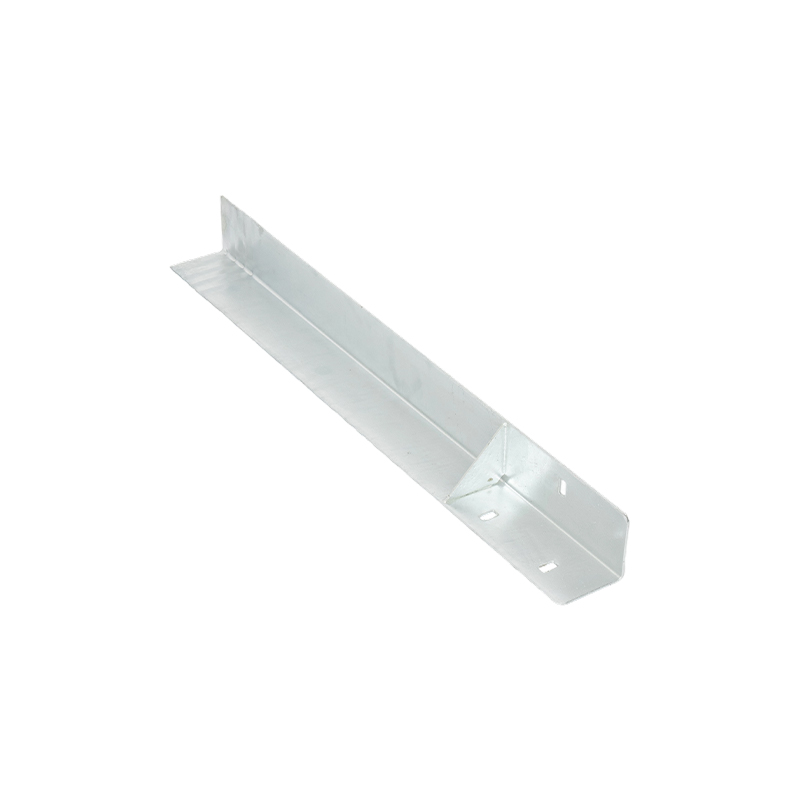 Giant Powerbar Gymnastics BarPREV:Hot-Dip Galvanized Split Ground AnchorView Product →
Steel, Coating, and Corrosion
Outdoor steel has three common protection paths: hot-dip galvanizing, electroplating, and powder coating over prepared steel. Hot-dip galvanizing generally gives the best long-term corrosion resistance because the zinc coating protects the steel even when the surface is scratched. Electroplated parts look clean and uniform, but the coating is thinner and performs poorly in coastal air or frequent rain. Powder coating provides color and a smooth feel, yet it can chip at weld edges and threaded connections.
Buyers should ask about tube wall thickness, zinc coating weight, and salt spray test results. A bar with a thick, glossy coating can hide a thin wall. A wall that is too thin will flex under load, and flexing eventually cracks the coating at the welds. For coastal areas, 304 stainless steel hardware is often worth the higher cost, especially for swivel rings, clips, and mounting plates that stay wet longer than the main bar.
Bar Diameter, Height, and Clearance
Grip comfort and hand size drive bar diameter more than appearance does. A bar that is too thick forces the hand to open and reduces control. A bar that is too thin concentrates pressure on the fingers. For children, a diameter around 25 to 28 millimeters is commonly comfortable. For adults, 28 to 32 millimeters is a practical range for pull-ups and swings. These are general guidelines, not fixed standards, and the final choice should match the intended user group.
Height should be adjustable when possible. A fixed bar that is perfect for a ten-year-old may be unusable for an adult, and a bar set for adults can be intimidating or unsafe for young children. A practical planning range is 1.2 to 1.5 meters for children and 2.0 to 2.4 meters for adults who perform full hanging movements. The exact height also depends on the movement. Pull-ups need full foot clearance. Swinging movements need more space in front of and behind the bar.
- Keep at least two meters of clear space around the bar.
- Use a shock-absorbing surface under the bar, such as grass, mulch, or rubber tiles.
- Check that the bar ends cannot catch clothing or skin.
- Confirm that the frame does not create a head strike point during swings.
Hardware and Connection Details
The small parts decide how the bar feels in use. Quick-connect clips should close fully and sit straight under load. Swivel rings should rotate smoothly without grinding. Hangers and brackets should match the tube diameter and wall thickness. A loose connection creates noise, movement, and wear that spreads to the rest of the structure. A tight connection distributes load and keeps the bar stable.
For suspended elements such as gymnastic rings and trapeze bars, the attachment point is the critical link. The strap or chain must be rated for dynamic load, not only static weight. The hanger must be fixed to a beam or frame that cannot rotate or slide. If the frame is made from round tube, a flat mounting plate often needs a curved saddle or a properly sized bracket to avoid point loading.
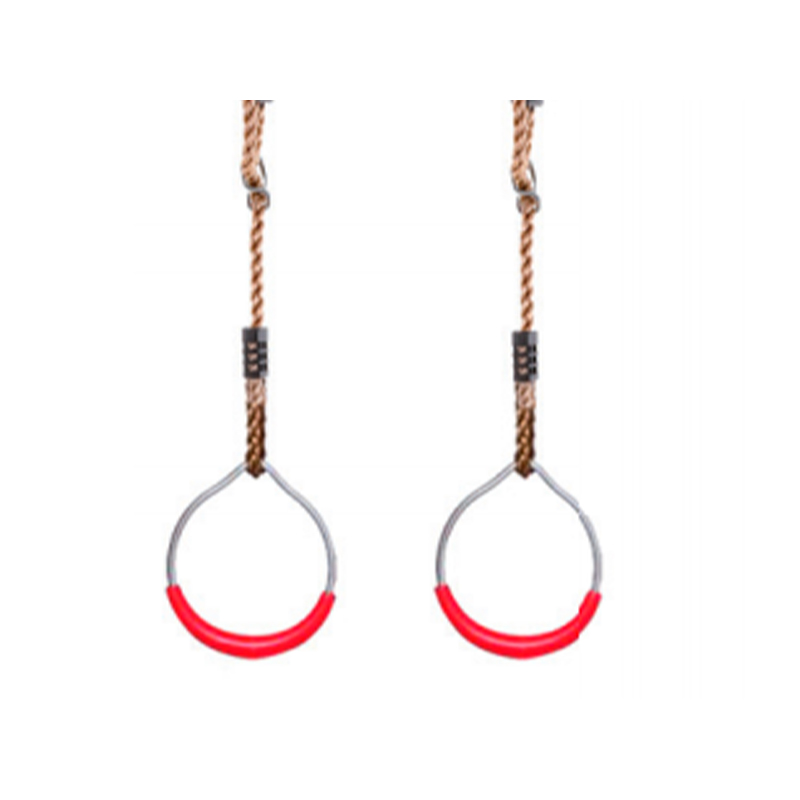 Kids Non-Slip Gymnastic RingsPREV:Natural Birch Wood Gymnastic Rings For KidsView Product →
Buying from a Manufacturer
When an outdoor gymnastics bar is part of a larger playground or swing project, the buying decision moves from retail to supply. A manufacturer that produces swing seats, swing frames, hangers, and hardware can often supply a matched system instead of unrelated parts. That matters because tube diameter, thread size, hook opening, and coating thickness must work together. A mismatch between a bar and a bracket can create a failure point that no single component inspection will catch.
For custom projects, ask how the supplier handles drawings and samples. A capable factory should be able to develop a bar or frame from a customer drawing, confirm dimensions before production, and inspect the finished batch with measurable tools. A measurement room with a coordinate measuring machine, tensile tester, optical projector, and salt spray chamber can check welds, threads, coating, and material performance. These checks do not replace third-party certification, but they show whether the supplier controls its own process.
Purchase risk usually appears in three places: tube wall thickness, coating thickness, and thread quality. A supplier may quote a lower price by reducing wall thickness by a fraction of a millimeter, switching from hot-dip galvanizing to electroplating, or skipping a final thread check. Those changes are hard to see in a photo. They become obvious after a season of use. Request a sample, measure it, and compare it with the production specification before placing a large order. If you need help matching bars, hangers, and anchors for a specific project, contact our team with the intended user group and installation method.
For broader background on outdoor fitness safety and durability, this article on outdoor fitness tools and core training is a useful starting point.
Installation and Maintenance Checklist
- Confirm the user weight and movement type before choosing the bar and anchors.
- Check the soil, concrete, or wall substrate at the installation point.
- Set posts in properly cured concrete or use rated anchors for the surface.
- Verify that all bolts, clips, and hangers are tight before first use.
- Inspect straps, chains, and connection points before every session.
- Look for coating cracks, rust stains, and bending after storms or heavy use.
- Recheck anchor tightness monthly during the first season.
- Replace worn straps, clips, or rings instead of repairing them with wire or tape.
A safe outdoor gymnastics bar is not the one with the thickest catalog photo. It is the one whose anchors match the ground, whose steel and coating match the climate, and whose hardware matches the load. Start with the installation method, then select the bar diameter and height, and finish with the connection details. That order prevents the most common and most expensive mistake: buying a strong bar for a weak base.