 Eng
Eng
 Español
 عربى
عربى Deutsch
 русский
 Français
Content
- 1 What Fails First When Older Kids Use a Play Set
- 2 Load Ratings and Dimensions Worth Buying Against
- 3 Swing Seats and Frames Built for Heavier Riders
- 4 Climbing and Upper Body Elements That Keep Tweens Interested
- 5 A Sourcing Checklist for Distributors and Project Buyers
- 6 Standards and Documentation Worth Requesting
- 7 The Practical Answer
A twelve year old on a swing is not a small child using oversized equipment. At the bottom of a full arc, a 45 kg rider can push two to three times that force into the hanger, the chain and the frame, and they will repeat that motion several hundred times in one afternoon. That number, not the age range printed on the carton, is what should decide the purchase.
The short answer for anyone buying outdoor play equipment for 12 year olds is simple: rate the suspension system and the connection hardware first, the seat second, and the frame third. Age labels on consumer play sets are written to cover a whole family, not a 55 kg rider who swings to the full height of the chains. Get the load path right and everything else becomes a straightforward choice.
What Fails First When Older Kids Use a Play Set
Play sets rarely fail at the frame tube. They fail at the joints, and they fail in a predictable order. The hook opens, the chain wears at the link, the wooden seat splits between the bolt holes, and the anchor creeps out of wet soil. Every one of those is a load path problem rather than a materials problem, which is why a heavier rider accelerates the failure without any visible warning beforehand.
| Component | Common failure mode | Better specification |
|---|---|---|
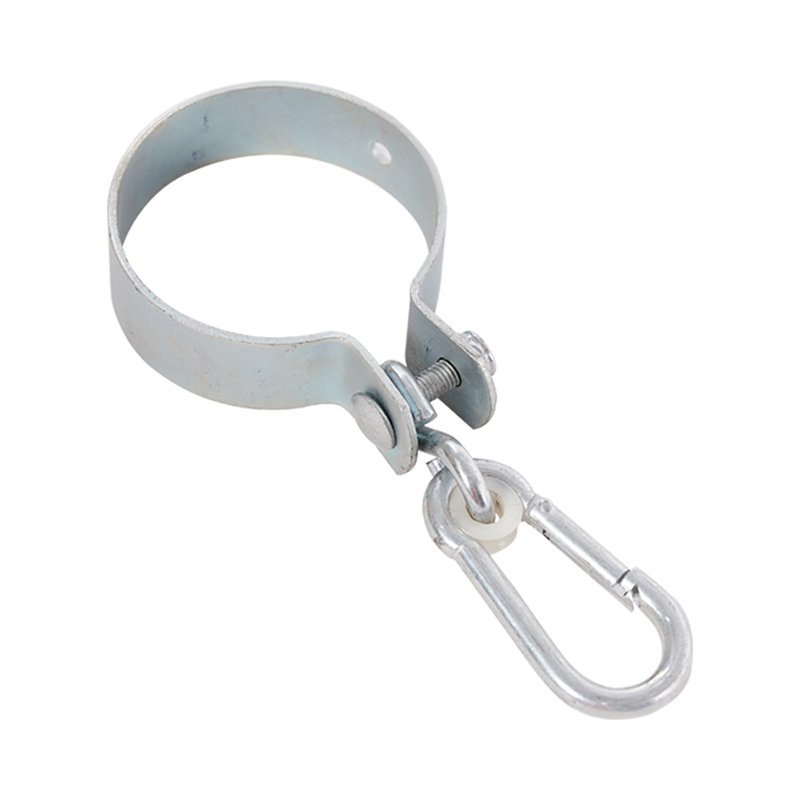
| Open hook on the swing hanger | Bends open and drops the seat under repeated dynamic load | Closed eye hanger, or a galvanized quick connect clip with a stated working load |
| Chain or rope suspension | Link wear, internal abrasion and UV degradation | High strength nylon suspension strap or galvanized chain with a rated working load |
| Wooden swing seat | Cracking along the grain between the fixing holes | Hardwood or reinforced pine seat with through bolts and steel plates at the holes |
| Ground anchor | Pull out in soft, sandy or saturated ground | Hot dip galvanized split ground anchor, or a concrete footing sized to the frame |
| Frame joints | Loosened bolts and rust bleeding from welds | Rustproof frame with welded gussets and hot dip galvanized fasteners |
The pattern is useful when you are judging a supplier. If the catalogue states the working load of the hanger and the anchor, the rest of the set is usually built to the same discipline. If the same catalogue lists a swing as suitable for ages 3 to 12 with no hardware data at all, that age range is describing the width of the seat, not the strength of the product.
Load Ratings and Dimensions Worth Buying Against
Two numbers do most of the work in a specification: rider mass, and the amplification that a swinging motion applies to it.
| Parameter | Target for tween use | Why it matters |
|---|---|---|
| Rider body mass | 35 kg to 65 kg | Sets the baseline the whole assembly has to carry |
| Dynamic amplification at the bottom of the arc | Roughly 2.5 times static load | Converts body mass into the force the hanger actually sees |
| Design load per swing point | 150 kg or more | Covers two riders on a tandem or glider seat |
| Suspension safety factor | 5 to 1 on the working load | Standard practice for any connection above head height |
| Rope or webbing size | 16 mm climbing rope, 25 mm webbing | Hand comfort for older children and slower wear |
| Metal finish | Hot dip galvanized or 304 stainless | Keeps red rust away from bolt holes and welds |
| Seat to ground clearance | Check the standard edition applied in your market | Prevents dragging feet and hard landings |
A 55 kg rider is heavy, but the swinging is what drives the requirement. At the bottom of the arc the chain is not just holding the rider, it is reversing their direction, and that reversal multiplies the static load. Designing for static mass is exactly why light duty sets feel loose after one season: the connections have already started to yield.
Finish is the other half of the equation. Powder coating over untreated steel will look fine for a year in a coastal garden and then bleed rust from every bolt hole. Hot dip galvanizing and 304 stainless cost more per piece and are the reason a public playground swing can stay in service for a decade.
Swing Seats and Frames Built for Heavier Riders
Seat selection
For riders aged 11 to 13, reinforcement at the fixing points matters far more than colour. A reinforced pine seat rated for both children and adults, with through bolts instead of screws and steel plates at the holes, spreads the load across the board rather than concentrating it at two points. Blow moulded plastic and EVA seats work just as well, as long as they are specified with a load rating rather than a size.
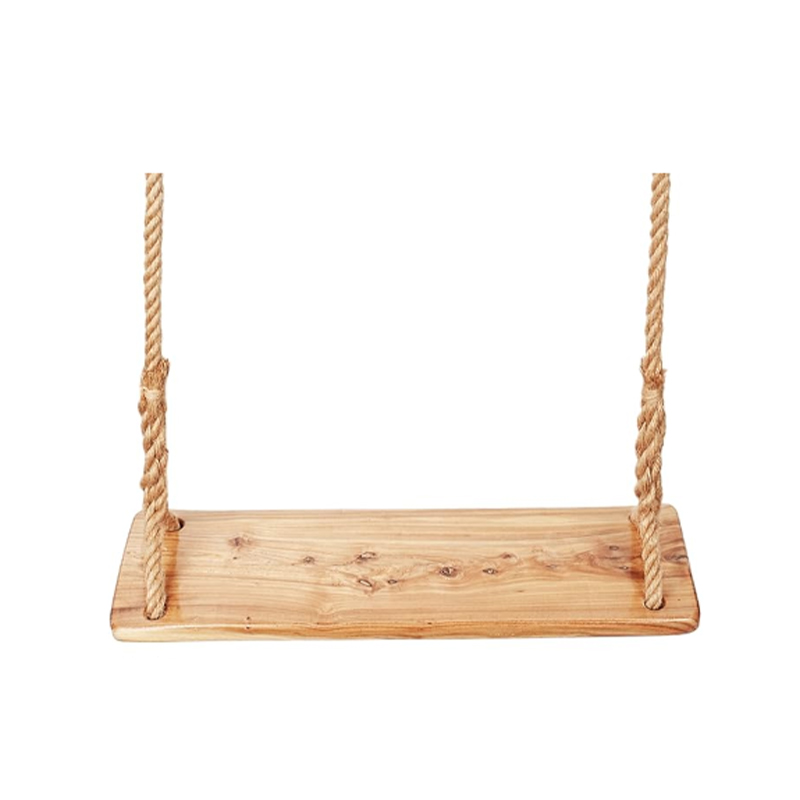 Reinforced Pine Swing Seat for Kids and AdultsA 150 kg-rated pine swing seat with adjustable PE ropes, reinforced fixing points and a smooth, weather-resistant finish for family outdoor swings.View Product →
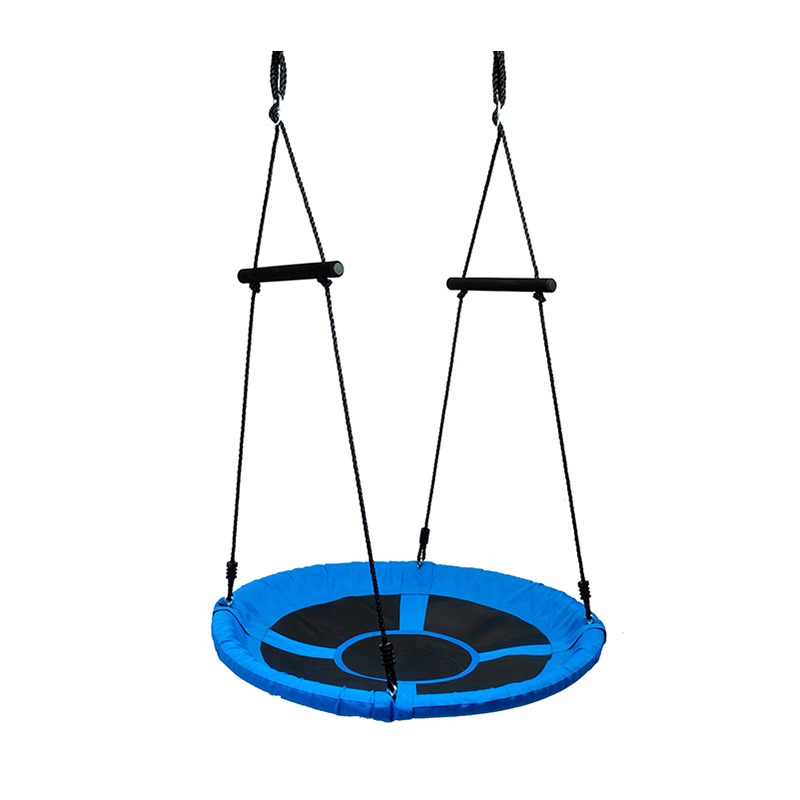
On shared equipment, a back to back glider seat lets two riders share one bay and keeps the motion smooth, which is often the difference between a swing bay that gets used every day and one that is abandoned within a month.
Frame and support
The frame has to absorb the same force the hanger transmits. A single swing frame is fine for one bay in a home garden, but a double frame with a wider footprint and a heavier tube wall is the safer choice for a school yard or a small commercial play area, because it spreads the pull out load across four feet instead of two.
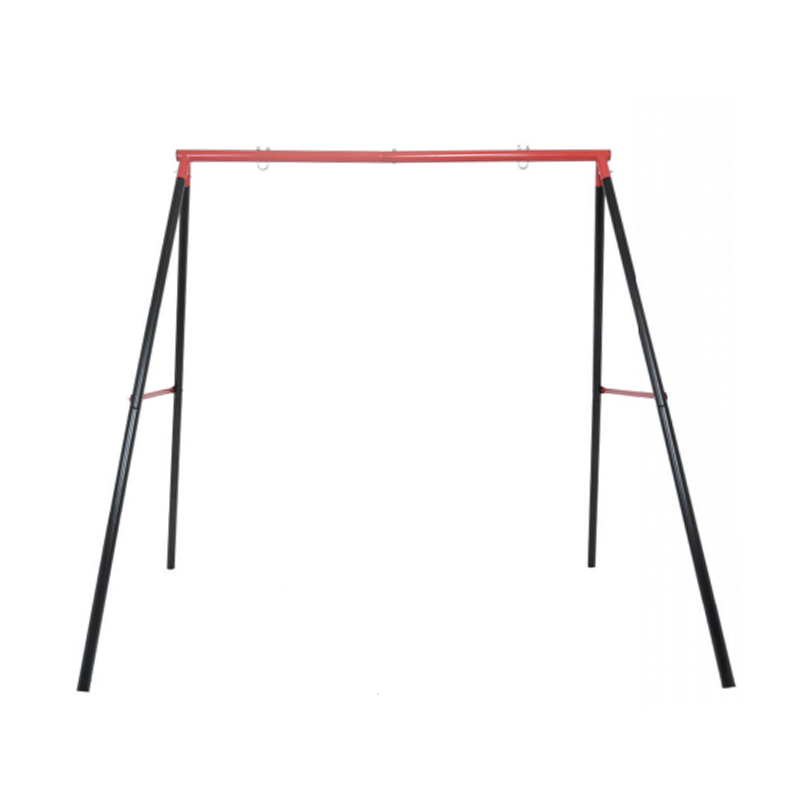 Heavy-Duty Rust-Proof Double Swing FrameA powder-coated steel double frame for two swing bays, with anti-tipping A-frame support and pre-drilled holes for outdoor gardens, parks, or schools.View Product →
Whichever frame you choose, the hanger, the suspension and the anchor should be ordered as a matched set. Mixing a heavy seat with light hardware simply moves the weakest point somewhere less visible.
Climbing and Upper Body Elements That Keep Tweens Interested
By age 12, many children have stopped treating a swing as a seat and started treating the whole structure as a climbing frame. That changes what belongs in the space. Upper body strength becomes the point of the play, so climbing nets, rope ladders and gymnastic rings hold attention far longer than another slide.
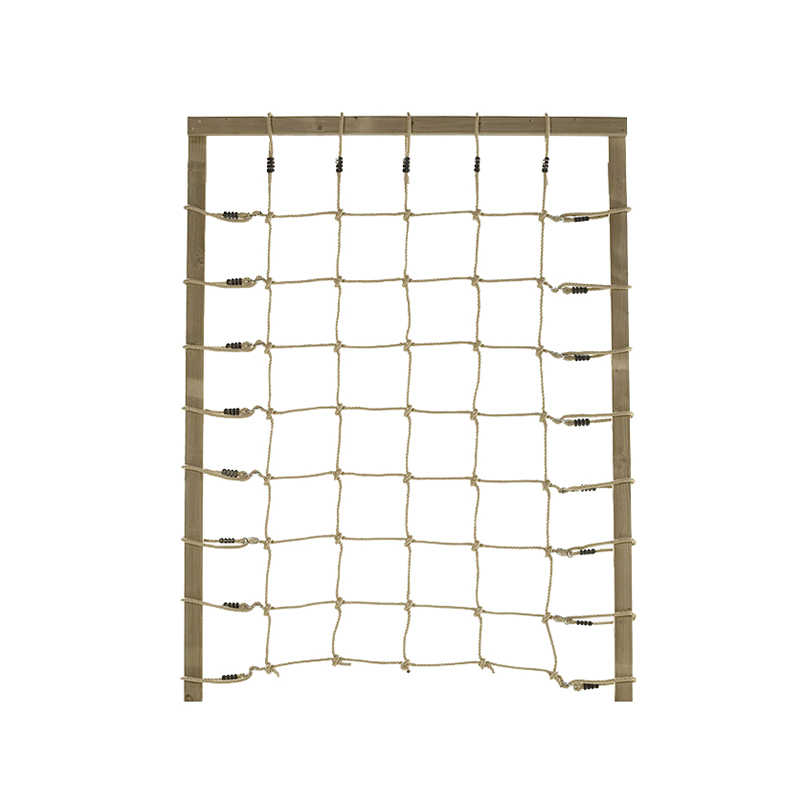 Hand-Woven PE Climbing Net for Wooden FramesA 150 x 200 cm hand-woven PE climbing net with 90 kg capacity, adjustable figure-8 buckles, ASTM/EN71 certification, and 30–90° angle settings.View Product →
- A hand woven climbing net offers an open, angled surface that suits longer arms and legs.
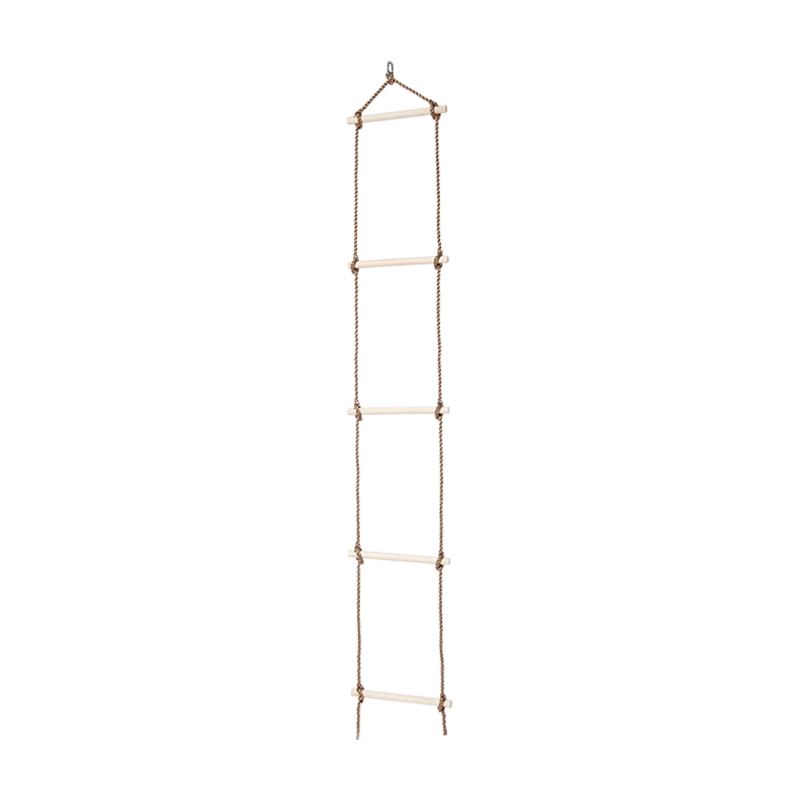
- A wooden or webbing rope ladder adds a straight vertical challenge that anchors to a frame or a beam.
- Blow moulded climbing holds convert a plain panel or wall into a route that can be reset as skills improve.
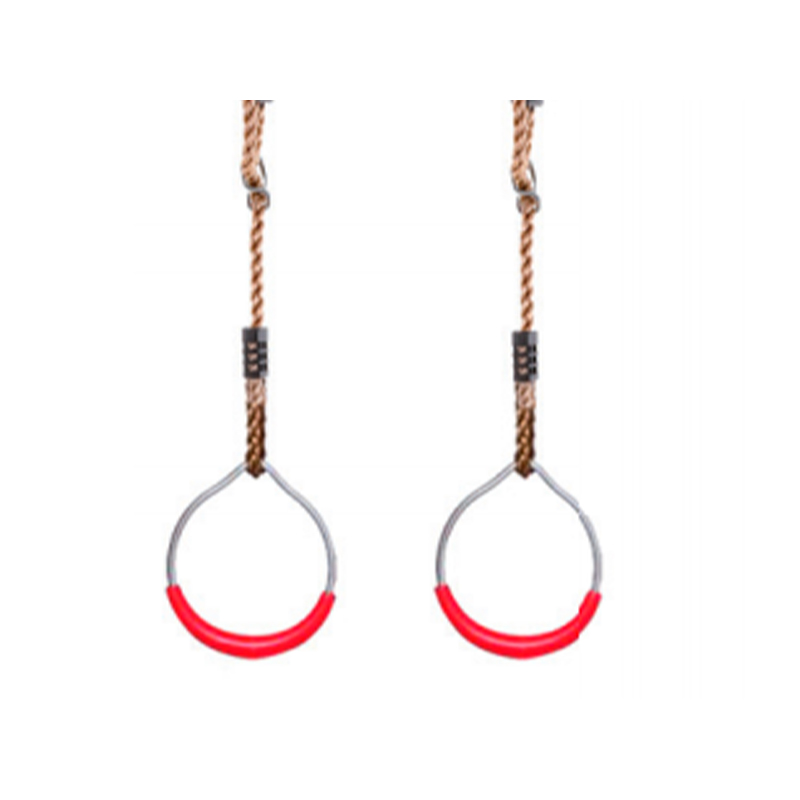
- Gymnastic rings and trapeze bars cover pulling, hanging and swinging within one footprint.
- A cargo net gives a wider, more forgiving surface for mixed age groups in the same yard.
Two planning rules keep these elements usable. Keep the fall height in mind, since a climbing point installed two metres above the ground needs a surfacing depth that matches the standard applied in your market, and that is usually the item left out of the budget. Then keep a clear falling space around the element, not only underneath it, because older children fall sideways rather than straight down.
A Sourcing Checklist for Distributors and Project Buyers
- Ask for the working load and safety factor of each suspension part, not the load of the finished set.
- Confirm the metal finish and the salt spray hours behind it, because humid and coastal markets expose every shortcut.
- Check that plastic parts are UV stabilised, since an outdoor playground stays in the sun all year.
- Ask whether the seat, hanger and frame were tested as an assembly or as separate items.
- Request samples of the hanger and the anchor, the two parts that decide the service life of the installation.
- Confirm the seat to ground clearance for every swing model on the order.
Standards and Documentation Worth Requesting
For public and school projects the usual reference points are EN 1176 in Europe and ASTM F1487 in North America, alongside chemical requirements such as CPSIA for anything a child can put in their mouth. A manufacturer self declaration is a starting point, not proof. Third party tensile reports on the hanger and the chain, salt spray results on the finish, and impact data for plastic seats are the documents that shorten an approval process instead of stalling it.
If you want a plain language view of what separates a durable set from a cheap one, this article on judging safe and durable play equipment is a useful summary to share with your own customers.
The Practical Answer
For a 12 year old, buy by load path and by interest. Rate the hanger, the suspension and the anchor for at least 150 kg of design load, choose a seat that is reinforced at the fixing points, and add at least one climbing element so the layout still has a purpose once swinging becomes boring. The age range on the box tells you who the set was designed for. The load data tells you who it will actually survive.
If you are specifying equipment for a school, a park or a retail programme and you already have drawings or a sample, send the details to our team and we can confirm load ratings, materials and tooling requirements before you commit to a purchase order.