 Eng
Eng
 Español
 عربى
عربى Deutsch
 русский
 Français
Content
A purchasing manager opens a crate of replacement swing seats and finds that the bolt holes do not line up with the existing frame. The seats are the right color and shape, but the mounting hardware is incompatible. This is one of the most common problems when sourcing parts of playground equipment. The conclusion first: every playground part belongs to one of six functional groups, and the group determines the tolerances, materials, and documentation you should request before ordering. Once you know whether a part is a structural frame, a motion component, a suspension element, a connector, an anchor, or an accessory, the sourcing conversation becomes much more precise.
The Six Functional Groups of Playground Equipment Parts
Playground equipment is not a single product but a system of parts that must work together. A slide needs a stable platform and a safe exit. A swing needs a seat, a hanger, a chain or strap, and a frame. A climbing net needs anchor points and tensioning hardware. When buyers ask for parts of playground equipment, they usually mean replacement or upgrade components rather than whole structures. Grouping these parts by function helps you compare suppliers and avoid mismatched orders.
| Category | Typical Parts | Common Materials | Sourcing Checkpoints |
|---|---|---|---|
| Support and Frame | Posts, top rails, A-frames, legs | Galvanized steel, powder-coated steel, treated wood | Load rating, coating adhesion, bolt spacing, base plate dimensions |
| Motion and Seating | Swing seats, glider seats, slide beds | HDPE, EVA, wood, stainless steel | Impact resistance, UV stability, edge radius, seat thickness |
| Suspension and Hanging | Chains, ropes, straps, hangers | Galvanized chain, nylon strap, hardwood, stainless steel | Tensile strength, wear indicators, corrosion class, link diameter |
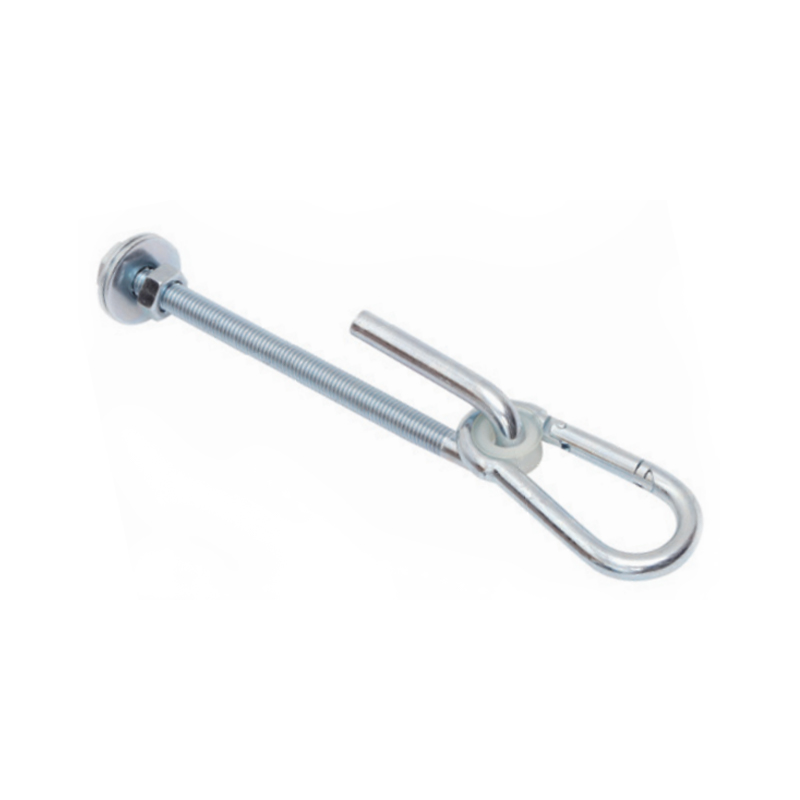
| Connectors and Hardware | Hooks, quick links, swivel rings, brackets | Stainless steel 304 or 316, galvanized iron | Thread type, tolerance, locking mechanism, proof load |
| Anchors and Ground Fixing | Ground anchors, expansion bolts, concrete anchors | Hot-dip galvanized steel, electro-galvanized steel | Pull-out strength, soil type, installation depth, corrosion protection |
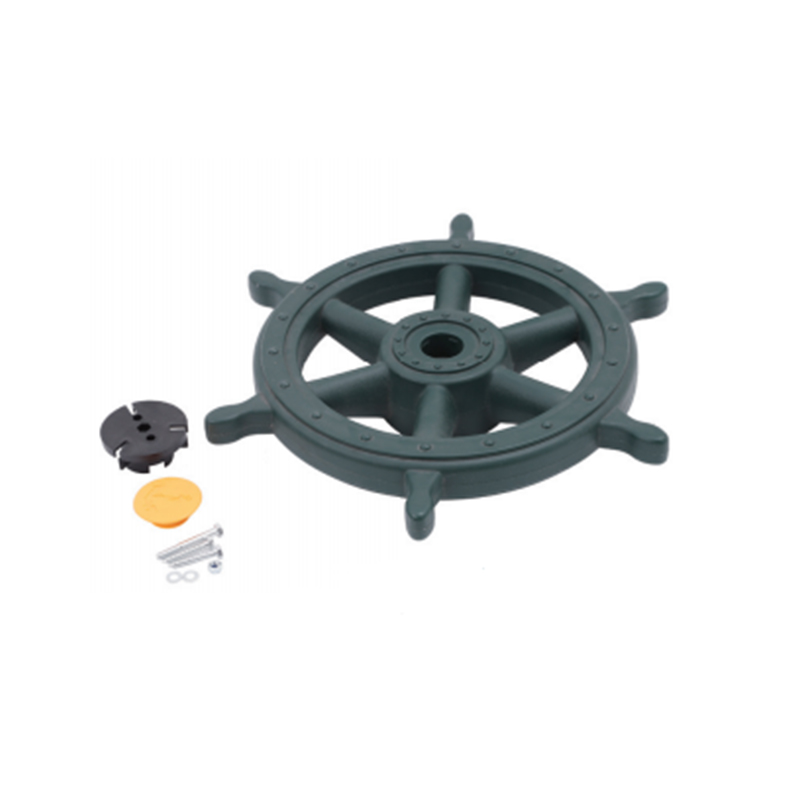
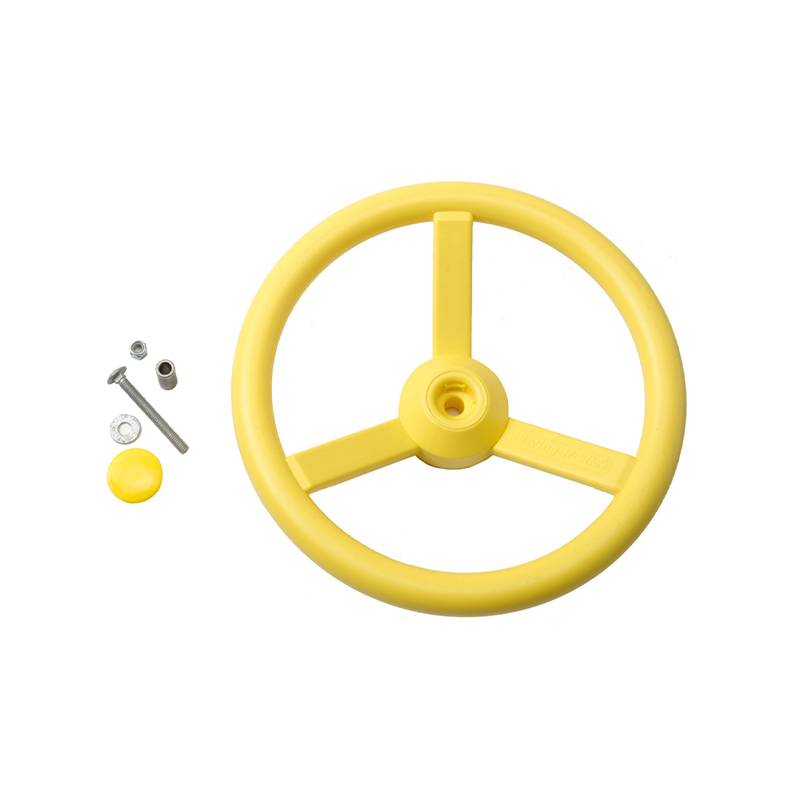
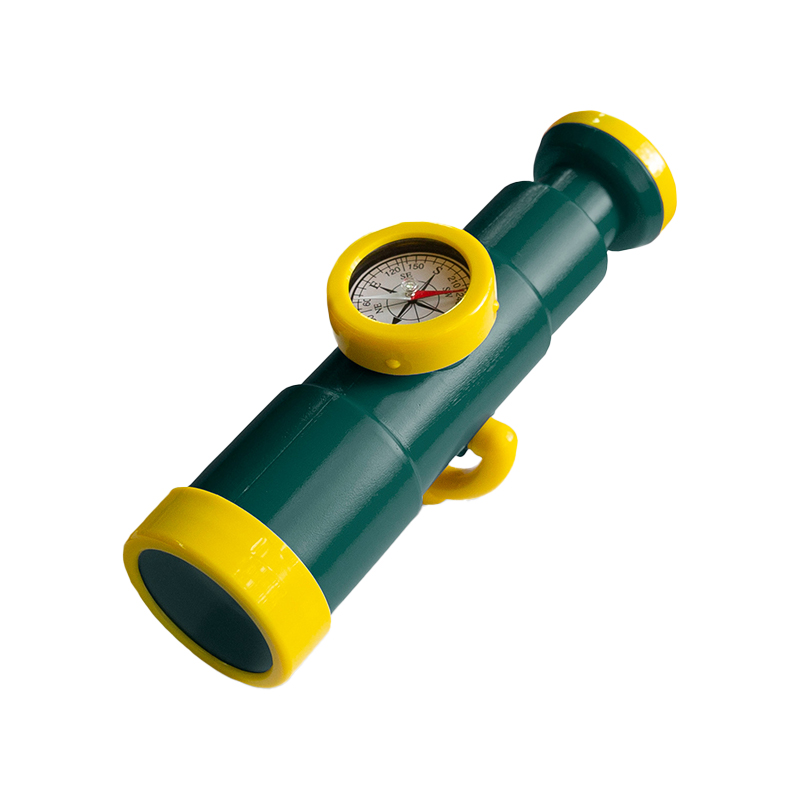
| Accessories and Interaction | Steering wheels, binoculars, tic-tac-toe panels | HDPE, PP, wood, polycarbonate | UV resistance, fastener compatibility, no sharp edges, color fastness |
A common mistake is to treat all metal parts as interchangeable. A stainless steel swivel ring and a galvanized iron hook may look similar in a catalog photo, but they behave differently in coastal air, in high-use parks, and under repeated dynamic loads. The table above gives a starting point for asking the right questions. For example, an anchor for a sandy playground needs a different design than an anchor for compacted soil. A swing seat for a toddler needs a different edge radius and harness option than a seat for an adult. These details are not marketing language; they are the difference between a part that lasts three seasons and one that fails in the first year.
Swing Set Parts: Seats, Hangers, Chains, and Hardware
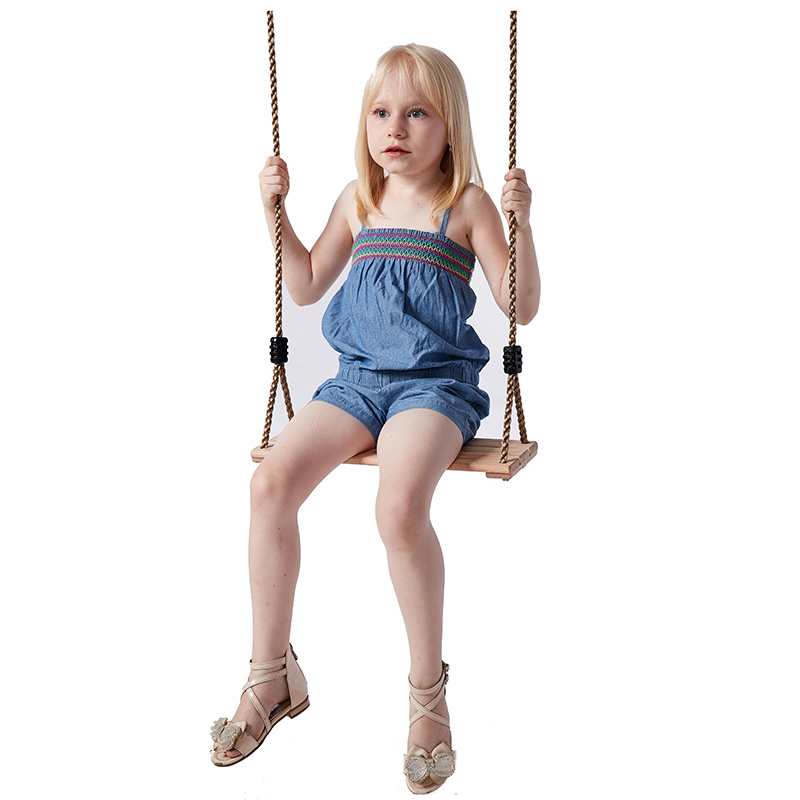
Swing sets are a good example of how parts interact. The seat carries the user, the hanger connects the seat to the suspension, the chain or strap transfers motion, and the frame absorbs the dynamic load. If any one of these parts is under-specified, the whole swing becomes a safety risk. Buyers often search for swing seats alone, but the seat is only one item in a four-part assembly.
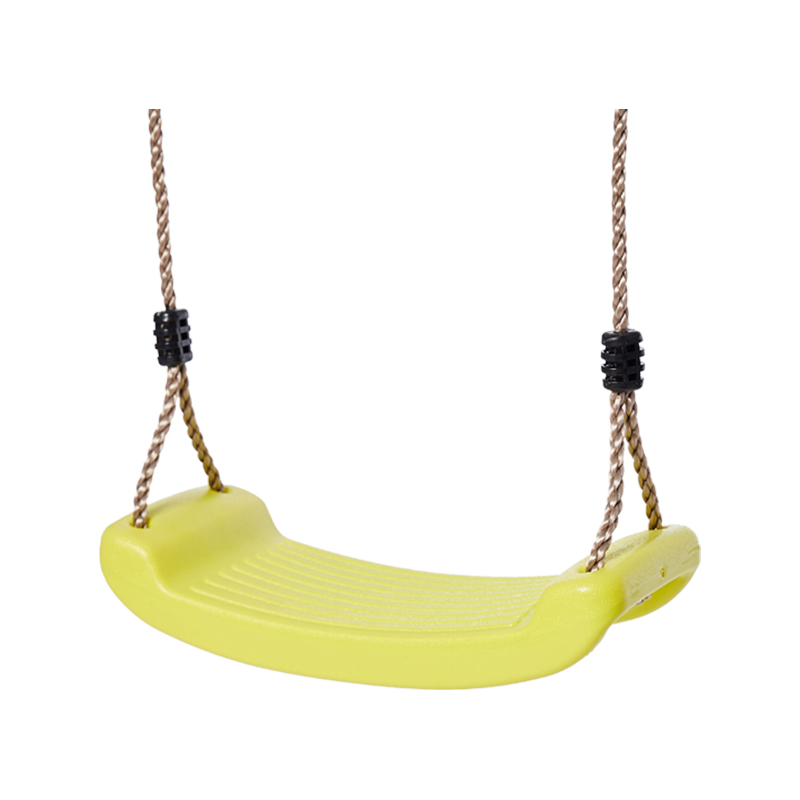 Plastic Blow Molding Swing Seat YXS-P01Lightweight PE swing seat for ages 3+, with anti-slip texture and reinforced ribs; it carries the user in a swing assembly.View Product →
Seat material affects comfort, durability, and maintenance. Blow-molded plastic seats are lightweight, weather-resistant, and easy to clean. They are common in public playgrounds and schools. Wooden seats, such as pine or beech, offer a natural look and can be sanded or refinished, but they require more inspection for cracks and splinters. EVA soft board seats with chains are softer for younger children and reduce impact, but they may need replacement sooner in high-traffic areas. When you order a seat, confirm the mounting hole spacing, the seat thickness, and the recommended user age.
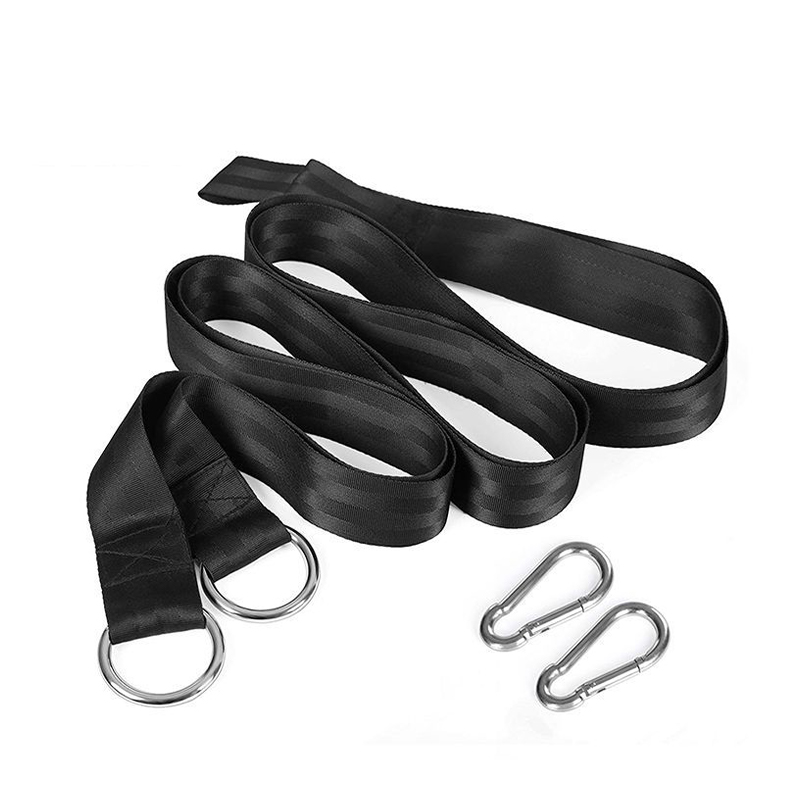 High-Strength Nylon Suspension Strap for Swings and HammocksWoven nylon strap in several textures and sizes; pairs with clips and rings and offers quieter, lower-pinch suspension than chains.View Product →
Suspension parts deserve equal attention. A nylon suspension strap can replace a chain in some designs and offers quieter operation and less pinch risk. However, the strap must be rated for the intended load and protected from abrasion at the hanger. Metal chains are strong and familiar, but they can rust, pinch fingers, and develop sharp edges over time. Hangers, swivel rings, and quick links should match the chain or strap diameter and be made from a corrosion-resistant material. For coastal or humid locations, 304 or 316 stainless steel is a safer choice than standard galvanized iron.
Climbing and Slide Components
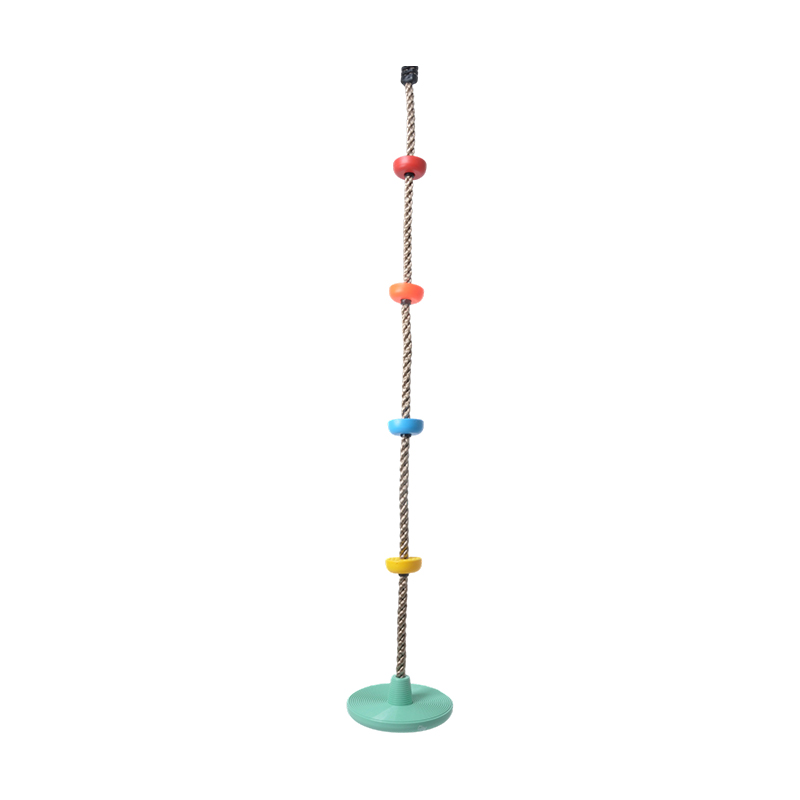
Climbing structures and slides add vertical play and physical challenge. Their parts include climbing holds, rope ladders, cargo nets, slide beds, side panels, and exit lips. The safety-critical points are the fixing method and the fall height. A climbing hold that rotates under load can cause a fall. A slide bed with a sharp seam can cut a child or catch clothing. Buyers should request the fixing torque, the panel thickness, and the impact test data for these components.
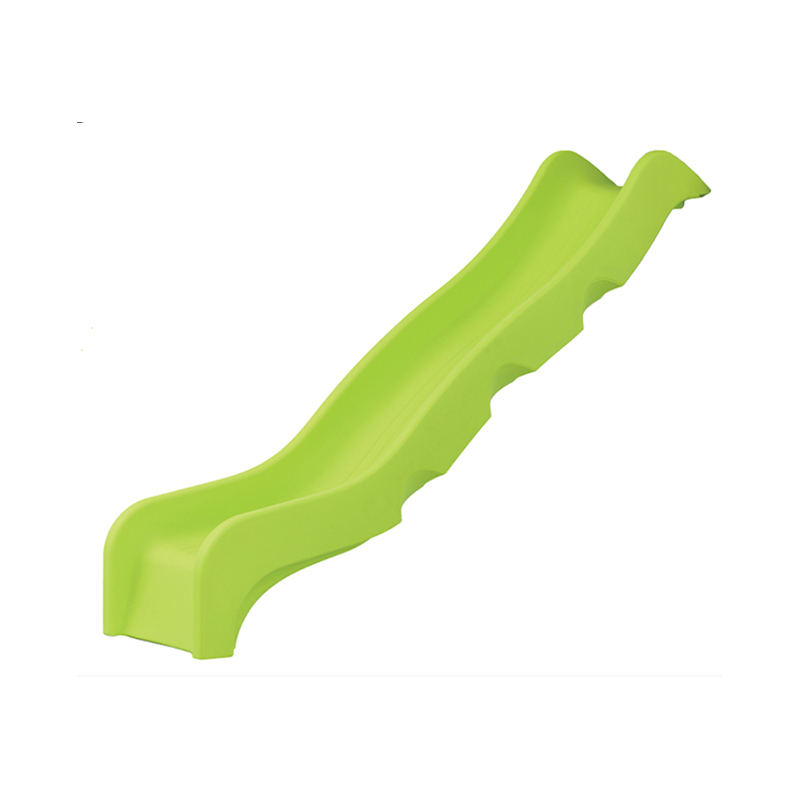 Multi-Size Kids Plastic Slide YXS-S01High-density PE slide for ages 3-12 in four lengths; smooth, UV-resistant, tool-free assembly, ASTM-certified, useful when replacing modular slide parts.View Product →
Plastic slides are often supplied as modular parts, so replacement is possible without replacing the entire structure. The key dimensions are the slide length, the bed width, the side wall height, and the mounting hole pattern. If the new slide does not match the original platform height, the exit angle may become too steep or too shallow. Both can be dangerous. For climbing nets and rope ladders, check the rope diameter, the knot type, and the anchor plate size. A rope ladder that is not tensioned correctly will swing and twist, which makes climbing harder and increases wear.
Connectors, Anchors, and Safety Critical Hardware
Connectors and anchors are small parts with large consequences. A quick link that opens under vibration, an expansion bolt that pulls out of cracked concrete, or a swivel ring that seizes after one season can all lead to equipment downtime and injury. In a commercial playground, these parts are subject to dynamic loads, temperature changes, and repeated use. They should be selected with a proof load higher than the expected working load and a corrosion class that matches the local environment.
- Check the thread type and pitch for bolts and anchors. Metric and imperial threads are not interchangeable.
- Confirm the minimum breaking load and the working load limit. A safety factor of at least five is common for overhead components.
- Ask for salt spray test hours for coated or galvanized parts. A 500-hour result is a reasonable benchmark for outdoor use.
- Verify the locking mechanism on hooks and quick links. A spring-loaded gate should not be the only thing holding a moving load.
- Request installation instructions with torque values and drill sizes. Missing information often leads to field errors.
Anchors are especially dependent on the ground condition. A ground anchor designed for grass may not hold in loose sand or wet clay. A concrete anchor needs a cured base and the correct hole depth. If the playground is on a rooftop or a wooden deck, the fixing method changes again. For these reasons, a supplier who only lists a part number without asking about the installation surface is not providing enough support.
How to Specify and Source Replacement Parts
Sourcing replacement parts becomes manageable when you follow a short process. Start by identifying the functional group from the table earlier. Then measure the critical dimensions: hole spacing, shaft diameter, thread size, overall length, and material thickness. Take photos with a ruler in the frame, because visual proportion helps suppliers confirm the part. Next, describe the use environment: coastal air, indoor mall, school yard, or heavy-use public park. Finally, ask for material certificates and test reports before placing a bulk order.
- Identify the functional group and the loads the part will carry.
- Measure mounting points and compare them with the supplier drawing.
- Confirm the material grade, coating, and corrosion resistance.
- Request samples and run a trial installation on one unit.
- Check the packaging and labeling so that parts do not get mixed on site.
For buyers who need a full set of components rather than a single item, it helps to work with a manufacturer that produces multiple part families. You can browse the full range of playground equipment components to see how seats, hangers, hardware, and slides fit together. If you have a damaged part but no drawing, send clear photos and dimensions to contact our team for a compatibility check.
The parts of playground equipment are not just a list of items. They are a chain of decisions about materials, tolerances, and installation. A swing seat that fits one frame may not fit another. A galvanized hook that works inland may fail near the sea. An anchor that holds in concrete may pull out of soil. By grouping parts by function and asking for the right data, buyers can reduce replacement costs, avoid downtime, and keep the playground safe for the people who use it. The next time you order a spare part, start with the functional group, then work through the dimensions and the environment. That approach will solve more problems than any catalog photo.