 Eng
Eng
 Español
 عربى
عربى Deutsch
 русский
 Français
Content
A preschool director approves a new outdoor play area in spring. By autumn, two bucket swings still look new, three belt seats have been replaced, anchor bolts have worked loose in the turf, and the climbing net sits in storage because nobody can document its use zone. The equipment list was not the problem. The design sequence was, because the yard had been planned around a catalog page instead of around the children who use it every morning.
Preschool playground design holds up when four decisions are made in order: age banding, zoning by type of play, use zones and surfacing, and the anchoring hardware that keeps everything in the ground. Equipment selection comes last and becomes straightforward once those four are settled. The sections below cover each step for ages 2 to 5, with the numbers, materials, and procurement questions that affect approval and long term cost.
Age Banding Comes Before Equipment Selection
One play area serving both two year olds and five year olds will never satisfy either group. Two year olds need low enclosed pieces with a single obvious entry, deck heights around 500 to 600 mm, and step spacing of 150 to 200 mm. Five year olds need climbing challenges at 900 to 1200 mm and enough net or rope structure to plan a route. Mixed ages usually produce the same scene: toddlers standing under tall decks while older children crowd the small pieces.
Two banded zones work well in most preschool settings.
- Toddler yard, ages 2 to 3: bucket swings, a low slide, a shallow sensory panel, all visible from the building door.
- Preschool yard, ages 3 to 5: climbing net or ladder, nest swing, longer slide, and role play panels.
Two details decide whether banding survives daily use. Avoid gaps between 90 mm and 230 mm anywhere a child can reach, since that is the head entrapment range in many early years standards. Keep every entry and exit inside one standing sightline so a teacher can watch both bands at once.
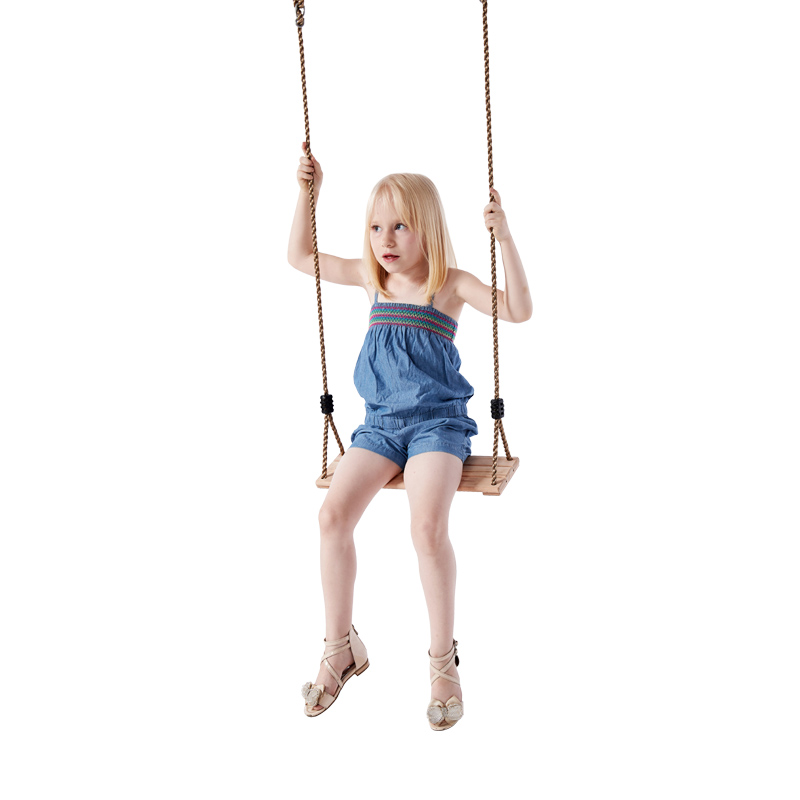
Swing seats follow the same logic. A seat with a high back and side containment suits children who cannot yet hold a seated balance, while open flexible belt seats belong in the older band and only under adult supervision.
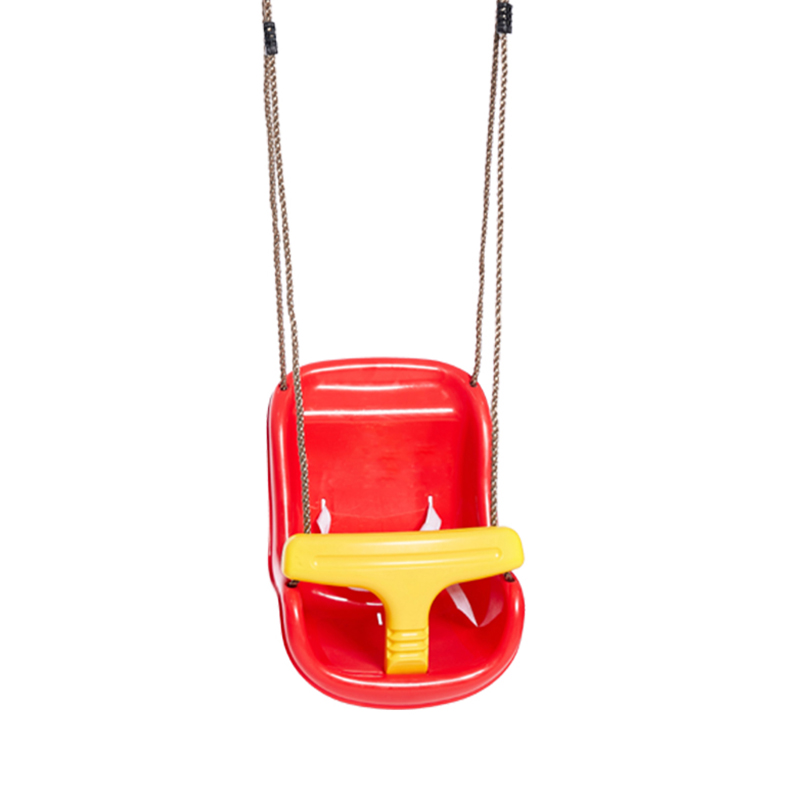 High Back Plastic Infant Swing for ToddlersHigh-back infant swing with neck support and harness suits children 7–36 months; check swing clearance and surfacing fall-height needs.View Product →
Use Zones and Surfacing Decide Approval
Approval usually turns on use zones rather than on how attractive the layout looks. A use zone is the clear area around a piece of equipment where a child may fall or land after sliding. Swings need more room than most buyers expect because the seat travels forward and back. Surfacing depth then has to match the fall height of each piece, measured at the highest reachable point, not at the deck.
| Play element | Main user age | Planning use zone | Watch point |
|---|---|---|---|
| Toddler bucket swing bay | 2 to 3 | 2.0 m front and back of the arc, 1.2 m each side | Zones of neighbouring seats must not overlap |
| Belt seat swing bay | 4 to 5 | 2.0 m front and back of the arc, 1.2 m each side | Measured from the seat arc, not the frame |
| Nest or saucer swing | 3 to 5 | 2.0 to 2.5 m clear on all sides | Heavy seat needs a rated swivel and anchor |
| Climbing ladder or net | 3 to 5 | Fall height at the highest reachable point, 1.5 m minimum around | Surfacing depth must match the fall height |
| Slide exit | 2 to 5 | 1.5 to 2.5 m runout for the lower half of the slide | Runout must not open into a swing bay |
Surfacing choice is a cost decision as much as a safety decision. Loose fill is cheap to install and expensive to keep at depth, while bonded rubber costs more up front and behaves predictably afterwards. Budget for topping up or scheduled inspection rather than assuming the first installation holds its depth for a decade.
Zoning the Yard into Four Kinds of Play
After banding, divide each band into four play types. This avoids the most common failure in early years design, which is a yard that does one activity very well and offers nothing else.
- Active play: climbing net, ladder, slide. Group the highest fall heights in one corner so surfacing is concentrated where it is needed.
- Social play: swings and group seating. A nest style seat puts several children face to face and generates more cooperative play than a row of single seats.
- Sensory and imaginative play: steering wheels, periscopes, telescopes, and rotating panels at child height.
- Quiet and transition play: shade, seating, a loop path, and storage close to the door.
A few layout rules keep the zones working. Keep paths at least 1.2 m wide so an adult can walk beside a child. Drain water away from surfacing at roughly 1 percent slope. Put storage within sight of the active zone, because equipment that is hard to move out stays inside.
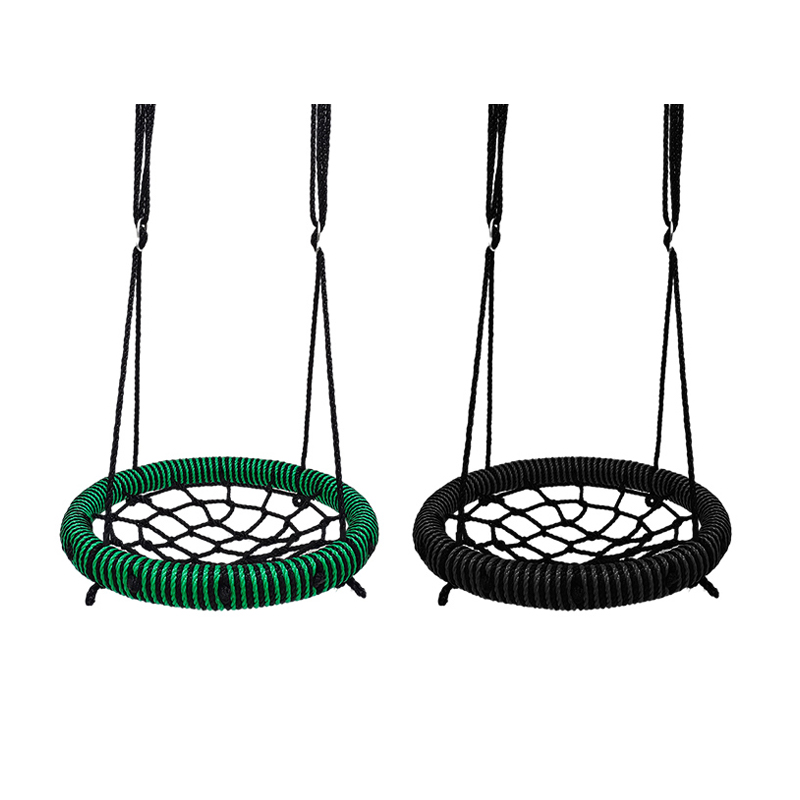 60cm Nest Net Swing for Backyard and ParkRound PE nest swing for ages 3+ with 600 lb load testing and reinforced steel; consider hang-point safety and placement during layout planning.View Product →
Climbing Equipment: Count Routes, Not Height
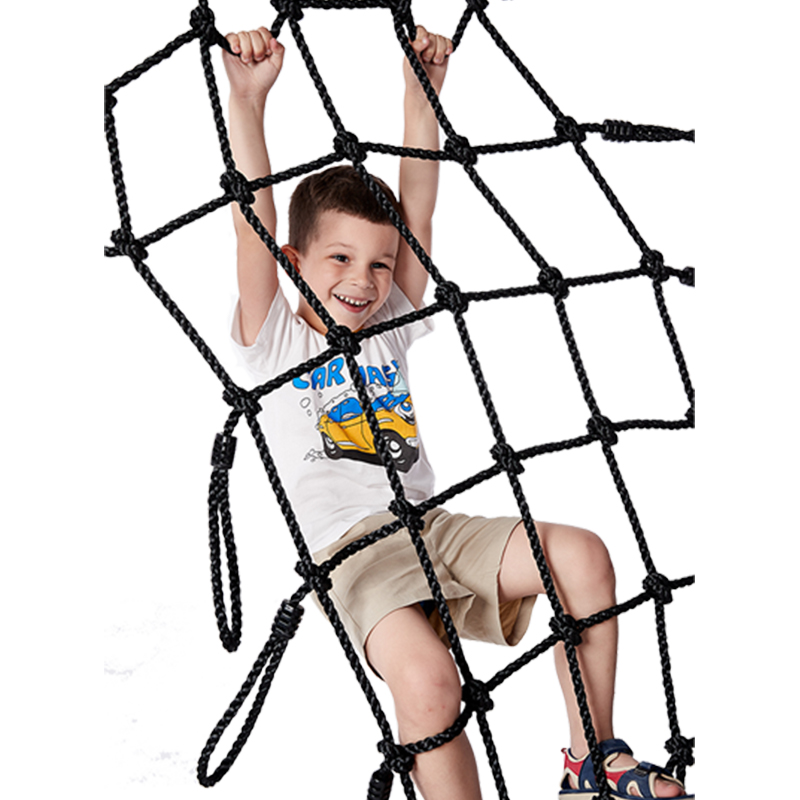
The useful question about a climbing piece is not how tall it is but how many ways up and down it offers. A ladder with one route creates a queue and pushes children to invent shortcuts. A net, a rope ladder, and a low boulder hold set give a three year old several choices at a modest height, which lowers fall risk while raising the challenge.
For early years use, look at rung diameter of 25 to 35 mm so a small hand can close around it, rung spacing of 200 to 300 mm, and non slip surfaces that still work when wet. Wooden rungs should be sanded and sealed rather than coated thickly, since heavy coatings crack at the edges and trap moisture. Rope should be UV stabilised, because rope that greys in one summer will fray in the second.
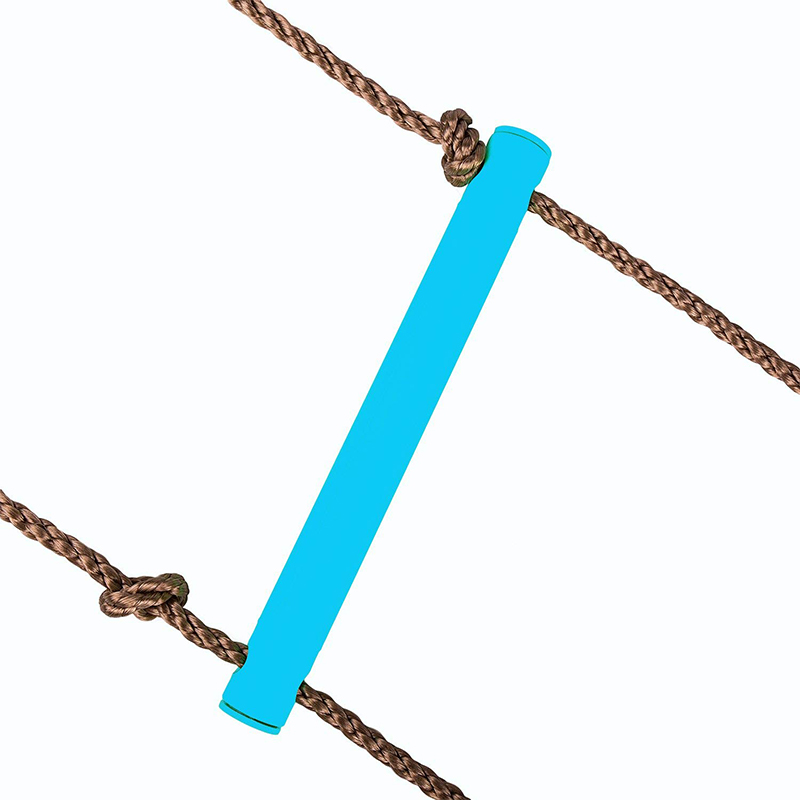 Rainbow Climbing Rope Ladder for KidsPlastic climbing rope ladder with anti-slip corrugated rungs, customizable 5- or 6-rung spacing, suitable for children 6+; review rung grip and wet-weather safety.View Product →
If you are specifying a climbing structure for the first time, our note on what makes a climbing system safe and durable covers the material and inspection points in more detail.
Hardware and Anchoring Decide Year Three
Most failures in preschool yards are not collapses. They are loose anchors, stretched suspension straps, and swing hooks worn oval. Three causes account for nearly all of them.
- Wrong substrate: expansion bolts specified for concrete are installed in compacted soil or timber, and they pull out.
- Wrong coating: standard zinc plating on a humid or coastal site shows red rust within a season, while hot dip galvanising or 304 stainless steel lasts far longer.
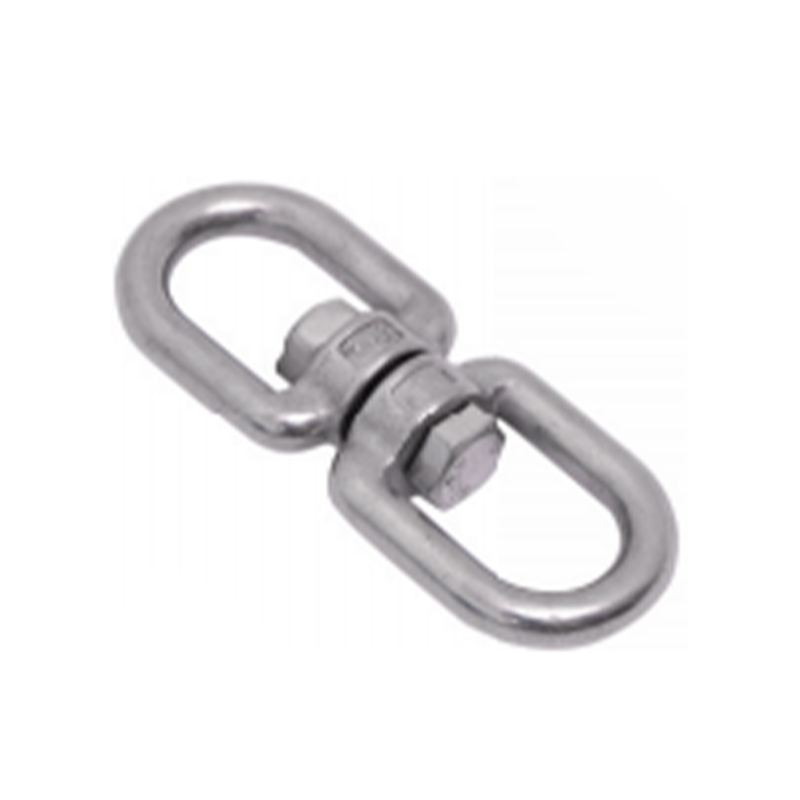
- Wrong movement allowance: a swing needs a rated swivel or rotating ring, or the chain twists, the seat skews, and children stop using it.
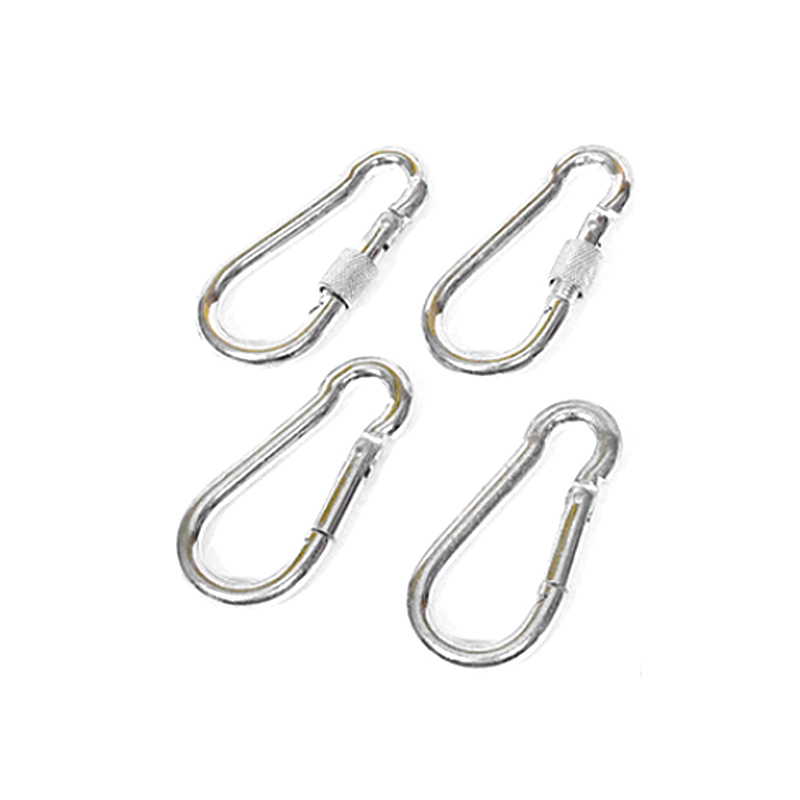
Specify anchors by soil type and load rather than by unit price. In turf and loose fill, a ground anchor with stakes and a rated strap spreads load over a wider area than a single bolt. On concrete, choose a fixing with a documented pull out value and a torque figure your installers can actually reach. Every hanger should carry a working load well above the weight of the seat and its occupants, because a parent will eventually sit on it.
Procurement Checklist for Preschool Projects
- Set the age bands and the maximum number of children on site at one time, then size the yard accordingly.
- Draw use zones and surfacing depths on the layout before choosing equipment, and check that zones do not overlap.
- Confirm head entrapment gaps, guard heights, and handrail dimensions against the standard your inspector uses.
- Match materials to climate: stainless or hot dip galvanised hardware for humid sites, UV stabilised rope and fabric everywhere.
- Ask for pull out and load test data on anchors, hangers, and swivels, not only certificates for the finished seat.
- Check that replacement straps, clips, and seats will still be available in two or three years.
- Write the inspection schedule into handover: monthly visual checks, annual detailed checks, and a log kept near the door.
Sourcing Equipment and Custom Parts
Preschool projects rarely buy one finished product. A typical order mixes swing seats, a nest swing, anchors, suspension straps, climbing rungs, and hardware, often with the school's own colours or a logo panel. Working with a manufacturer that produces plastic, metal, wood, and textile parts in house shortens the loop between a drawing and a shipped set, and it makes spare parts easier to source later.
When you send a layout for quotation, include the age bands, the number of children per zone, the surface type, and the standard you are inspected to. Those four items let a supplier flag a mismatch before production starts, such as a seat height that suits a five year old but not a three year old. If you would like a quotation for a mixed preschool order or an OEM version of a part in the range, send us your drawing or sample and we will confirm materials, testing, and lead time.
Preschool playground design rewards sequence more than budget. Band the ages, zone the play types, draw the use zones, then specify hardware that suits the ground it sits in. Do that, and the yard still works in year three, with the same swings, the same anchors, and the same children who were there on day one.