 Eng
 Español
 عربى
 Deutsch
 русский
 Français

Content
A swing line in a public park absorbs more abuse in one summer than a backyard swing takes in ten years. That single fact should shape every decision behind buying swings for parks, from the seat material to the size of the anchor bolt.
The short version: buy a system, not a swing. A park swing is five parts working together, and the weakest part sets the maintenance calendar for the whole unit. Seats, hangers, suspension, frames and anchors wear at different rates, and a supplier who makes all five can keep replacement parts consistent for years instead of months.
What Separates Park Swings from Backyard Swings
Residential sets assume a parent is watching, one or two children are using the equipment, and the product only has to survive a few seasons. Public equipment assumes none of that. It assumes unsupervised use across a wide age range, older children testing the limits of the structure, and a service life that a maintenance crew has to plan and budget around.
In practice, these are the differences worth verifying before you place an order:
- Load rating. Commercial swing seats and hangers should carry a documented static and dynamic load well above the weight of a single child, because two or three children often end up on one swing.
- Duty cycle. A park swing can cycle thousands of times per week. Bearings, chain links and hanger rods need to tolerate continuous motion rather than occasional weekend use.
- Vandalism resistance. Open hooks, removable seats and exposed fasteners disappear. Closed connection systems and tamper resistant fixings survive.
- Standards alignment. In Europe, playground equipment is normally assessed against EN 1176 criteria, and in the United States against ASTM F1487. Both deal with entrapment, fall height and use zones, and they influence the geometry of what you buy.
The commercial consequence is straightforward. A seat that saves a few cents per unit can double your annual replacement spend, because maintenance is charged per work order and per crew hour, not per part.
The Five Parts of a Park Swing
Break any swing down and you find the same five functions. Knowing which function you are buying prevents the most common procurement error: ordering seats that do not match the hangers, or hangers that do not match the frame beam.
| Part | Function | Common materials | What fails first |
|---|---|---|---|
| Seat | Carries the user | Blow molded HDPE, EVA board, hardwood, canvas | UV cracking, worn edges, split planks |
| Hanger | Joins the seat to the chain or rope | Hardwood, plated chain, plastic rings | Chain link wear, splitting wood, pinching joints |
| Suspension | Transfers load to the frame | Galvanized chain, nylon webbing, steel cable | Rust, frayed webbing, stretched links |
| Frame | Holds the pivot points | Hot dip galvanized steel tube | Coating damage at joints, corrosion near the ground |
| Anchors | Fixes the frame or swing point to the ground | Expansion bolts, ground anchors, concrete footings | Loose bolts, soil movement, pull out under load |
Frames deserve special attention because they are the most expensive part to replace and the hardest to ship. A heavy duty rustproof frame with a consistent wall thickness and a proper hot dip coating will outlast three sets of seats, which is exactly how it should be specified.
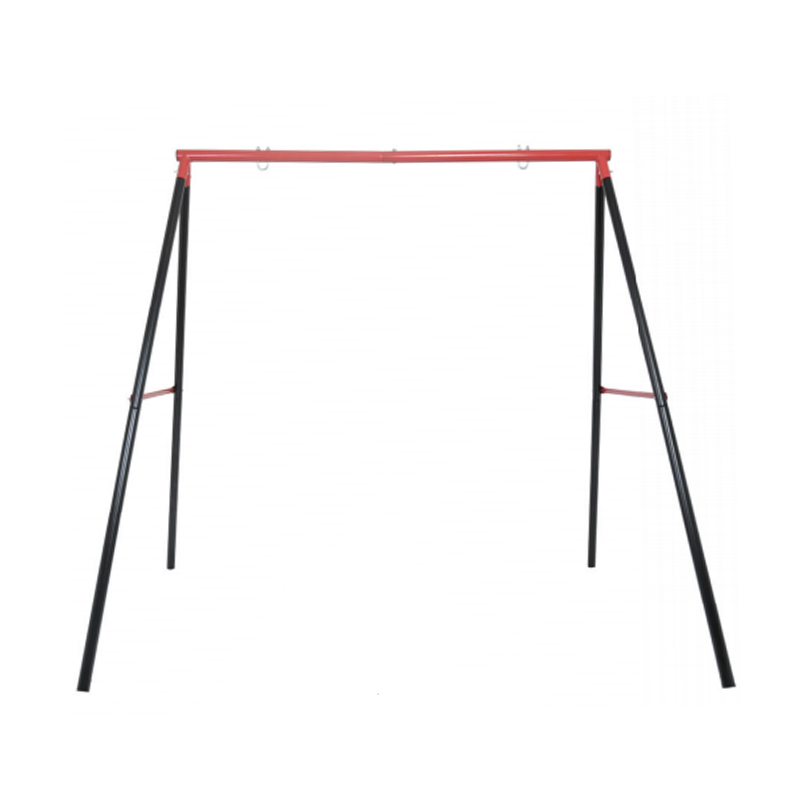 Heavy-Duty Rust-Proof Double Swing FrameA thickened steel dual swing frame with rust-resistant powder coating, sized for gardens, parks, and schools, and built for long-term outdoor stability.View Product →
Choosing the Right Swing Type for Each Zone
Most park projects fail at the planning stage, not the manufacturing stage. A single bay of belt swings is not enough for a mixed age playground, and a cluster of infant swings in a teen oriented space becomes dead equipment within a season. Match the swing type to the users first, then to the budget.
| Swing type | Typical users | Where it works | Buyer notes |
|---|---|---|---|
| Belt seat | Ages 5 and up, adults | Community parks, school yards | Lowest cost per seat, easiest to replace |
| Nest or saucer | Mixed ages, small groups | Inclusive play areas, destination parks | One unit serves several children, needs more clearance |
| Infant cradle | 6 to 24 months | Toddler zones, kindergartens | High back support, adult supervision required |
| Tandem or glider | Adult and child pairs | Family parks, resorts | Higher load on frames and anchors |
| Trapeze or rings | Ages 6 and up | School yards, fitness corners | Needs clear space and frequent inspection |
The nest swing is usually the highest value addition to an existing line. It gives a whole group something to do at once, and it is the type most often requested by parents of children with limited mobility.
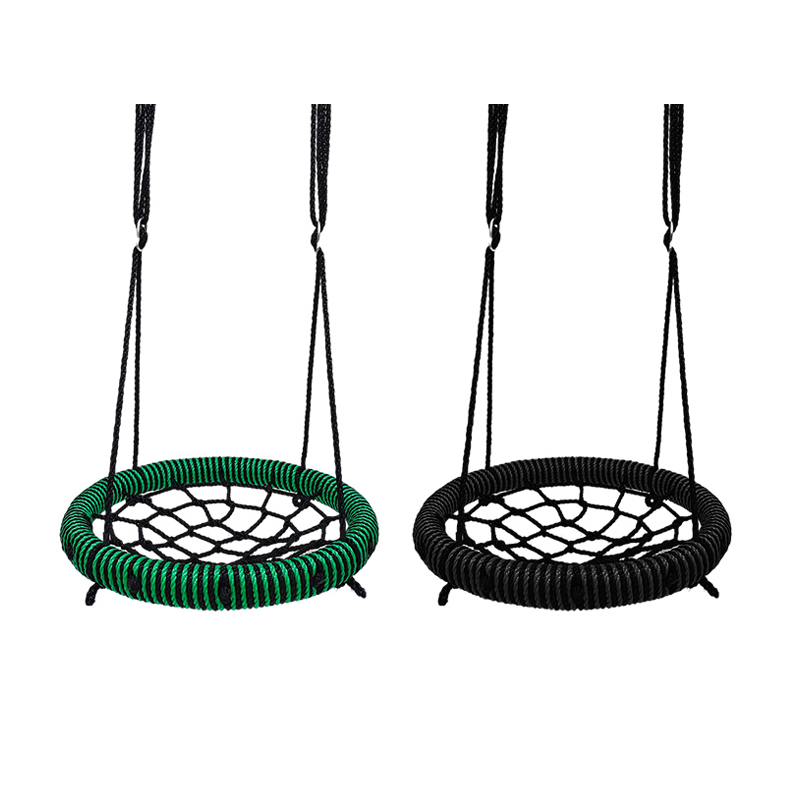 60cm Nest Net Swing for ChildrenA certified 60cm nest swing with reinforced steel pipe and 272kg limit, suited to backyard, park, indoor, or tree hanging.View Product →
Materials and Realistic Service Life
Material choice is where purchase price and lifetime cost diverge most sharply. Electroplated hardware looks acceptable on delivery and starts to show red rust after a wet season. Hot dip galvanized and 304 stainless steel hardware cost more up front and typically last through several repainting cycles of the rest of the playground.
Salt spray testing is the cheapest way to tell the difference before you commit to a container. A supplier with an in house salt spray chamber can show you how a coated bracket or hook behaves after hundreds of hours of exposure, rather than reassuring you with adjectives. The same logic applies to plastics and fabrics: UV stabilized HDPE does not chalk and crack the way low grade regrind does, and solution dyed fabrics hold color far better than surface printed ones.
Suspension parts are the quiet workhorses of the whole assembly. A nylon strap or a stainless connection that spreads load without sharp edges protects both the frame coating and the user, and it is far easier to swap than a welded frame.
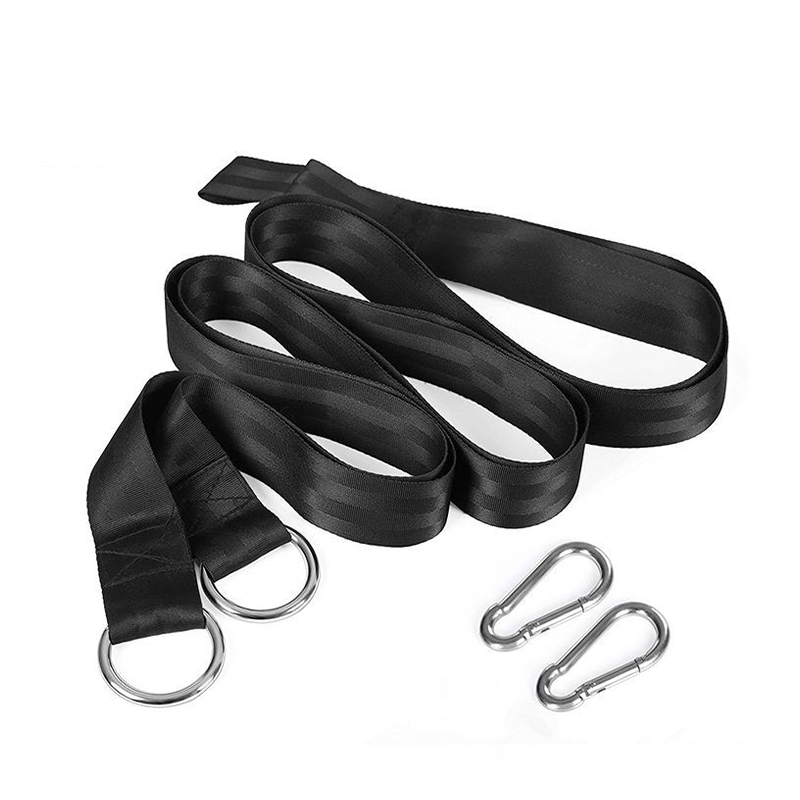 High-Strength Nylon Suspension Strap for SwingsA woven nylon strap with anti-slip textures and custom sizing for swings, hammocks, and climbing nets; useful for load-spreading suspension setups.View Product →
Safety Checks to Run Before You Order
Safety is designed into geometry, not added on at installation. Run these checks against samples or technical drawings before signing off:
- Entrapment gaps. Openings in the seat, chain and hanger should not trap a head or a finger at any point of the swing arc.
- Pinch points. Chain links, S hooks and folding joints should close without leaving a gap that catches skin.
- Chain twist. A 360 degree swivel ring between the chain and the hanger reduces twisting, which is a leading cause of premature wear.
- Use zone. The clear area around each swing must match the fall height of the pivot, and the surface underneath must meet the impact attenuation requirement of the applicable standard.
- Anchor integrity. Confirm the pull out capacity of the ground anchor or expansion bolt for the soil type on site, not for a laboratory slab.
- Seat height consistency. Uneven seat heights across one bay cause uneven wear and complaints from users.
It also helps to see how public installations age in practice. One city park restored its swing line and saw public favor return quickly, which is a useful reminder that a well specified swing bay is one of the most heavily used assets in any playground.
Specifying, Sampling, and Ordering
For most park projects, the swing package is not a catalogue purchase. It is a specification: beam spacing, seat height, color scheme, chain gauge, anchor type and spare parts kit. That is where an OEM and ODM manufacturer earns its place, because the same factory should be able to mold the seat, form the frame, coat the metal and supply the hardware, so all five parts arrive matched rather than approximated.
Practical steps that reduce risk:
- Send drawings or a physical sample and ask for a dimensional report before tooling starts. Metal parts usually hold tight tolerances, while molded plastic and wood parts need agreed ranges.
- Approve a pre production sample in the final color and finish, not a natural colored prototype.
- Ask for a spare parts list with every order, including chain, hangers, connection clips and anchor bolts for the first years of service.
- Confirm packaging that survives export handling, since a bent frame tube is a total loss on a long shipment.
Maintenance and Replacement Planning
Budget for maintenance from the start. A typical park swing bay needs a visual inspection before each high season, a torque check on anchors after the first month of use and again annually, and a chain wear check where the load is concentrated around the hanger. Rust at a joint is the earliest reliable sign that a coating has failed, and it appears long before a part becomes unsafe. Keeping two spare seats per bay on the shelf turns a two week downtime into a fifteen minute repair.
Swings for parks are judged on how they behave in year three, not on how they look on delivery day. Buy the full system from one source, insist on tested coatings and documented load ratings, and keep a small stock of spare parts on site. That combination is what keeps a swing line in service and keeps the maintenance calendar predictable.
If you are specifying a new bay or replacing an aging one, send us your drawings, target standards and quantity, and we will quote the seats, frames and hardware as a matched set.