 Eng
 Español
 عربى
 Deutsch
 русский
 Français

Content
Start with the conclusion: Texas does not license playground equipment, and no state agency signs off on a swing set before it is installed. Compliance for a Texas municipality arrives from four separate directions at once, and a parks department that satisfies only one of them still carries exposure. In practice, the specification written into the purchase order decides whether a project passes, not the inspection that follows it.
Consider a mid-sized Texas city replacing six swing bays in a neighborhood park. The equipment was durable, the footings matched the engineer's detail, and the surfacing depth looked right. The accessibility review still flagged the project. The accessible route ended roughly 18 inches short of the swing use zone, and the loose fill surfacing had never been tested for firmness and stability. Nothing about the swings themselves was unsafe. The project failed a rule that never made it into the bid documents.
The Four Sources of Playground Compliance in Texas
Texas has no single statewide playground safety statute. What it has is a stack of overlapping requirements, each with a different enforcer and a different trigger.
| Source | What it covers | Who enforces it | Typical trigger |
|---|---|---|---|
| Texas Accessibility Standards and ADA 2010 Section 240 | Accessible routes, ground level play components, transfer systems, surfacing | Texas Department of Licensing and Regulation, through Registered Accessibility Specialists | New construction or alteration at $50,000 or more |
| Adopted local building codes | Site work, footings, permits, inspections, sometimes park specific amendments | City building official | Permit application |
| Grant conditions from state and federal park programs | Design review, accessibility, procurement, reimbursement | Granting agency | Grant award or reimbursement request |
| Premises liability exposure under the Texas Tort Claims Act | Standard of care, inspection and maintenance records | Courts and municipal risk managers | Injury claim or incident |
Two consequences follow. First, a compliant project usually has to satisfy the accessibility rules and the consensus safety standards at the same time, because the risk manager and the building official are reading different documents. Second, ASTM F1487 and the CPSC Public Playground Safety Handbook are not law in Texas, but they routinely become the standard of care in a premises liability claim. A city that ignores them during procurement will still be measured against them in court.
Accessibility: Where Texas Playground Projects Fail Most Often
The Texas Accessibility Standards, administered by the Texas Department of Licensing and Regulation, apply to public buildings and sites, and a play area is treated as part of the site. New construction and alterations with a construction cost of $50,000 or more require plan review and inspection by a Registered Accessibility Specialist, and the project is tracked through registration. Work below that threshold is not reviewed, but it is still expected to comply.
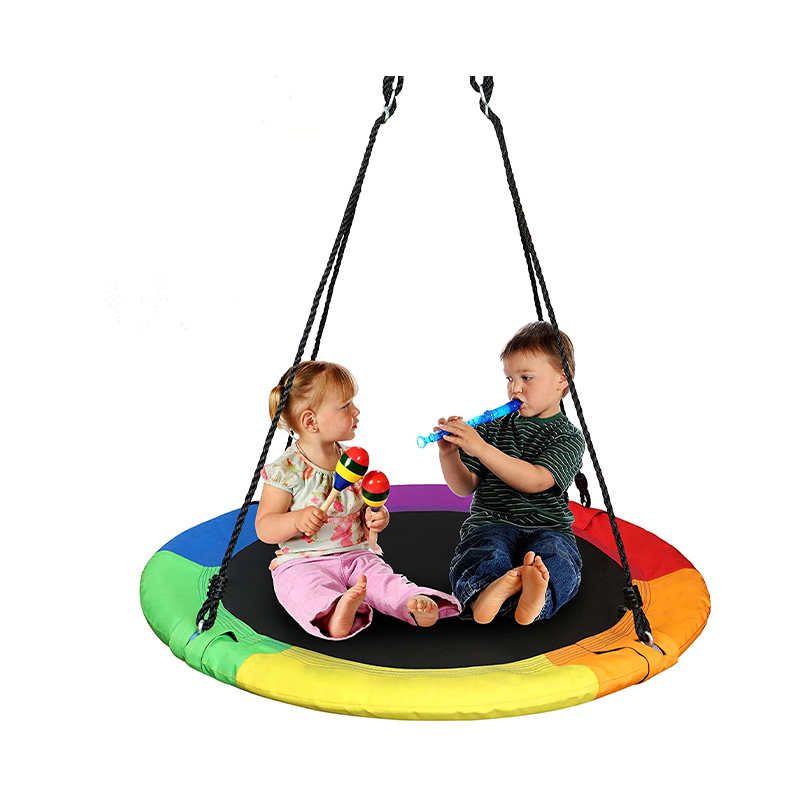
ADA 2010 Standards Section 240, which the state standards mirror, drives the design. Where a play area has elevated components, a portion of them must be reachable by ramp or transfer system. Where ground level play components are provided, at least one of each type must sit on an accessible route. A swing is a type. A city that installs a belt swing, a toddler swing, and a nest swing has three types, and the accessible route has to reach the ground level version of each.
Most failures are not about the equipment at all. They cluster in three places.
- Accessible routes that stop at the edge of the play area instead of connecting to the use zone of each required component.
- Surfacing that meets impact attenuation but not accessibility. ASTM F1292 governs how a surface absorbs a fall. ASTM F1951 governs whether a wheelchair can travel across it. Engineered wood fiber can pass one and fail the other when depth, compaction, and maintenance are not specified.
- Loose fill depths that are correct on installation day and never documented again. Maintenance records matter when an injury claim arrives two years later.
Safety Standards That Set the Standard of Care
ASTM F1487 covers public use playground equipment, and the CPSC handbook fills in the inspection and maintenance side. Neither is enforced by a Texas agency, but both shape what a defensible installation looks like. Several numbers appear repeatedly in Texas bid specifications, and they are worth writing directly into the purchase order.
- Fall height for a swing is the height of the pivot point, not the seat. A frame with a 96 inch top rail creates a fall height that many standard surfacing depths will not cover.
- S-hook gaps should not exceed 0.04 inches, roughly the thickness of a dime, to limit clothing entanglement.
- Clearance under a swing seat should be at least 12 inches above the protective surface.
- No more than two seats per swing bay, with the use zone extending 6 feet to the sides and a distance equal to twice the pivot height to the front and rear.
- Surfacing should test at 200 G-max or less and a HIC of 1000 or less at the equipment's critical fall height, verified in the field on installed material rather than only on a lab sample.
Corrosion is the other Texas specific. Gulf Coast humidity and inland temperature swings punish hardware. Galvanized or stainless components with documented salt spray testing hold up where painted carbon steel does not, and that difference shows up in a maintenance budget long before it shows up in an incident report.
Grant Conditions Quietly Add Requirements
Many Texas playground projects are funded in part by state park grant programs or by federal Land and Water Conservation Fund money passed through the state. Those awards carry their own conditions. Accessibility compliance is typically a reimbursement requirement rather than a suggestion, and design review happens before construction, not after.
The consequence for procurement is timing. A city that buys equipment before the grant review closes can end up owning hardware that cannot be placed where the approved plan puts it. Build the standard into the bid documents early: the current revision of ASTM F1487, a tested critical fall height printed on the submittal drawings, the corrosion class of every fastener, and the surfacing test method. If the requirement is not in the bid, it is not in the contract, and it is not enforceable after delivery.
Swing Components That Decide Pass or Fail
Inspection findings on swing structures concentrate in a small number of parts, and they are usually the least expensive items on the invoice.
Hangers, hooks, and connections
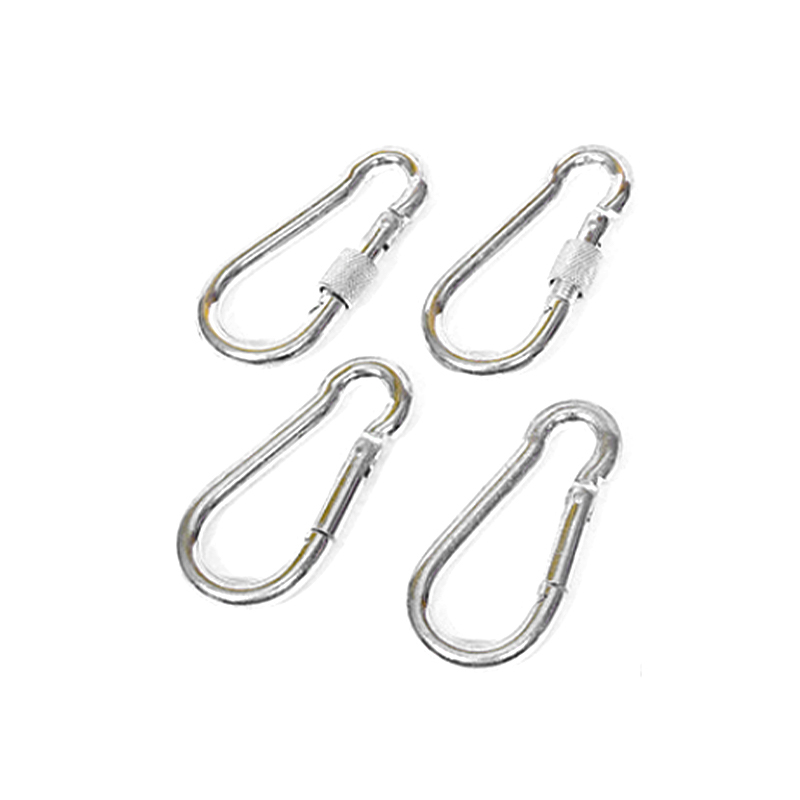
Open S-hooks, worn bushings, and mismatched hanger and chain combinations create entanglement and wear problems at the same time. A closed, properly gauged hook and a hanger rated for the load and the swing type remove most of that risk. A rotating element such as a swivel ring also prevents chain unwinding, a common cause of uneven wear on a multi-bay frame.
 Galvanized Swing Hooks with Nylon-Bearing Carabiner ConnectionsHeavy-duty galvanized hooks with zinc coating, M10/M12 options, and pre-assembled nuts and washers for smoother, quieter swing hardware.View Product →
Seats and suspension
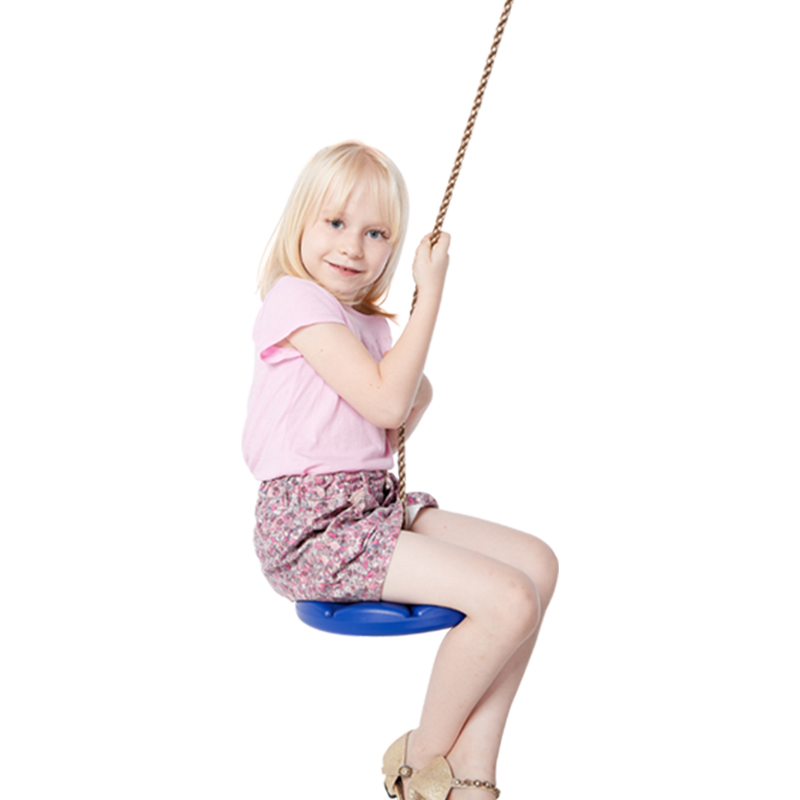
Seat selection drives the compliance conversation more than most buyers expect. A reinforced pine seat rated for both children and adults can serve a neighborhood park where a lightweight molded seat would be replaced within a season. Suspension choice follows the same logic: chain is durable but heavier and noisier, while high strength nylon webbing reduces swing noise and hardware wear in shared spaces.
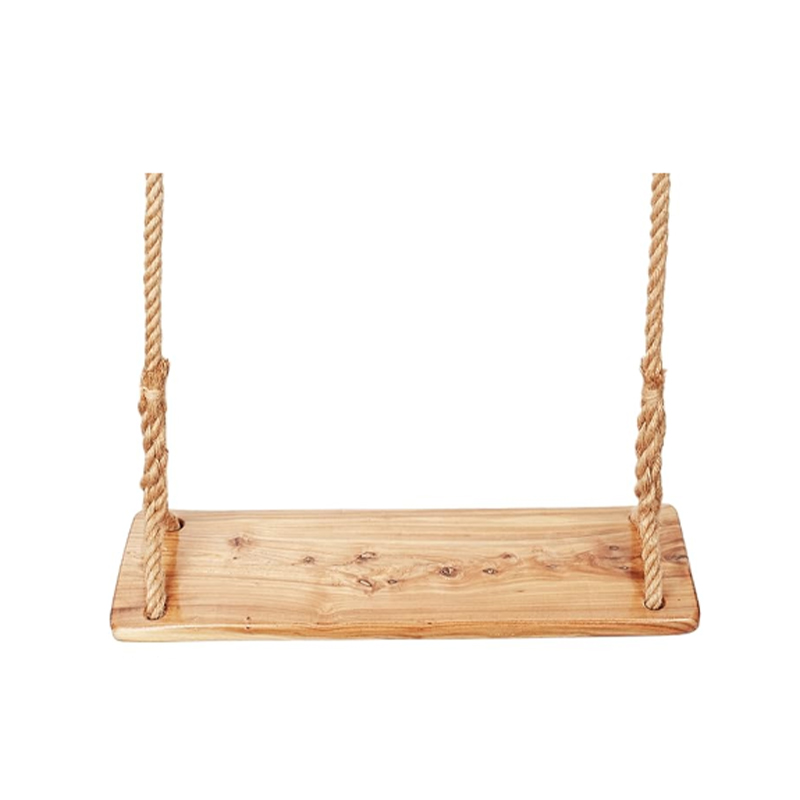 Reinforced Pine Swing Seat for Kids and AdultsPremium pine board with rounded edges, adjustable UV-resistant PE rope, and 150 kg capacity for shared family outdoor swinging.View Product →
Frames and anchoring
Frame geometry sets the fall height and the use zone, so it constrains every decision downstream. A heavy duty rust resistant double frame with a known top rail height lets the designer calculate surfacing depth and use zone dimensions before the concrete is poured, instead of adjusting after.
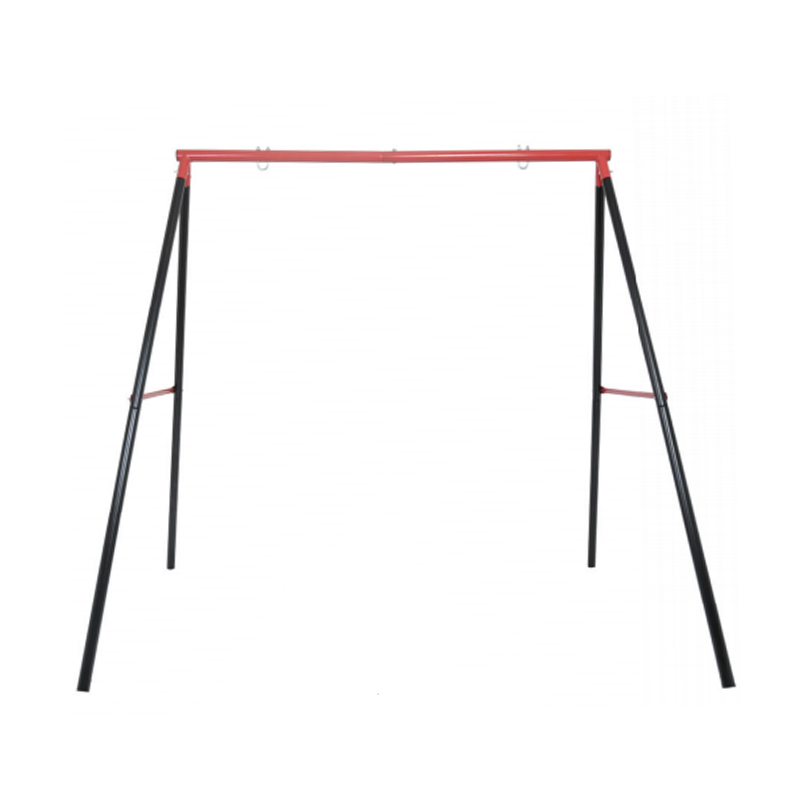 Heavy-Duty Rust-Proof Double Swing FrameThickened steel A-frame with anti-tipping base rod, UV-resistant powder coating, pre-drilled holes, and two sizes for shared outdoor use.View Product →
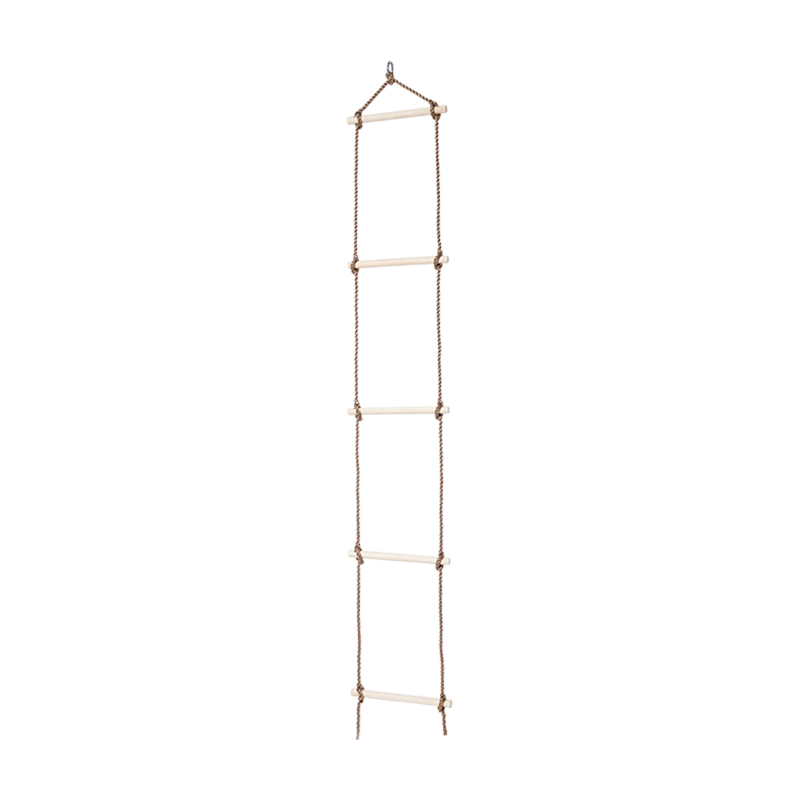
Footings deserve equal attention. Concrete should sit below grade so it does not become a protrusion or a trip hazard, ground anchors should be rated for the soil condition on site, and hardware should be inspectable without excavation. Climbing structures placed alongside a swing bay raise the same questions about rope, net, and connector durability, and the factors behind a safe climbing system are worth reviewing before a combined play area is specified.
What to Ask a Manufacturer For
A supplier response is only useful if it is specific. For a Texas municipal project, request the following and treat any missing item as a gap in the offer.
- Dimensional drawings showing pivot height, seat height above surfacing, and the recommended use zone for each configuration.
- Material and finish documentation, including galvanizing thickness or stainless grade, plus salt spray test results for exposed hardware.
- Load and durability test reports for hangers, hooks, chains, and anchors, not only for the seat.
- A written statement of the standard the equipment is designed to meet, with the ASTM F1487 revision identified.
- Recommended surfacing type and depth matched to the actual critical fall height of the frame.
- Replacement part availability and lead times, since a discontinued hanger can take an entire bay out of service.
Manufacturers who build to drawings rather than to a catalog page are easier to hold to these requirements. The same documentation that supports an accessibility review also gives a city something to hand a certified playground safety inspector and a risk manager.
The checklist for a Texas municipality is short. Confirm which of the four compliance sources apply to the project. Write the accessibility and safety requirements into the bid, not into the installation meeting. Require documentation before the purchase order is issued. Record surfacing depth after installation and keep the record.
None of that requires a larger budget. It requires settling the specification before the equipment is ordered, because once a Registered Accessibility Specialist or an inspector walks the site, the remaining options are expensive. If you are scoping a project and want hardware, drawings, and test documentation that line up with Texas requirements from the start, reach out to our team and we will work from your site plan.