 Eng
Eng
 Español
 عربى
عربى Deutsch
 русский
 Français
Content
- 1 Materials Used in Plastic Slides and Why They Matter
- 2 Types of Plastic Slides by Design and Configuration
- 3 Key Safety Features Built into Plastic Slides
- 4 Age Appropriateness and Size Guidance
- 5 Where Plastic Slides Are Used: Installation Environments
- 6 Developmental Benefits of Plastic Slides for Children
- 7 Installation Requirements and Surface Considerations
- 8 Maintenance and Longevity of Plastic Slides
- 9 How to Choose the Right Plastic Slide
A plastic slide is a children's play structure — or a standalone sliding component within a larger playground system — constructed primarily from molded plastic materials, most commonly high-density polyethylene (HDPE). It consists of an inclined chute along which a child slides from a raised platform to the ground, typically accessed by a ladder or staircase integrated into the structure. Plastic slides are designed for outdoor and indoor use, built to withstand repeated physical impact, UV exposure, rain, and temperature changes while remaining safe and smooth for sliding.
Unlike older steel or wooden slides, plastic slides are shaped through rotational molding or blow molding processes that create seamless, one-piece chute surfaces with no exposed edges, seams, or fasteners that could injure a child. Modern plastic slides support dynamic load capacities of up to 150 kg (330 lbs) and are engineered to meet international playground safety standards such as ASTM F1487, EN 1176, and AS 4685 — making them the dominant material choice for playgrounds worldwide.
Materials Used in Plastic Slides and Why They Matter
The performance, safety, and longevity of a plastic slide depend fundamentally on the type of plastic used in its construction. Not all plastics perform equally in outdoor playground environments, and the material choice directly affects UV resistance, surface temperature, impact toughness, and recyclability.
High-Density Polyethylene (HDPE)
HDPE is the most widely used material for premium outdoor plastic slides. It offers an outstanding combination of properties that make it ideal for playground applications:
- UV resistance: UV stabilizers are compounded into the HDPE resin during manufacturing, preventing the polymer chains from breaking down under prolonged sunlight exposure. Quality HDPE slides retain their color and structural integrity for 10 to 15 years or more of outdoor use.
- Impact toughness: HDPE has excellent impact resistance, particularly at low temperatures, with a notched Charpy impact strength that allows it to absorb the physical loads from children sliding and climbing without cracking or shattering.
- Anti-aging: Antioxidant additives prevent thermal and oxidative degradation, maintaining the material's flexibility and strength over its service life rather than becoming brittle with age.
- Chemical resistance: HDPE resists moisture, dilute acids, alkalis, and most environmental chemicals — important for equipment exposed to rain, cleaning agents, and organic matter from the surrounding environment.
- Recyclability: HDPE (recycling code #2) is one of the most widely recycled plastics, making end-of-life disposal more environmentally responsible than many alternative materials.
Polypropylene (PP) and ABS Plastic
Some smaller or indoor plastic slides use polypropylene or acrylonitrile butadiene styrene (ABS). Polypropylene offers good stiffness and is lighter than HDPE, making it suitable for compact, lightweight toddler slides. ABS provides a higher-gloss surface finish and better dimensional stability for injection-molded components, but is generally less UV-resistant than HDPE without additional stabilizer packages, making it better suited to indoor or partially shaded environments.
Why Plastic Outperforms Steel and Wood for Slides
The shift from steel and wood to plastic as the dominant slide material reflects measurable performance advantages:
| Property | Plastic (HDPE) | Galvanized Steel | Treated Wood |
|---|---|---|---|
| Surface temperature in sun | Moderate (less heat absorption) | Very hot (can exceed 70°C) | Moderate to warm |
| Corrosion / rot resistance | Excellent (no rust or rot) | Good (coating dependent) | Moderate (treatment dependent) |
| Splinter / sharp edge risk | None (seamless molded surface) | Low (if well maintained) | Moderate (splinter risk over time) |
| Maintenance requirements | Very low | Moderate (repainting) | High (re-treatment, sanding) |
| Color and design options | Very wide (molded-in color) | Limited (paint required) | Limited (stain or paint) |
| Child injury risk from surface | Very low | Moderate (heat burns, edges) | Moderate (splinters) |
Types of Plastic Slides by Design and Configuration
Plastic slides are available in a wide variety of configurations, each designed for a specific age group, space size, installation environment, or play experience. Understanding the types helps parents, school administrators, and playground designers choose the most appropriate option.
Straight Slides
The simplest and most common configuration, straight slides run from the top platform to the ground in a direct line, either at a constant angle or with a slight concave curve at the bottom to reduce landing impact. They are available in heights ranging from 0.6 m (for toddlers) to over 3.0 m (for older children). Straight slides are easy to install, require minimal space, and are the most straightforward to inspect and maintain.
Spiral and Tube Slides
Spiral slides wrap around a central axis, allowing a greater elevation drop within a smaller footprint — a valuable characteristic for urban playgrounds with limited space. Tube slides enclose the child within a cylindrical tunnel during the slide, adding an element of adventure and also providing protection from the sun on exposed playgrounds. Tube slides are particularly popular for school-age children (ages 5 to 12) and are a common feature of larger multi-activity play structures. Spiral tube slides can achieve height drops of 3 to 5 meters while occupying a ground footprint of only 2 to 3 meters in diameter.
Wide and Double Slides
Wide slides accommodate two children sliding side by side simultaneously, promoting social interaction and reducing queuing time on busy playgrounds. Some designs feature a central divider creating two parallel lanes — allowing children to race — while others have an open wide surface for cooperative sliding. These slides are particularly effective in school and community playground settings where throughput of children per hour is an important consideration.
Wave and Banked Turn Slides
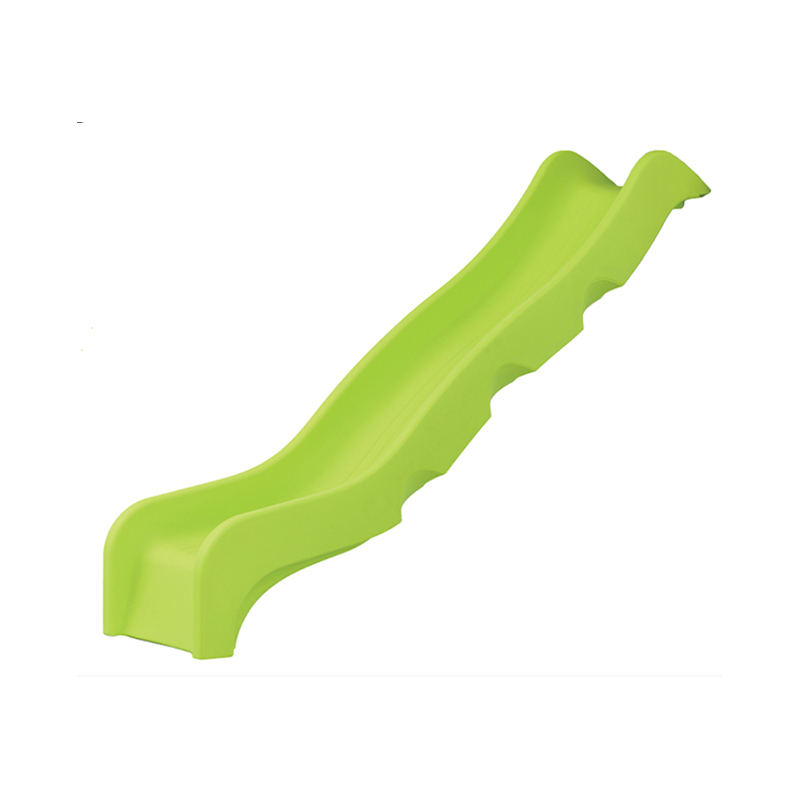
Wave slides incorporate undulations along their length that vary the speed and sensation during descent, providing a more dynamic play experience. Banked turn slides curve horizontally while descending — similar to a bobsled track — creating centrifugal forces during sliding that children find thrilling. These more complex slide geometries are typically found in larger commercial playground installations and adventure play parks.
Standalone Slides vs. Integrated Play Structure Slides
A standalone plastic slide is a self-contained unit with its own access ladder and support frame — ideal for home backyards where space and budget are limited. An integrated slide is a component within a larger multi-activity play system that also includes climbing walls, rope bridges, swings, and activity panels. Integrated slides typically offer more structural support, greater design flexibility, and a wider range of slide types for the same overall play value budget.
Key Safety Features Built into Plastic Slides
Safety is the primary design requirement for any children's play equipment, and modern plastic slides incorporate multiple engineered safety features that work together to minimize the risk of injury during normal play.
Non-Slip Steps and Ladder Rungs
Access to the slide platform is provided by steps or rungs molded or textured with non-slip surfaces — raised grips, cross-hatched patterns, or rubber-coated inserts — that maintain traction even when wet. International standards require that steps be horizontal (not angled), with a consistent rise height typically between 150 mm and 230 mm, and a minimum tread depth of 90 mm to provide secure footing for a range of foot sizes. Ladder handrails are positioned at a height suitable for the intended age group and must be grippable along their full length.
Raised Side Rails and Containment Guardrails
The slide chute itself is flanked by raised side rails — typically 100 to 200 mm high — that guide the child during descent and prevent them from sliding off the sides of the chute. At the top entry point, containment guardrails prevent children from falling off the platform before they begin sliding. These rails are seamlessly integrated into the one-piece molded chute structure, eliminating the risk of fingers or clothing becoming caught in gaps or seams.
Cushioned and Slowed Landing Zones
The bottom of a well-designed plastic slide curves upward slightly at the exit — a feature called an upturn or landing platform — that decelerates the child gently before they reach the ground, reducing the impact velocity at landing. This curved exit is carefully dimensioned to be effective without causing children to become airborne. The landing zone below the slide must also be covered with impact-attenuating surface material — such as rubber tiles, engineered wood fiber, or sand — to a depth specified by the fall height of the slide, as defined in safety standards.
Entrapment Prevention
One of the most critical safety requirements in playground standards is the prevention of head and neck entrapment. All openings in a plastic slide structure — gaps between rungs, between rails, in platform decking — must either be smaller than 89 mm (to prevent head entry) or larger than 230 mm (to allow free passage). Openings in the 89–230 mm range, which could trap a child's head, are strictly prohibited. This requirement drives many design decisions in plastic slide geometry and is one reason why molded-plastic one-piece construction is preferred over multi-part assembled designs.
Smooth, Seamless Sliding Surfaces
The seamless one-piece molding of HDPE slide chutes eliminates the joints, rivets, and exposed fasteners present in multi-part slide assemblies. No protrusion on the sliding surface may exceed 8 mm under EN 1176 standards, and all edges must be rounded to a minimum radius of 3 mm. These requirements are inherently met by the molding process for quality plastic slides, whereas assembled metal or wooden slides require ongoing inspection to ensure fasteners have not loosened and edges have not become exposed.
Age Appropriateness and Size Guidance
Plastic slides are manufactured in a wide range of sizes specifically calibrated to the developmental capabilities and safety needs of different age groups. Matching the slide height, chute angle, and access method to the intended users is essential for both safety and play value.
| Age Group | Platform Height | Chute Angle | Typical Access Type | Key Safety Consideration |
|---|---|---|---|---|
| Toddlers (1–3 years) | 0.5 – 0.9 m | 20° – 30° | Wide steps with handrails | Requires adult supervision; low speed |
| Preschool (3–5 years) | 0.9 – 1.5 m | 30° – 38° | Steps or low-angle ladder | Side rails, gentle upturn at base |
| School age (5–12 years) | 1.5 – 3.0 m | 30° – 45° | Ladder, climbing wall, or stairs | Impact-absorbing surface required below |
| Older children / teens | 3.0 m+ | 35° – 45° | Multi-step climb, rope access | Tube or enclosed slide recommended |
Playground standards such as EN 1176 and ASTM F1487 also specify maximum chute angles — generally not exceeding 40° for straight slides intended for school-age children — to control sliding speed and ensure that children arrive at the landing zone at a safe velocity.
Where Plastic Slides Are Used: Installation Environments
Plastic slides are versatile enough to be installed across a wide range of environments, each with its own requirements for size, durability, and design integration.
Residential Backyards
Home garden slides are typically compact standalone units or small integrated play sets suitable for children aged 2 to 8. They prioritize ease of assembly, attractive appearance, and safe operation without constant adult supervision. HDPE construction is particularly valued in this setting because it requires virtually no maintenance — no painting, no re-treating, no rust removal — allowing parents to focus on play rather than upkeep. A typical home backyard slide stands 1.0 to 1.8 m tall and includes a short ladder with two or three rungs.
School and Kindergarten Playgrounds
Schools and early childhood education centers require play equipment that meets certified safety standards, accommodates large numbers of children of varying ages simultaneously, and withstands intensive daily use across many years. Plastic slides for these environments are typically integrated into larger multi-activity play structures, specified to relevant national safety standards, and inspected regularly by qualified playground inspectors. Durability is paramount — a school slide may see 50 to 150 child-uses per day, accumulating tens of thousands of uses per year.
Public Parks and Community Playgrounds
Public playgrounds managed by local authorities, housing associations, or community groups require plastic slides that are highly vandal-resistant, graffiti-cleanable, and structurally robust against misuse. Commercial-grade HDPE slides for this sector are manufactured to greater thicknesses than residential equivalents and are typically anchored to in-ground footings meeting engineering specifications for the local wind and seismic zone. The color palette is usually bright and inviting, contributing to the welcoming aesthetic of the public space.
Indoor Play Centers
Commercial indoor play centers — soft play areas in shopping malls, children's entertainment venues, and fast food restaurant play areas — use plastic slides as key elements of multi-level soft play structures. In this application, UV resistance is less critical, but fire resistance becomes more important. Indoor plastic slides are typically manufactured from self-extinguishing grades of polyethylene or polypropylene that meet fire classification requirements such as UL 94 HB or EN 13501-1 Class E.
Developmental Benefits of Plastic Slides for Children
Beyond their physical structure, plastic slides deliver a range of developmental benefits that make them more than simply a piece of play equipment. Research in child development consistently identifies sliding as an activity that supports multiple developmental domains simultaneously.
Physical Development
Climbing the ladder or steps to reach the top of a slide builds leg strength, core stability, and gross motor coordination. Repeated climbing develops the large muscle groups of the legs, glutes, and back, and improves cardiovascular fitness. The descent itself — requiring the child to balance their posture, lean at the right angle, and land correctly — develops body awareness and proprioception. Children who regularly use slides and climbing equipment demonstrate measurably better balance and coordination than those with limited active outdoor play.
Cognitive and Emotional Development
For young children, a slide represents a genuine challenge — the ladder is steep, the platform is high, and the slide itself is a one-way commitment. Overcoming this challenge builds courage, self-confidence, and risk assessment skills. Each successful descent reinforces the child's belief in their own physical capability, contributing to a broader growth mindset. Studies of risk-benefit analysis in playground design consistently conclude that the developmental benefit of age-appropriate challenge — including some perceived risk — outweighs the minimal injury risk of well-maintained, properly specified playground equipment.
Social Development
Slides are inherently social play structures. Children queue for their turn, negotiate who goes first, encourage hesitant friends, and celebrate each other's achievements. Wider or double slides allow cooperative and competitive play between two children simultaneously. These social interactions develop communication skills, empathy, turn-taking, and the ability to read and respond to the emotional states of other children — foundational social competencies that translate directly into school readiness and interpersonal effectiveness throughout life.
Sensory Experience
The sensation of sliding — the rush of speed, the wind, the landing jolt, the visual experience of the world moving rapidly past — provides rich vestibular and proprioceptive sensory input that supports neurological development in young children. Sensory integration — the brain's ability to organize and respond to multiple simultaneous sensory inputs — is strengthened by experiences exactly like sliding that challenge the child's equilibrium and spatial awareness in a controlled, enjoyable way.
Installation Requirements and Surface Considerations
A plastic slide performs safely only when correctly installed on an appropriate surface with adequate fall zone protection. Ignoring installation requirements is a leading cause of preventable playground injuries worldwide.
Anchoring and Structural Stability
Standalone plastic slides must be securely anchored to prevent tipping under the dynamic loads of children climbing and sliding. Residential units are typically anchored with ground stakes or concrete footings; commercial units use engineered concrete anchor pads specified for the slide's weight, dynamic load rating, and local wind speed requirements. The slide must remain stable when a child of the maximum intended weight applies a horizontal force of 500 N to any point on the structure — a stability test required by most international playground standards.
Impact-Attenuating Surfaces
The ground surface within the fall zone of a slide — defined as the area below and in front of the slide exit — must be covered with impact-attenuating material to a depth that provides a critical fall height (CFH) equal to or greater than the platform height of the slide. Common impact-attenuating surfaces include:
- Rubber tiles or mats: Pre-formed rubber tiles of 40 to 80 mm thickness provide consistent, weather-resistant fall protection with low maintenance requirements. They are the preferred surface for high-use commercial and school playgrounds.
- Engineered wood fiber (EWF): Loose-fill wood fiber processed to specific particle size and depth specifications is effective, natural in appearance, and economical, but requires regular raking and replenishment as it compacts and disperses with use.
- Sand: Loose sand provides good impact attenuation when maintained at a sufficient depth (typically 300 mm minimum), but requires frequent topping up and can harbor contaminants if not regularly cleaned.
- Poured-in-place rubber: A seamless rubber surface installed in situ, available in a wide range of colors and designs, offering the highest durability and accessibility for children with mobility impairments.
Fall Zone Dimensions
The fall zone extends a minimum of 1.8 m from all sides of the slide structure and extends at least 2.2 m beyond the slide exit point in the direction of travel, according to EN 1176. For taller slides with higher exit velocities, the forward fall zone may need to be extended further based on exit speed calculations. Hard surfaces — concrete paths, paving, or compacted gravel — must not be present within the fall zone.
Maintenance and Longevity of Plastic Slides
One of the most compelling advantages of plastic slides over steel or wood alternatives is their extremely low maintenance requirement — a direct result of HDPE's material properties. However, "low maintenance" does not mean "no maintenance," and a regular inspection and cleaning routine is essential to ensure continued safety.
Routine Cleaning
Plastic slide surfaces should be cleaned regularly with mild soap and water to remove dirt, biological growth (algae, moss), and any surface deposits that could reduce traction or harbor bacteria. Most surface contamination wipes off easily from smooth HDPE surfaces. For stubborn biological staining, a dilute bleach solution (no more than 1% sodium hypochlorite) can be used with a soft brush, followed by thorough rinsing. Harsh abrasive cleaners should be avoided as they can scratch the surface and dull the UV-protective outer layer.
Periodic Safety Inspection
Regardless of how durable the plastic, regular visual inspection is essential. Inspection should check for:
- Surface cracks, splits, or impact damage on the chute, side rails, or platform decking.
- Loosening of anchor fixings or connection hardware between the slide and its supporting structure.
- Condition of non-slip step surfaces — worn or damaged grip patterns should be restored or the step replaced.
- Evidence of significant UV degradation — chalking, color fading, or surface brittleness — which may indicate the UV stabilizer package is exhausted and replacement is approaching.
- Condition of the fall zone surface — depth, distribution, and absence of foreign objects within the impact area.
For commercial and public playground slides, formal documented inspections by a qualified playground inspector are typically required annually, with routine visual checks by site staff daily or weekly. A well-maintained premium HDPE plastic slide can provide 15 to 20 years of safe service before replacement is warranted.
How to Choose the Right Plastic Slide
Selecting the right plastic slide involves matching the product specification to the intended users, available space, budget, and installation environment. The following checklist covers the most important decision points:
- Age range of users: Choose platform height and chute angle appropriate for the youngest and oldest children who will regularly use the slide. Avoid installing a tall, steep slide in an area primarily used by toddlers.
- Material quality: Confirm the slide is manufactured from UV-stabilized, anti-aging HDPE with appropriate wall thickness for the intended use intensity (residential vs. commercial). Ask for material certification or specification sheets if purchasing for public or commercial use.
- Safety standard compliance: Verify that the product is tested and certified to the relevant national or international playground safety standard (EN 1176, ASTM F1487, AS 4685, or equivalent) by an accredited testing body.
- Load capacity: Ensure the dynamic load rating is appropriate for the intended users. A minimum of 150 kg (330 lbs) dynamic load capacity is standard for school and commercial applications.
- Available space: Account for the total footprint of the slide including the fall zone. A slide with a 1.5 m platform requires an impact-attenuating surface area extending well beyond the structure itself — ensure this can be accommodated in the available space.
- Standalone vs. integrated: For a single play item in a small space, a standalone slide is appropriate. For a larger playground with multiple play elements, an integrated multi-activity structure with a built-in slide delivers better play value per square meter.
- Color and aesthetic: Choose colors that complement the surroundings and are attractive to the target age group. HDPE pigments are stable and should retain their vibrancy for years with normal outdoor exposure.